Leave Your Message
Precision-manufactured aluminium lantern rivets designed for multi-grip versatility, minimal point stress, and superior joint integrity across fragile substrates.
How lantern rivets transform concentrated point loads into broad, triangular clamping footprints without damaging structural integrity.
Fastening soft or brittle materials—such as fiberglass, carbon-reinforced polymers (CFRP), thermoplastics, acrylics, rubberized gaskets, honeycomb panels, and lightweight sheet metals—has historically presented severe assembly bottlenecks. Conventional standard blind rivets generate substantial radial expansion inside the pre-drilled hole along with high localized axial tension. In brittle workpieces like PMMA sheets, ceramics, or thin cast alloys, this focused mechanical stress results in immediate micro-cracks, crazing, or catastrophic structural fracturing. In soft materials such as polyolefins, polyurethane foams, and thin laminates, standard rivets routinely pull straight through the parent material under dynamic vibrational or tensile loading.
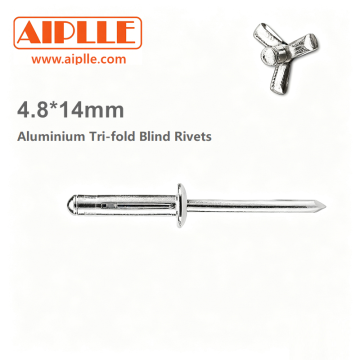
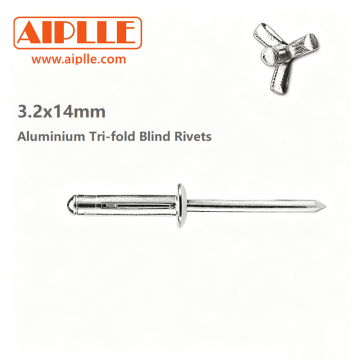
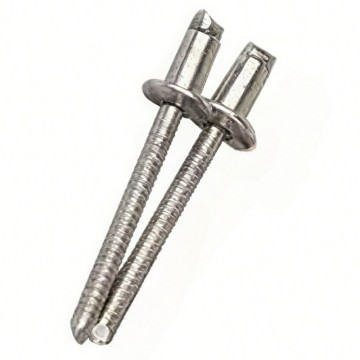
Trifold Blind Rivets (commonly designated as Lantern Rivets, Bulb Rivets, or Tri-Wing Split Rivets) are engineered specifically to eliminate these fundamental failure modes. During the setting process, the axial stroke of the rivet installation tool pulls the mandrel head into the slotted tubular body. Rather than relying on radial body expansion to grip the inner hole wall, the rivet sleeve divides along three precision-machined axial slots, flaring outward into three large, petal-like folding wings on the blind side of the assembly.
The three folded legs create a blind-side contact footprint up to 250% larger than standard rivets, spreading clamping pressure over a wide surface area and preventing pull-through on soft plastics and wood.
Unlike expanding blind rivets, trifold rivets do not impart outwards radial stress against the hole perimeter, ensuring zero micro-fractures in brittle acrylics, glass-filled resins, and thin composite sheets.
The broad span of the unfolded lantern legs effortlessly bridges misaligned, slotted, oblong, or oversized pre-drilled holes without compromising tensile or shear retention.
As these three legs clamp flush against the rear mating surface, they generate a gentle, balanced, yet exceptionally resilient clamping force. This structural geometry protects sensitive substrates from deformation, localized crushing, and hoop-stress cracking, establishing Trifold Blind Rivets as the international standard for high-reliability lightweight joining.
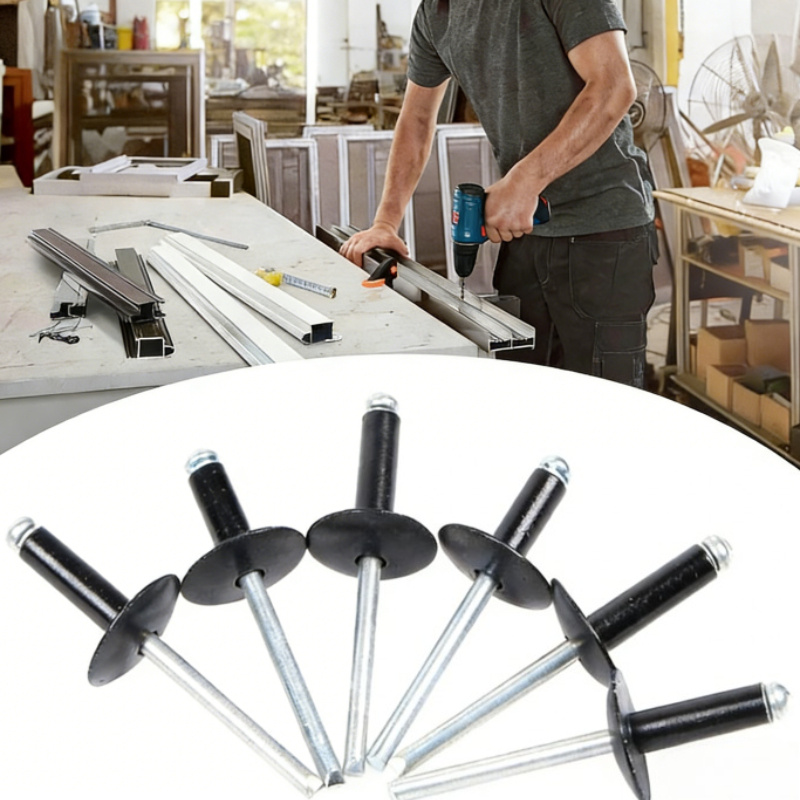
Lantern rivets are one-sided riveting fasteners. After riveting, the rivet head takes on a lantern-like shape. Thanks to their unique structure and performance, they are widely used in critical manufacturing sectors across global and U.S. markets.
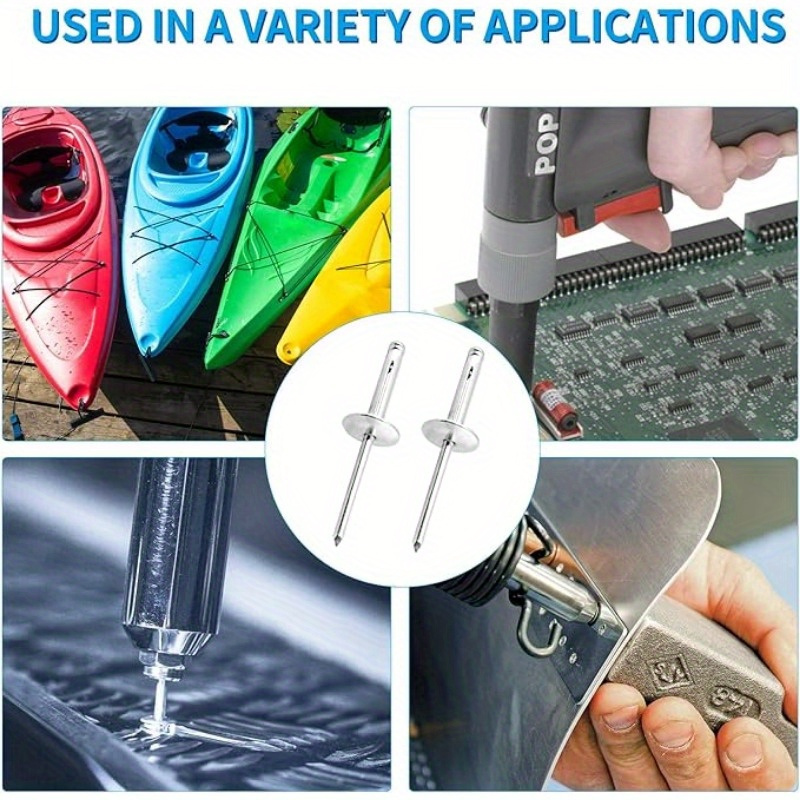
They can be applied to connect components such as automotive instrument panels and ventilation systems. These parts often adopt fragile or flexible materials like plastics and rubbers. The three-fold legs formed during the riveting process of lantern rivets can distribute the clamping force evenly, preventing damage to the riveted materials, inner trim panels, EV battery casing shields, and bumper facias.
In the assembly of electronic instruments and devices, lantern rivets are suitable for joining thin metal plates, plastic casings, and delicate internal structural frames. They not only ensure firm, vibration-proof connection but also avoid harming precision electronic components, circuit boards, and sensitive sensor modules during high-speed production.
They are commonly used in food packaging, wine packaging, heavy-duty shipping crates, and specialty container sectors. Lantern rivets can firmly rivet packaging materials including heavy corrugated cartons, honeycomb boards, and composite plastic sheets. Meanwhile, their aesthetic appearance and flush finish enhance the overall texture and durability of premium packages.
They are ideal for connecting metal furniture frames, composite wooden products, acrylic panels, and upholstery structures. For components with irregular shapes or connection holes of large sizes, lantern rivets perform excellently and guarantee the long-term structural stability of modular office, residential, and outdoor furniture.
In the assembly of home appliances such as refrigerators, air conditioners, and washing machines, lantern rivets can be used to fix outer sheet metal casings, internal acoustic dampening brackets, and plastic drawer guides. They feature excellent shock resistance, acoustic damping, and tensile strength, which prevent the loosening of component connections during continuous motor vibration.
In the gift, artwork, scale model, and toy industries, lantern rivets not only realize secure connection of brittle resin or vinyl parts, but also can be processed into various colors and patterns on the rivet head through processes like baking paint and anodizing. This allows fasteners to match the visual design style of the products and play an integrated decorative role.
They are widely used for connecting door and window accessories, curtain wall composite panels, acoustic ceiling baffles, and fixing various architectural decoration materials. For irregular or large-sized installation holes, lantern rivets provide reliable, moisture-resistant connection solutions that adapt to thermal expansion and contraction cycles.
In photovoltaic installations and marine watercraft (kayaks, fiberglass hulls), lantern rivets provide essential corrosion-resistant anchoring. They join thin-gauge aluminum racking, solar module backsheets, and thermoformed plastic hulls without puncturing brittle gel coats or compromising structural watertightness.
Quantifying why standard blind rivets fail on delicate substrates where Trifold Lantern Rivets excel.
| Fastening Attribute | Trifold (Lantern / Bulb) Rivets | Standard Open-End Blind Rivets | Peel Type Blind Rivets | Threaded Rivet Nuts |
|---|---|---|---|---|
| Blind-Side Footprint Area | Very Large (3 Wide Folding Petals) | Small (Spherical Ball Bulb) | Medium (4 Splitting Petals) | Medium (Swaged Sleeve Ring) |
| Radial Pressure on Hole Wall | Near Zero (Folds outside hole) | Extremely High (Expands inside hole) | Low to Moderate | High (Requires tight bore tolerance) |
| Risk of Cracking Brittle Workpieces | Negligible / Safest Choice | High Risk (Radial hoop failure) | Low Risk | Moderate Risk |
| Resistance to Soft Pull-Through | Exceptional (>2.5x Standard) | Poor (Pulls through plastics) | Good | Moderate (Requires thick base) |
| Tolerance to Non-Uniform Holes | High (Handles elongated/oversized holes) | Strict (Hole must be precise) | Moderate | Strict (Hole must be exact) |
| Grip Range Flexibility | Multi-Grip (Accommodates varied stack heights) | Narrow Grip Range | Moderate Grip Range | Narrow (Depends on thread stroke) |
| Retained Mandrel Stability | Mechanically locked / rattle-free | Friction retained or loose | Open mandrel core | Full interior thread |
When selecting trifold fasteners, mechanical engineers must assess the tensile modulus, flexural strength, and shear limits of both joined materials:
1. Carbon Fiber Reinforced Polymers (CFRP) & Glass Fiber (FRP): These composite matrices exhibit exceptional axial tensile strength but are notoriously susceptible to interlaminar shear delamination when subjected to point-source compression. Trifold rivets distribute the clamping load across multiple weave fibers, preventing resin micro-fractures around the bolt circle.
2. Thermoplastics (ABS, Polycarbonate, Polypropylene, Nylon): Due to viscoelastic creep and low surface yield strength, solid mechanical fasteners frequently lose preload over time or sink into the plastic. The expansive footprint of trifold lantern legs delivers sustained residual clamping force without initiating stress-induced environmental cracking.
3. Soft Woods, Particle Boards & Architectural Gypsum: Fibrous and cellular materials lack the cohesive shear resistance required for standard threaded screws, which easily strip out during torqueing. Trifold rivets clamp securely against the outer skin, establishing an unyielding mechanical interlock.
How the shift toward hybrid lightweighting, automated assembly robotics, and eco-coatings is propelling trifold rivet adoption.
The global industrial fasteners market is undergoing a structural transition driven by the electrification of mobility, consumer electronic miniaturization, and aggressive decarbonization directives. Multi-material designs—where high-strength steels, ultra-thin aluminum alloys, lightweight plastics, and carbon composites are joined within a single assembly—are replacing monolithic metal construction.
Modern production facilities utilize high-speed, blow-fed automated riveting end-effectors on robotic arms. Trifold rivets feature optimized mandrel geometry that facilitates seamless pneumatic feeding, cycle times under 1.2 seconds, and automated optical mandrel verification.
To eliminate toxic hexavalent chromium, next-generation aluminium and stainless trifold rivets employ trivalent passivations, organic zinc-aluminum flake coatings (Geomet), and specialized anodization capable of exceeding 1,000+ hours in ASTM B117 salt spray testing.
For external facade, marine, and roof solar racking applications, trifold rivets are increasingly pre-fitted with vulcanized EPDM or neoprene washers. When the lantern folds compress, the gasket creates an airtight, IP67-rated waterproof barrier around the joint.
To guarantee optimal joint performance when fastening delicate workpieces with trifold blind fasteners, adherence to strict engineering protocols is recommended:
Detailed technical answers to common queries regarding lantern and bulb rivet selection for soft and brittle materials.
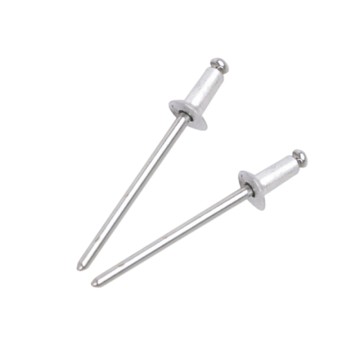
A standard pop rivet expands its body radially inside the drilled hole and forms a compact ball bulb on the blind side, creating intense localized stress. A Trifold Rivet features three precision axial body slits that fold outward into three broad petals (lantern shape) against the rear surface. This distributes clamping pressure over a much wider surface area and produces virtually zero radial pressure inside the hole, preventing cracking in brittle materials and pull-through in soft materials.
Yes. Because the three expanded legs span a diameter significantly wider than the original rivet body (often expanding to 2-3 times the nominal hole size), trifold rivets bridge oversized, oblong, slotted, or slightly misaligned holes securely without slipping through or compromising joint tension.
Standard trifold rivets are water-resistant, but for fully watertight or weatherproof joints (such as on RV roofs, kayaks, solar racking, and building envelopes), trifold rivets equipped with pre-assembled EPDM or chloroprene neoprene washers are utilized. When actuated, the gasket is compressed securely between the rivet flange and the workpiece, creating an IP67 hermetic seal.
Aluminium trifold rivets are primarily cold-headed from high-ductility aluminium alloys such as AlMg 2.5 (5052) or AlMg 3.5 (5056) paired with high-tensile steel or aluminium alloy mandrels. This metallurgical formulation guarantees smooth petal folding without stress fractures in the legs during high-speed installation.
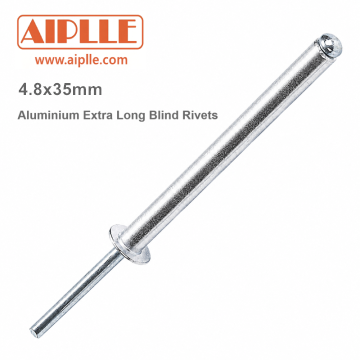
Explore our complete inventory of industrial-grade blind fasteners, extra-long rivets, trifold lantern rivets, and specialty head configurations.