Leave Your Message
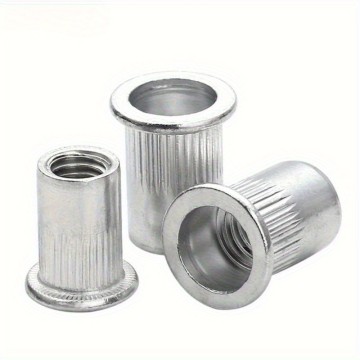
Engineered for high-volume automotive, server cabinet, and aerospace chassis fabrication where dependable thread engagement and zero thermal distortion are non-negotiable.
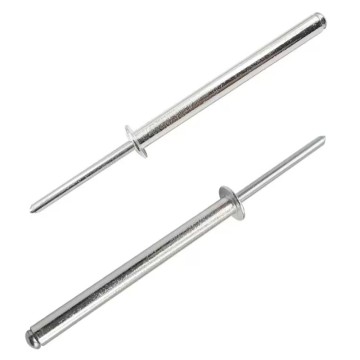
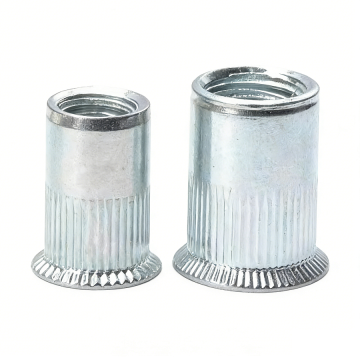
Engineered for lightweight sheet assemblies requiring extended grip ranges and non-magnetic properties.
View Technical Specs →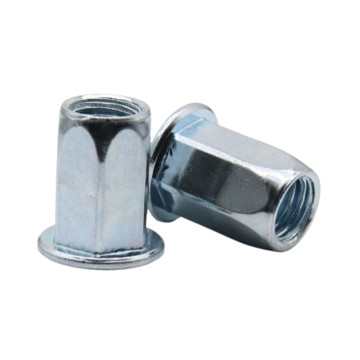
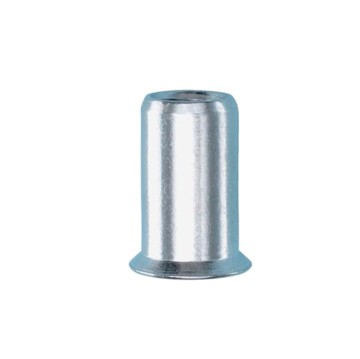
Hexagonal shank profiles offering extreme spin-out torque resistance in pre-punched hex holes.
View Technical Specs →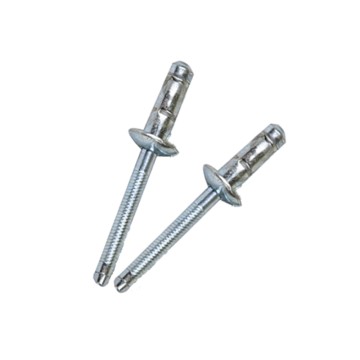
Delivers dual structural shear capacity and vibration-proof clamp loads under dynamic stress.
View Technical Specs →
Expanded footprint prevents sheet pull-through on ultra-thin, soft composite, or plastic-clad sheets.
View Technical Specs →In contemporary manufacturing paradigms ranging from electric vehicle (EV) lightweighting to server-grade telecom chassis, the demand for ultra-thin metallic sheets (typically ranging between 0.5 mm and 3.2 mm in thickness) has skyrocketed. While sheet thinning reduces vehicle curb weight, lowers raw material expenditure, and minimizes carbon footprints, it simultaneously introduces a critical mechanical dilemma: traditional fastening methodologies fundamentally fail on thin sheet cross-sections.
When sheet thickness drops below the nominal pitch of a standard screw thread (such as an M6 pitch of 1.0 mm on a 0.8 mm panel), direct tapped threading is physically impossible. Tapping in such thin gauges yields less than one full thread engagement, precipitating immediate thread stripping under minimal torque loading. While conventional alternatives such as weld nuts or self-clinching studs have long been utilized, they incur substantial penalties: resistance welding causes localized thermal warping, destroys zinc coatings, generates spatter, and demands two-sided tooling clearance. Meanwhile, clinching nuts require intense hydraulic press equipment prior to part folding and suffer catastrophic dislodgement in blind-access tubular frames.
Threaded rivet nuts (also known as blind threaded inserts or nutserts) have emerged as the definitive industrial resolution for joining thin sheet metals. Operating strictly from a single side of the workpiece (blind fastening), a rivet nut is installed by introducing a specialized threaded mandrel that pulls the internal thread towards the tool nosepiece, systematically collapsing the unthreaded thin wall section into a substantial, load-bearing upset bulge on the blind side. This creates a solid, high-tensile internal thread firmly locked into the parent metal sheet, providing flawless reuse capability through thousands of fastener assembly and disassembly cycles.
The superior pull-out strength and vibration stability of threaded rivet nuts in thin sheet metals stem from rigorous metallurgical cold-forming principles. The fastener is bifurcated into two functional segments: an upper unthreaded deformation sleeve and a lower internal precision tapped thread zone.
During the automated installation cycle, the mandrel applies a calibrated axial tensile stroke (or torque-controlled force). Because the deformation sleeve has a thinner wall thickness and controlled annealing treatment, it yields under compression, flaring radially outward against the rear face of the parent sheet. The resulting bulb geometry exerts high perpendicular clamping force against the back surface, while the fastener flange (flat, countersunk, or low-profile flush) seats securely on the front surface.
For applications subjected to severe torsional shear—such as power tool housing attachments or automotive steering column brackets—fastener spin-out within the parent sheet hole presents a grave engineering hazard. To eliminate rotational slippage, manufacturers implement knurled body profiles or full hexagonal shanks:
Evaluating mechanical properties, assembly throughput, tooling accessibility, and thermal effects across mainstream sheet metal threading solutions.
| Evaluation Parameter | Threaded Rivet Nut | Self-Clinching Nut (PEM) | Resistance Projection Weld Nut | Flowdrill Friction Tapping |
|---|---|---|---|---|
| Accessibility Needs | 100% Single-Sided (Blind) | Two-Sided Clear Access Required | Two-Sided Electrode Access | Single-Sided Access Needed |
| Installation Timing | Anytime (Post-Paint / On-Site) | Pre-Bending Flat Blank Only | Pre-Coating Bare Metal Only | Pre-Assembly Machining Station |
| Thermal Distortion Risk | None (Cold Mechanical Forming) | None (Hydraulic Cold Pressing) | High (Spatter, Warping, Decarb) | Moderate (Frictional Heating) |
| Surface Finish Preservation | Maintains Anodizing, E-Coat, Powder | Minimal Surface Damage | Destroys Zinc/Coatings; Requires Rework | Discolors Substrate Margins |
| Substrate Versatility | Steel, Al, Mg, Composites, Plastics | Limited by Substrate Hardness | Weldable Ferrous Metals Only | Ductile Thin Metals Only |
| Automation Feasibility | High (Robotic Handheld / Auto-Feed) | High (Automated Press Feeder) | High (Automated Weld Cell) | Requires High-Speed CNC Spindle |
| Pull-Out Resistance (Thin Sheet) | Exceptional (Expanded Bulb Flange) | Moderate (Interference Clinch Ring) | Superior (Fused Metallurgical Bond) | Poor (Limited Engaged Pitch) |
The adoption curve of threaded rivet nuts in thin sheet metals has steepened markedly over the past half-decade. Driven by global clean-energy mandates, electric vehicle platform innovations, hyper-scale cloud server rack expansions, and architectural facades, engineers are continuously substituting obsolete welding operations with blind mechanical inserts.
In modern EV architecture, battery packs serve both as energy reservoirs and structural floor panels. These enclosures combine deep-drawn 6000-series aluminum alloy trays with ultra-thin stamped covers (0.8 mm – 1.5 mm). Conventional welding is strictly prohibited due to thermal transfer risk to lithium-ion pouch cells and combustible dielectric electrolytes. High-strength stainless steel hex-shank rivet nuts provide a hermetically sealed, high-clamp anchoring point for internal cooling manifolds, cell retention brackets, and protective bottom shields, resisting continuous chassis vibration without fatiguing parent metal sheets.
Modern AI computing servers utilize dense 1U, 2U, and 4U sheet metal chassis fabricated from electro-galvanized cold-rolled steel (SECC) as thin as 0.75 mm. These computing units require thousands of precision mounting points for power supplies, hot-swappable fan trays, motherboard standoffs, and high-bandwidth optical line cards. Countersunk and ultra-flush rivet nuts allow components to slide smoothly along guide rails without protruding hardware, completely eliminating the zinc flaking and electrical short hazards associated with weld nuts.
Utility-scale solar farms deploy motorized single-axis tracking systems in severe outdoor desert and maritime environments. Torsion tubes and thin-walled galvanized purlins require thousands of weather-tight threaded attachments to secure photovoltaic modules. Grade 316 stainless steel and zinc-nickel coated rivet nuts provide over 1,500 hours of neutral salt-spray resistance (ASTM B117), withstanding cyclic dynamic wind uplift pressures without thread stripping or galvanic degradation.
In aircraft galleys, overhead luggage compartments, and metro carriage walls, weight optimization requires thin aluminum honeycombs and sheet skins. Threaded rivet nuts with pre-applied microencapsulated thread-locking adhesives (MIL-STD compliant) guarantee that internal retaining bolts cannot back out under high-frequency harmonics, satisfying strict aerospace passenger safety mandates.

Hexagonal and knurled profiles bite securely into sheet margins, delivering up to 35% higher break-out torque than conventional clinch hardware.

Available in 304/316 stainless steel, zinc-nickel electroplate, and anodized aluminum to prevent electrolytic degradation across dissimilar metals.

Hydro-pneumatic spin-pull-spin cycle tooling completes full insert deformation in under 2.5 seconds, drastically slashing fabrication labor costs.

Countersunk and small-flange heads provide virtually flat surface profiles, allowing unobstructed mating of secondary panels and covers.

Fully compatible with multi-axis articulated robot end-effectors equipped with real-time stroke-force sensory feedback monitoring.
Non-sparking, cold plastic installation prevents thermal puckering, paint blistering, or rear-side discoloration on pre-coated decorative sheets.
The manufacturing world is undergoing a seismic shift toward lights-out automation. In automated body-in-white (BIW) automotive lines and server enclosure plants, manual handheld pneumatic riveting is increasingly superseded by robotic end-effectors fed by automated blow-feed bowls.
Smart rivet nut setting systems incorporate piezo-electric load cells and high-resolution linear optical encoders that trace the exact Force-Distance (F-s) curve during the deformation cycle. If an operator accidentally places an M6 rivet nut into an oversized hole, or if the sheet thickness varies by more than ±0.15 mm, the AI monitoring system instantaneously detects an abnormal flattening of the curve slope. The system marks the assembly for automated optical rejection before the defective chassis can progress down the line, delivering six-sigma quality reliability.
To achieve the maximum rated shear strength, tensile pull-out, and torque-to-turn ratings, mechanical engineers must follow exact design tolerances during CAD layout and CNC turret punching:
Discover how leading enterprises achieve structural integrity, cycle-time reductions, and zero-defect quality using our precision rivet nut inserts.
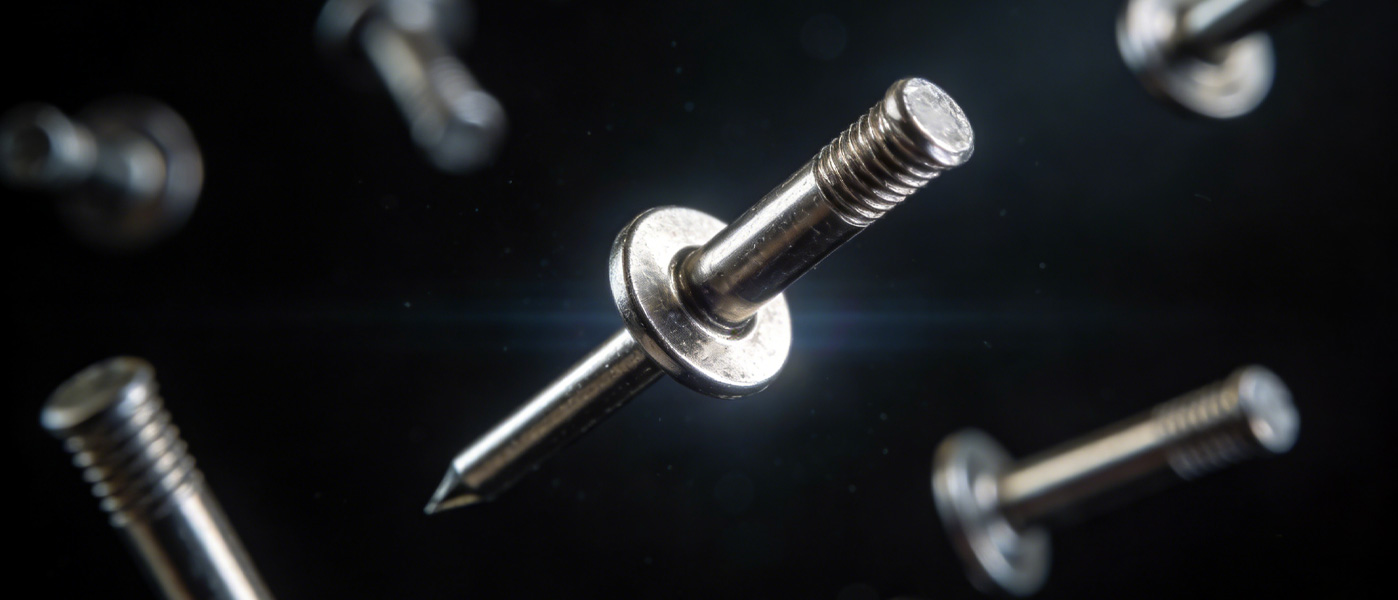
Installed over 1.2 million M8 full hex stainless steel rivet nuts into 1.5mm aluminum extrusions, achieving zero defect rates and 42Nm spin resistance.
Read Project Details →
Upgraded 316L stainless steel blind rivet nut configurations on high-corrosion chemical fluid conduit covers and outdoor monitoring enclosures.
Read Project Details →
Implemented flush-head knurled inserts on 0.8mm galvanized sheet panels, eliminating component jamming and improving production cycle times by 40%.
Read Project Details →Authoritative technical guides compiled by senior mechanical fastening specialists to assist manufacturing engineers in optimizing sheet metal joining.
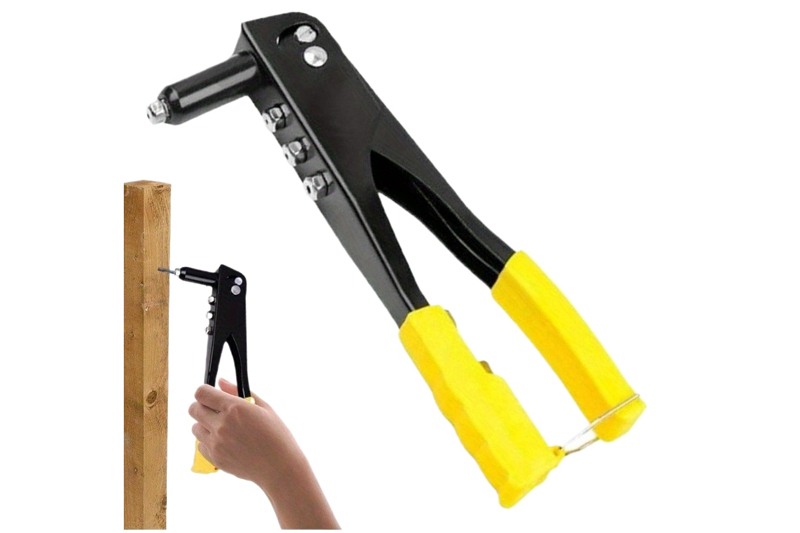
Air supply pressure balancing, stroke fine-tuning, and mandrel lubrication rituals that double tool life and safeguard thin sheet metal integrity.
Read Full Article →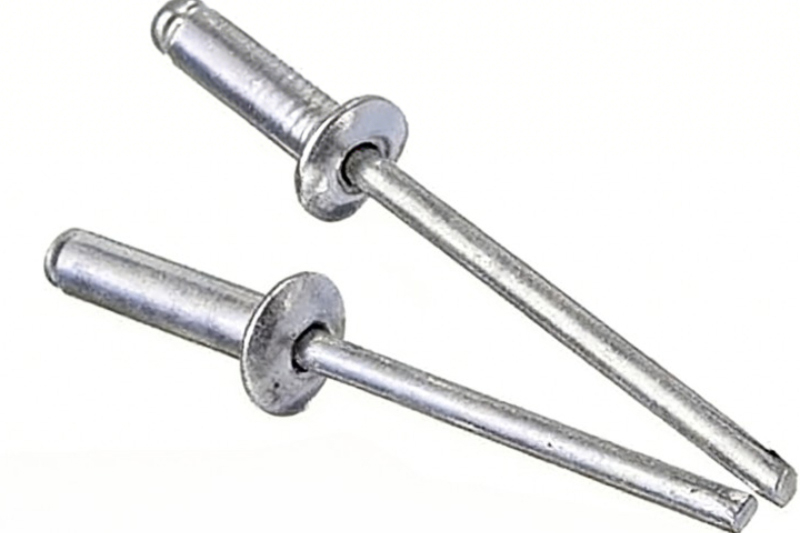
A thorough engineering breakdown contrasting structural monobolts, tri-fold aluminum anchors, and full hex threaded inserts under dynamic shear.
Read Full Article →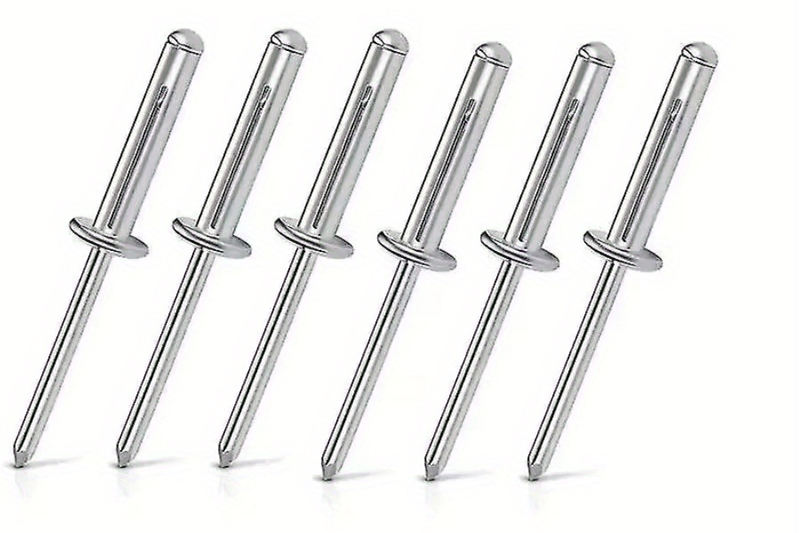
How engineers solve inaccessible hollow profile attachments, square tubing joining, and curved sheet constraints with threaded rivet nut inserts.
Read Full Article →Connect directly with our fastener metallurgical engineers for CAD models, grip range calculations, pilot hole tolerance recommendations, or custom OEM manufacturing quotes.
Explore our full range of professional grade steel, stainless steel, and aluminum threaded inserts manufactured to ISO 9001 and IATF 16949 automotive standards.
A premier high-precision industrial fastener manufacturer specialized in cold-formed blind rivets, heavy-duty structural fasteners, and threaded rivet nuts for thin sheet metals. Supplying automotive OEM, telecommunications, and green energy industries worldwide.


 Phone: +86 18651023616
 Email: aipllemetal@126.com