Leave Your Message
Engineered for seamless blind-side installation in photovoltaic racks, marine enclosures, and exposed industrial frameworks.
In modern civil, solar, electrical, and transport engineering, the demand for resilient structural assembly has accelerated the adoption of specialized threaded rivets (commonly referred to as blind rivet nuts or threaded inserts). Outdoor environments subject mechanical connections to aggressive atmospheric factors: continuous moisture ingress, chemical pollutants, extreme thermal cycling, UV radiation, and severe galvanic reaction potentials. Traditional joining methods—such as direct tapping into thin sheet metal, standard nut-and-bolt pass-throughs, or field welding—frequently exhibit critical failure modes in open-air conditions.
Direct tapping into thin structural members often leads to thread stripping under dynamic wind loads, while welding compromises factory-applied anti-corrosive coatings, initiating localized crevice and galvanic corrosion. The Threaded Rivet For Corrosion-Resistant Outdoor Joints addresses these challenges by delivering high-strength, load-bearing internal threads installed entirely from one accessible side of a profile, tubular post, or enclosed hollow section, preserving outer protective barriers while maintaining joint hermeticity.
As mega-scale solar utility farms, electric vehicle (EV) charging infrastructures, and coastal telecommunication base stations proliferate across remote terrains, fastening integrity dictates the operational lifecycle of billion-dollar assets. Engineers now specify high-grade austenitic stainless steel (A2/304, A4/316) and specialized nickel-alloy threaded rivets to eliminate maintenance overheads, stop galvanic degradation between dissimilar metals, and assure unyielding joint tension over multi-decade lifespans.
Atmospheric corrosion in outdoor joints manifests primarily in three distinct modes: uniform oxidation, localized pitting/crevice attack, and bimetallic (galvanic) cell reactions. Threaded rivets engineered for outdoor service mitigate these vulnerabilities through precise metallurgical composition and advanced surface passivations.
Formulated with 2-3% Molybdenum to prevent pitting caused by airborne chlorides in marine environments and de-icing highway salts. Provides superior yield strength in cyclic coastal dampness.
Monel and Inconel grade threaded inserts engineered for severe chemical processing facilities, marine splash zones, and offshore oil platforms requiring total resistance to stress corrosion cracking.
Carbon steel rivet nuts treated with electroplated Zn-Ni (12-15% Ni) plus nano-sealers, exceeding 1,000 to 1,500 hours of neutral salt spray exposure without forming red rust.
Galvanic Isolation Principle: When connecting aluminum sub-frames to steel brackets in outdoor solar canopies, threaded rivet nuts equipped with dielectric under-head sealing rings or cadmium-free passivations break the electrolytic path, halting galvanic current transfer and extending joint structural integrity beyond 25 years.
| Fastener Material / Coating | Tensile Strength (MPa) | Salt Spray (ASTM B117) | Key Outdoor Application Environments |
|---|---|---|---|
| 316 Marine Stainless Steel | 650 – 850 | 2000+ hrs No Red Rust | Coastal structures, marine docks, solar trackers |
| 304 Industrial Stainless Steel | 600 – 750 | 1000+ hrs No Red Rust | Architectural cladding, urban outdoor lighting, EV chargers |
| High-Performance Nickel Alloy | 800 – 1100 | 3000+ hrs Severe Exposure | Offshore oil & gas platforms, chemical exhaust mounts |
| Zinc-Nickel Plated Alloy Steel | 700 – 900 | 1200+ hrs Red Rust Free | Heavy commercial vehicle chassis, outdoor agricultural machinery |
The versatility of blind threaded rivets stems from their unique geometric deformation mechanism. When installed with pneumatic-hydraulic or intelligent cordless battery tools, the unthreaded shank collapses uniformly against the blind side of the parent workpiece, forming a wide, rigid secondary flange. This structure distributes clamp load across delicate or thin-walled surfaces without warping parent materials.
Utility-scale solar power plants are continuously exposed to dynamic wind buffeting, desert sand abrasion, and intense UV degradation. Threaded rivet nuts are installed inside roll-formed galvanized steel torque tubes and cold-rolled purlins. By providing pre-threaded anchor points for module clamps and sensor mounts without requiring rear-access wrenching, they streamline installation speed by up to 45% while preserving the zinc-galvanized coating on the inner tube walls.
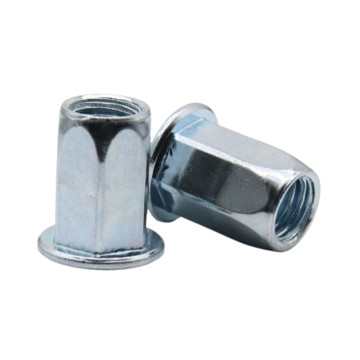
In offshore wind turbine transition pieces, harbor navigational aids, and coastal walkway balustrades, airborne salt mists cause catastrophic thread seizure in sub-standard hardware. Full hex rivet nuts manufactured from high-grade molybdenum-alloyed stainless steel eliminate the risk of spin-out during maintenance cycles, even when subjected to high-vibration wave pounding and salt-crust accumulation.
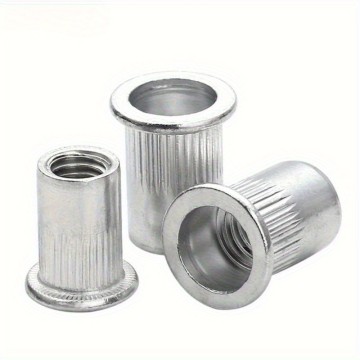
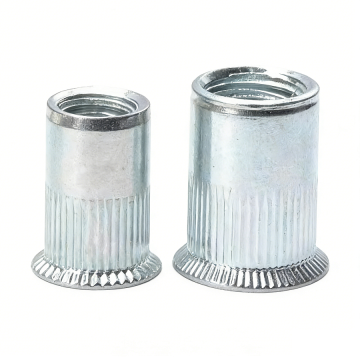
Cellular antenna mounting brackets, outdoor junction enclosures, and fiber optic splice cabinets mounted high on utility poles require zero-maintenance blind fasteners. Knurled body threaded rivets cut microscopically into the host hole walls, creating high friction resistance that counteracts torsional harmonics induced by extreme gale-force wind shears.
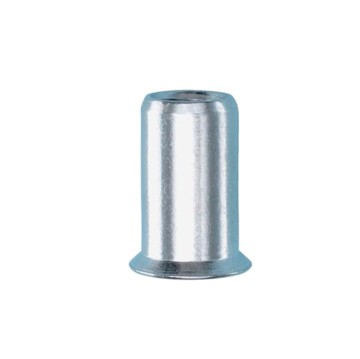
Architects specify countersunk head open-end and closed-end rivet nuts to attach composite panel clips, perforated decorative louvers, and curtain wall anchor plates. The countersunk head sits completely flush with the aluminum extrusion surface, preventing water pooling at joint seams and delivering an aesthetically flawless, modern exterior façade.
Trifold rivets are widely used in the automotive industry due to their unique structural advantages, and the specific applications are as follows:
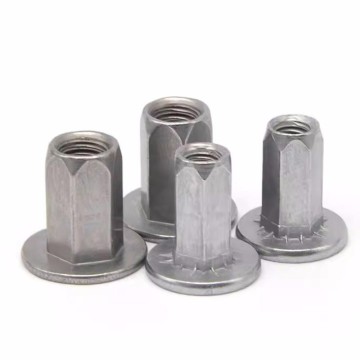
Lantern rivets are often used to connect components such as plastic instrument panels, interior trim panels and automotive interior decorations. These parts are mostly made of fragile or soft materials like plastics. The three folded feet formed after the riveting of lantern rivets can distribute the clamping force, avoiding damage to the riveted materials. Meanwhile, rivets with large caps can increase the riveting area and further disperse the riveting load.
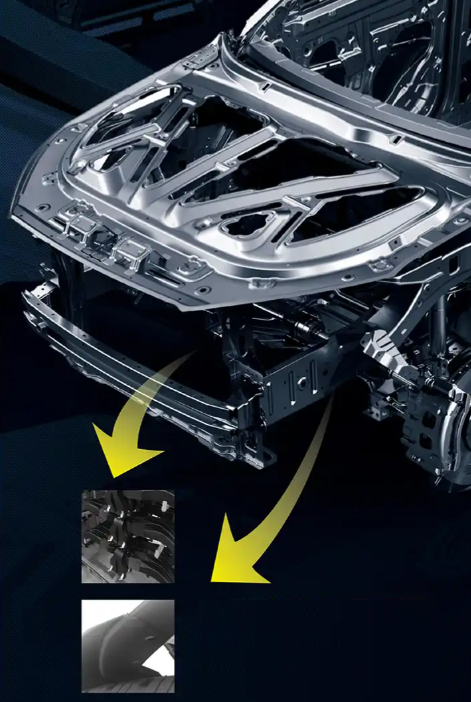
Lantern rivets are extensively applied in the assembly of automotive bumpers. They have good load - bearing capacity and stability, are suitable for connecting various metal and non - metal materials, and can meet the requirements of reinforced assembly between bumpers and vehicle body structures. In addition, lantern rivets are also used for fixing some automotive lamps, and their structure can provide reliable connection in vibrating environments.
In the automotive ventilation system, lantern rivets can be used to connect related components. The components of the ventilation system usually need to be connected with materials such as rubber and plastics, and the characteristics of lantern rivets make them well - adapted to these materials, ensuring the firmness and tightness of the connection.
Lantern rivets are also adopted for connecting the casings or brackets of electronic equipment inside the car, such as audio systems and on - board computers. They can realize the reliable connection of components like thin metal plates or plastic casings without damaging electronic components.
For some trucks or cars equipped with tarpaulins, lantern - type rivet nuts can be used to fix the tarpaulins. Their expanded structure has a large contact surface, which can fix the tarpaulins more firmly.
In structural design for outdoor joints, a blind threaded rivet must endure complex multi-axial static and dynamic load vectors. Three primary mechanical values determine the specification of the rivet geometry:
The ultimate tensile force required to pull the deformed rivet bulb straight out through the parent sheet. Flat head styles maximize rear bulb surface area, delivering optimal resistance against dynamic wind-uplift pressures.
The torsional threshold at which the installed rivet rotates within its prep hole during bolt tightening. Full hexagonal profiles keyed into laser-cut hex holes deliver near-unbreakable rotational lock compared to plain round bodies.
The capacity to withstand perpendicular transverse slicing forces induced by heavy traffic vibration, wind flutter, or seismic oscillations without neck shearing or thread ovalization.
For outdoor sealed enclosures (such as IP68 junction boxes and marine lighting enclosures), Closed-End Rivet Nuts provide a 100% blind-side hermetic barrier, preventing liquid ingress along the internal thread pitch directly into the delicate internal electronic circuitry.
The global transition toward lightweight renewable transportation and circular economy infrastructure is shifting fastener engineering parameters. In automotive and rail engineering, aluminum-intensive structures and carbon fiber reinforced polymers (CFRP) require corrosion-immune threaded inserts that do not induce micro-cracking during setting.
Furthermore, Industry 4.0 process monitoring is revolutionizing high-volume blind riveting. Modern automated setting tools now incorporate real-time force-distance displacement sensors. Each rivet installation curve is digitally logged and checked against quality algorithms, ensuring 100% perfect blind-bulb formation, correct clamping preload, and immediate detection of oversized drill holes or material misalignments in outdoor structural assembly lines.
Environmental regulations such as EU RoHS and REACH directives have accelerated the total phase-out of hexavalent chromium (Cr6+) passivations. Advanced trivalent chromium treatments, combined with organo-mineral silicate sealers and zinc-flake technologies, deliver up to 2,000 hours of neutral salt spray corrosion protection without environmental toxicity, setting a new benchmark for clean, sustainable outdoor fastening solutions.
Explore precision-engineered blind threaded inserts configured for severe outdoor, marine, industrial, and automotive environments.