
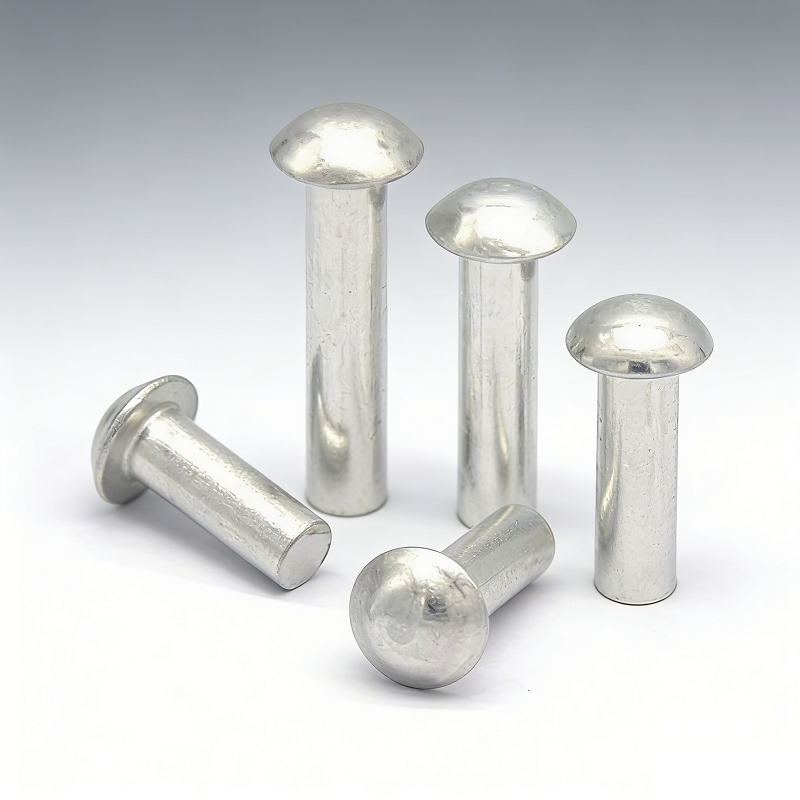
What is Aluminium Solid Rivet ?
-
Lightweight
Aluminum has a density of approximately 2.7 g/cm³, which is significantly lower than that of steel (7.8 g/cm³). This makes solid aluminum rivets ideal for applications where weight is a critical factor, such as in the aerospace, automotive, and light machinery industries. Using aluminum rivets helps reduce the overall weight of a product while maintaining high strength—a key advantage for industries focused on fuel efficiency or portability.
-
Corrosion Resistance
When aluminum comes into contact with air, a thin, protective oxide layer naturally forms on its surface. This oxide layer effectively prevents rust and corrosion, making aluminum solid rivets suitable for outdoor, marine, or high-humidity environments. To further enhance corrosion resistance, many aluminum solid rivets undergo anodizing, passivation, or powder coating, thereby extending their service life under harsh conditions.
-
High Strength and Durability
Despite their light weight, aluminum solid rivets made from suitable alloys still offer excellent shear strength and tensile strength. Different aluminum alloys (such as 1100, 2117, 2024, and 5056) can be selected based on the strength requirements of the application.
-
Permanence and Vibration Resistance
Once installed, aluminum solid rivets form a permanent connection. They remain extremely secure and do not loosen over time, even in high-vibration environments such as automotive engines or industrial machinery.
-
Easy Installation (Requires Proper Tools)
Although aluminum solid rivets require double-sided installation (requiring contact with both ends of the rivet simultaneously), the process is straightforward when using the correct tools. By using a rivet gun (pneumatic, hydraulic, or manual) in conjunction with a flanging tool to deform the shank of the rivet, a second rivet head is formed. This simplicity makes them ideal for mass production and on-site installation.