
What are Rivets in 2026?|Material ,Advantage and Application
In industrial manufacturing and assembly applications in 2026, rivets remain one of the most widely used and reliable permanent mechanical fasteners. They create a strong, non-removable connection by inserting a cylindrical body with a preformed head through aligned holes in the parts to be joined, then deforming the other end to form a second locking head. They serve as essential components in industries such as assembly, metalworking, furniture, DIY, and vehicle manufacturing.
1、Basic Definition of Open-End Rivets in 2026
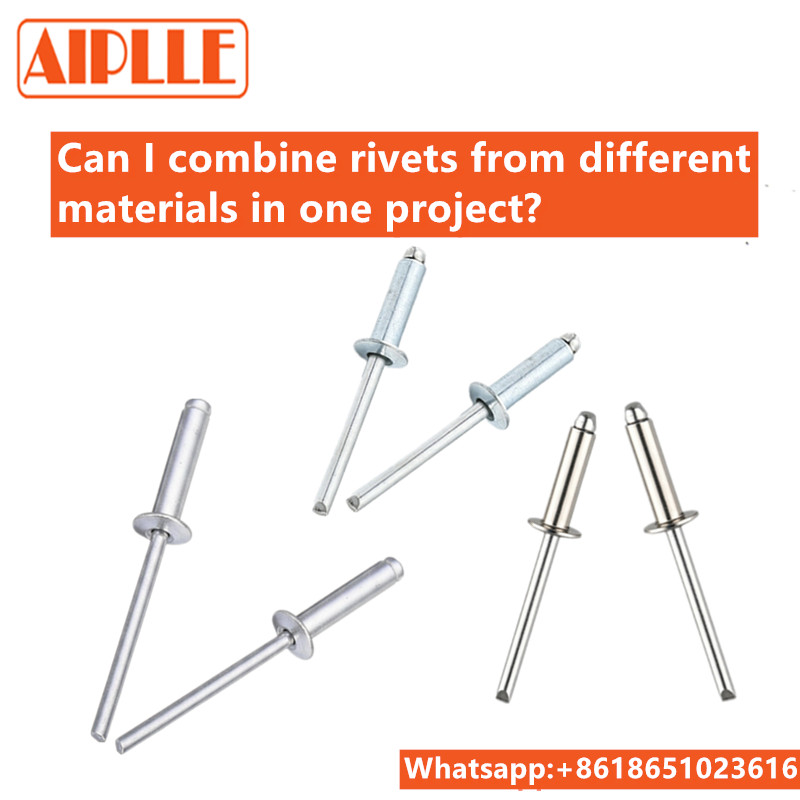
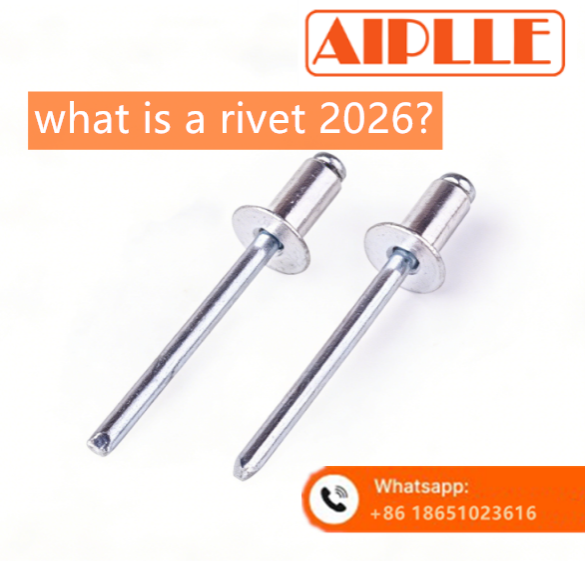
Open-end rivets, also commonly known as open-end pop rivets or pull rivets, are a type of rivet with a hollow structure, a slotted tail, and the ability to be installed from one side. It consists of two parts: the body and the mandrel. When the mandrel is tightened using a rivet gun, the tail end of the body expands outward, firmly clamping the sheet metal. Once the tail end of the mandrel reaches its yield point, it automatically breaks, completing the permanent fastening.
2、Aluminium Steel Open End Blind Rivets(features)
2.1. Material
pure aluminum or aluminum alloys, with common grades including 5050, 5052, and 5056 aluminum alloys, these products are lightweight and highly ductile. The mandrels are typically made of carbon steel to ensure riveting strength.
2.2. Advantage
● Lightweight, weighing over 60% less than iron rivets, making it ideal for lightweight assembly applications
● Excellent rust and corrosion resistance, suitable for humid and mild outdoor environments
● Smooth installation with minimal jamming, making them suitable for high-volume production on automated assembly lines
● Non-magnetic, making them suitable for magnetically sensitive products such as electronics, electrical appliances, and precision instruments
● Surfaces can be treated with galvanization, polishing, and other finishes for a more aesthetically pleasing appearance
2.3 Application
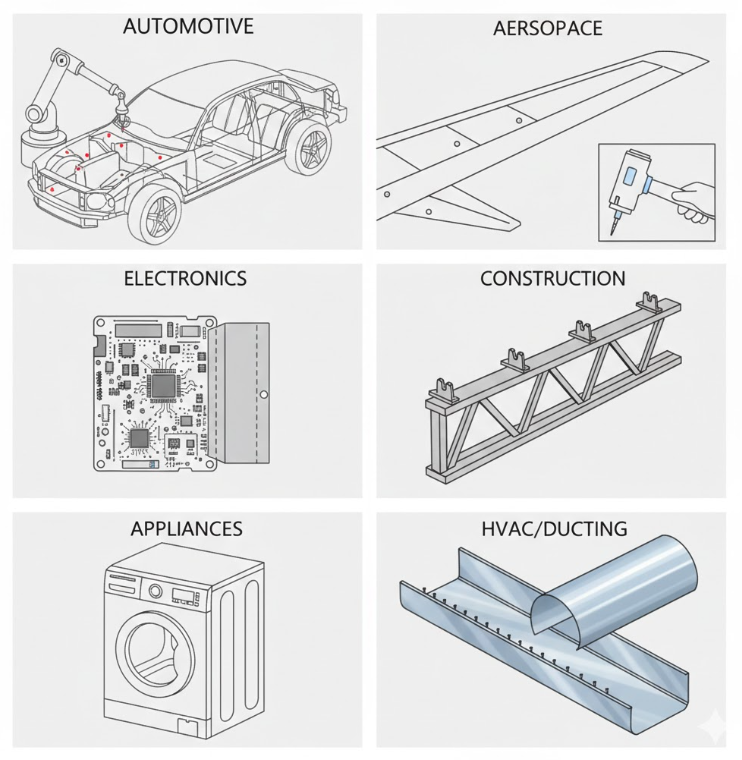
● Interior components for new energy electric vehicles, battery pack housings, and lightweight brackets
● Housings for home appliances, air conditioner panels, and metal enclosures for electronic devices
● Furniture hardware, aluminum profile frames, and lighting fixture assemblies
● Non-load-bearing lightweight structures such as aircraft interiors and rail transit interiors
For more professional rivets details,You can contact us