




Is it possible to undo screw and blind rivet connections?
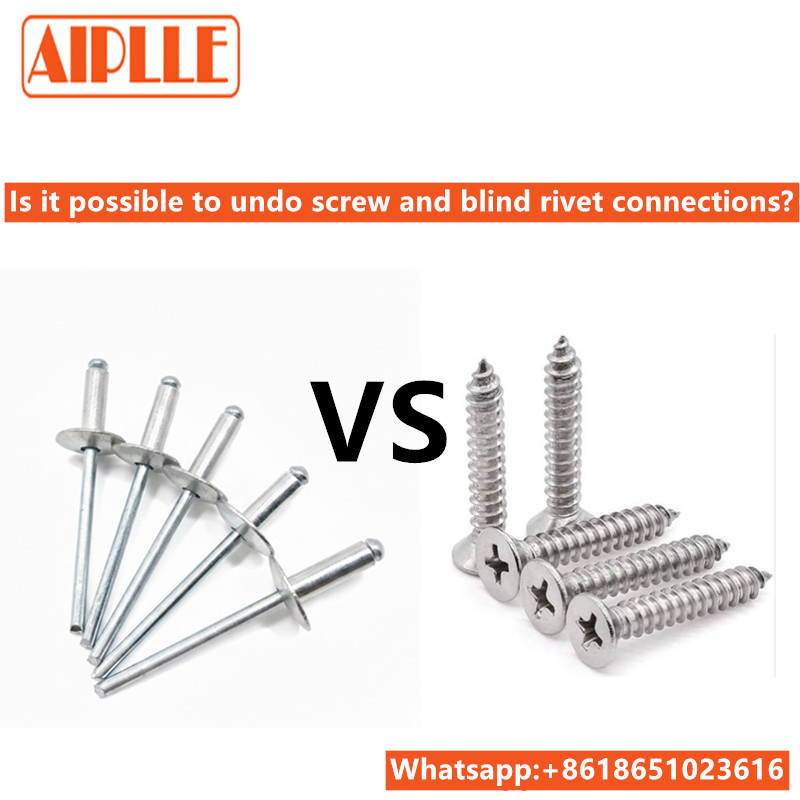
Is it possible to undo screw and blind rivet connections?Screw connections can normally be undone, while standard blind rivet joints are non-detachable.
Difference Between Screw Joints and Blind Rivet Connections
Screws have threaded features.
During blind rivet installation, the mandrel pulls the rivet body, expanding the blind side of the rivet behind the substrate
Why Standard Screw Connections Are Easy to Undo and Reuse
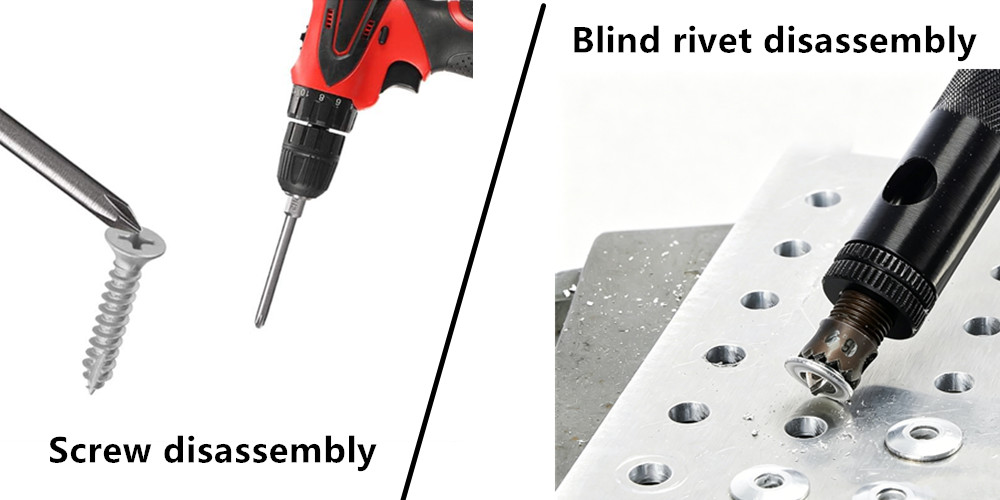
Standard screw connections utilise matching internal and external threads. As long as compatible screwdrivers, wrenches or impact tools are available, rotational force can separate the threaded engagement. No destruction to the screw body or base threads occurs in normal disassembly.
Can You Undo a Standard Blind Rivet Connection?
You can separate the workpiece joint, but you cannot undo a standard blind rivet in the true sense. Once installed, a regular blind rivet has a deformed blind head. The mandrel is either snapped off or locked inside the rivet barrel. There is no reverse operation to reshape the rivet body back to its original state. You are able to remove the blind rivet from panels, but the rivet itself will be destroyed in the process. Standard blind rivets are not designed for non-destructive disassembly. If your project requires frequent takedown, ordinary blind rivets are not a suitable solution.
Practical Methods to Remove Installed Blind Rivets
The most common method is drilling out the blind rivet. Select a drill bit matching the rivet body diameter, drill through the rivet head to break the clamping structure, then push the remaining rivet barrel out of the hole. Care is needed to avoid enlarging or damaging holes on thin sheet metal.
Reusability: Removed Blind Rivets vs Disassembled Screws
Reusability forms the clearest practical dividing line between the two fastener types. Disassembled screws that avoid thread stripping, bending or corrosion can be reinstalled many times. Many light assembly lines recycle undamaged standard screws to cut costs. Any standard blind rivet taken out from a joint becomes scrap. The expanded blind flange cannot return to its original tubular shape. Even if you manage to pull the rivet out intact, the deformed structure loses clamping capability. After removal, you must fit a brand-new blind rivet for re-assembly. This factor carries notable cost implications for after-sales service, prototype testing and product overhaul planning.
When to Choose Screws and When to Use Blind Rivets in Assembly
Choose blind rivets when you only have access to one side of the materials. Typical scenarios include cabinet fabrication, vehicle body panels, electrical enclosures and thin sheet metal structures, where the rear side stays unreachable. Bear disassembly requirements in mind at the design stage. If periodic takedown is required but only single-sided access exists, avoid ordinary blind rivets. Instead, shift to threaded fasteners or select specialised detachable blind rivet variants.
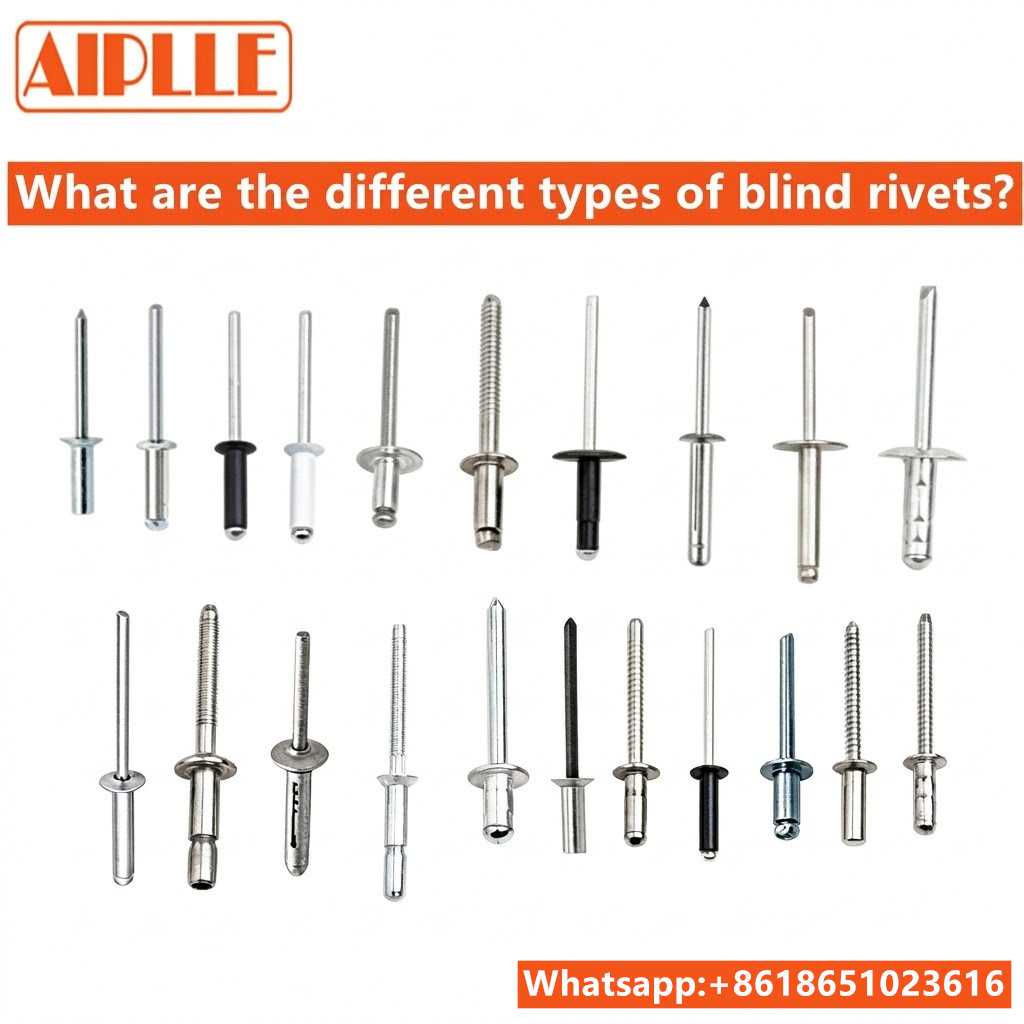
Special Type Blind Rivets Designed for Disassembly
Special blind rivets feature modified mandrel structures or split barrel designs. Operators can use specific tools to release the clamping tension without fully destroying the rivet body. It is important to highlight that detachable blind rivets differ greatly from conventional stock blind rivets. They come at a higher unit price, with smaller market availability. Most general hardware suppliers do not keep these products in regular stock. Engineers must specify this variant clearly at the design phase, as standard blind rivets cannot be converted into removable fasteners.
Common Mistakes When Trying to Undo Blind Rivet Joints
One frequent error is attempting to reuse drilled-out blind rivets. Once deformed, these rivets cannot deliver reliable clamping force, leading to loose joints, vibration failure or safety risks.