
Can I combine rivets from different materials in one project?
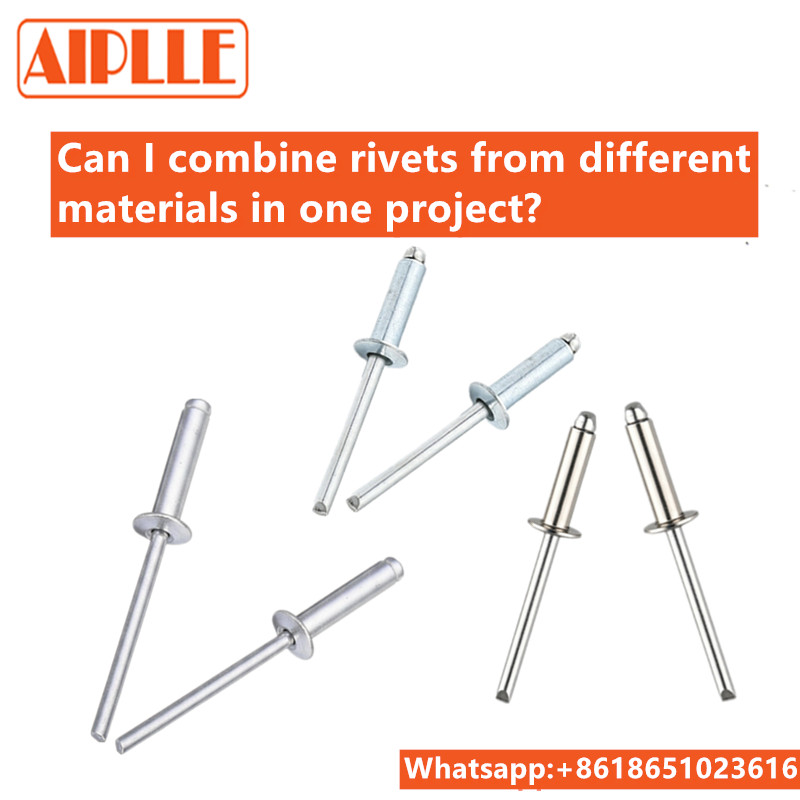
Anyone assembling metal frames, cabinets or sheet metal parts will ask the same question: Can I combine rivets from different materials in one project?
1. It’s easy to install mixed rivets, but that doesn’t mean it’s safe
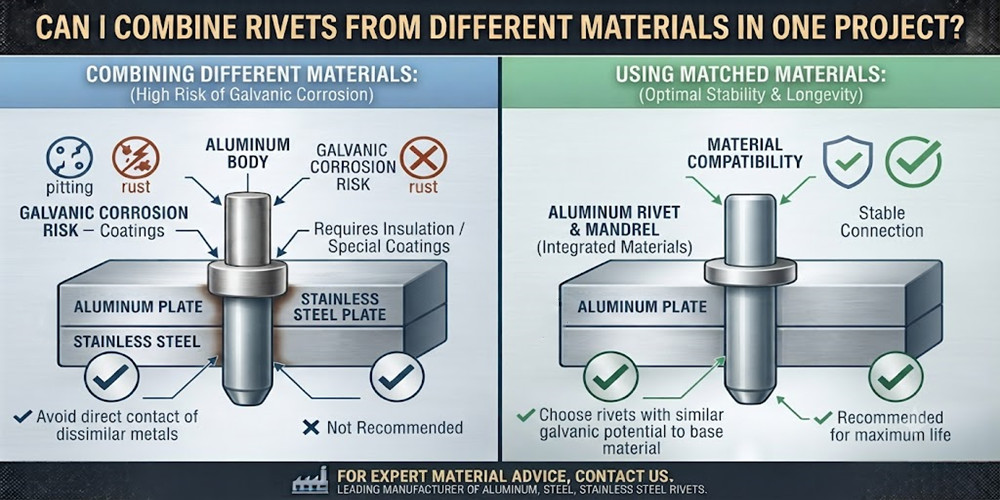
Most people think if the rivet fits, it’s fine to use. In reality, you can definitely install steel, aluminum and stainless rivets on the same project, but mixing materials often creates hidden problems that only show up weeks or months later.
1.1 Any rivet gun fits all rivet materials
Standard hand tools and pneumatic rivet guns work with almost all rivet types. There is no tool limitation when you switch between different rivet materials. That’s why many beginners assume mixed rivets are totally okay.
1.2 When mixing rivets is banned by project standards
Many official projects, outdoor structures and industrial assemblies strictly forbid mixed rivet materials. This is not about installation difficulty — it’s about long-term safety, stability and anti-rust performance. Once the project requires warranty or outdoor durability, mixing rivets is usually not allowed.
2. Other annoying issues from mismatched rivets
Rust is not the only problem. Mixed rivet materials also cause hidden structural issues that make your project less stable over time.
2.1 Uneven strength leads to loose connections
Steel, stainless and aluminum rivets have totally different hardness and tensile strength. When you use them together, some rivets bear more pressure while others deform easily. Uneven force makes joints loose after long-term vibration and usage.
2.2 Temperature swings loosen joints over time
Different metals expand and shrink at different rates when the temperature changes. In hot summer or cold winter, mixed rivets shift slightly differently. After repeated temperature changes, the fitting gap becomes bigger, and the whole assembly gets wobbly.
3. Cases where mixing rivets won’t cause big trouble
Mixing rivet materials is not always wrong. There are safe scenarios where it’s totally acceptable and won’t affect quality.
3.1 Dry indoor use with zero moisture
If your project stays indoors all the time with no dampness, no rain and no condensation, mixed rivets will not corrode easily. Daily indoor temperature changes are small and won’t damage your joints.
3.2 Short-term prototypes and temporary fixtures
For testing prototypes, temporary frames or short-term fixtures, mixing rivets is completely fine. These projects don’t need long-term durability, so hidden corrosion and slight looseness don’t matter.
3.3 Fully sealed assemblies protected from water
If your parts are fully painted, sealed or covered with waterproof layers, different rivet metals cannot touch moisture. The anti-rust risk is almost eliminated, so mixed rivets are usable here.
4. Easy fixes if you have to use different rivets
Sometimes you run out of one rivet type and have to use alternatives. Here are simple, practical ways to avoid problems.
4.1 Use insulating gaskets to separate metals
Put thin non-metal gaskets between different metals to block direct contact. This stops the electric corrosion reaction and prevents fast rusting.
4.2 Coat panels and rivets for extra protection
Paint, powder coat or anti-rust spray on your metal surface and rivets. The protective layer isolates moisture and greatly reduces material mismatch risks.
4.3 Pick rivets with close metal properties
If you must mix, choose materials with similar metal activity. For example, use stainless steel rivets with steel plates, avoid pairing soft active metals with hard stable metals.
5. Reliable matching combinations you can follow
Here are the most practical and stable rivet matching rules you can directly use for your project.
5.1 Best rivets to pair with aluminum sheets
Aluminum sheets work best with aluminum rivets. This matching ensures the same expansion rate, perfect fitting and zero extra corrosion. It is the most stable choice for aluminum structures.
5.2 Ideal rivets for carbon steel workpieces
Carbon steel or stainless steel rivets are the safest match for steel plates. They provide strong tension and avoid soft metal deformation.
5.3 Matching rivets for stainless steel panels
Always use stainless steel rivets on stainless panels. This combination keeps high hardness, anti-rust performance and long service life for outdoor and heavy-duty projects.
6. Quick tips before buying rivets in bulk
These simple tips help you avoid wrong material matching and save rework cost.
6.1 Outdoor heavy projects: stick to one rivet material
For outdoor, load-bearing, long-life projects, never mix rivet materials. Uniform material guarantees stable structure and long anti-rust life.
6.2 Simple checklist to check compatibility first
Before installation, quickly check: working environment (dry or wet), service life requirement, metal sheet material and load weight. This simple check avoids most mixed-material mistakes.
For more question ,you can link to