Leave Your Message
Explore our premier industrial blind threaded inserts optimized for atmospheric exposure, cyclic vibration, and maximum torque endurance in outdoor enclosures, marine frames, and renewable installations.
In contemporary civil, energy, and transportation infrastructure, outdoor bolted joints confront relentless ecological stress. Atmospheric moisture, airborne saline particulates, thermal cycling between -40°C and +85°C, ultraviolet radiation, and acidic precipitation continually challenge joint integrity. Historically, industrial structural design relied heavily on conventional through-bolts with standard lock washers, welded cage nuts, or direct sheet tapping. However, as thin-walled metal sheets, extruded aluminum profiles, hollow rectangular steel tubes, and lightweight composites become the standard for outdoor engineering, traditional assembly methods rapidly reveal insurmountable engineering limitations.
Tapping into thin metal sheet profiles generates insufficient thread engagement, leading directly to thread stripping under moderate wind-load vibrations. Welded nuts destroy pre-applied galvanized or cathodic dip coatings, burning away the protective passivation layer and creating localized micro-galvanic cells that precipitate premature rust. Meanwhile, through-bolting requires double-sided technician access—an impossible condition when fastening into sealed hollow structural sections (HSS), tubular solar purlins, street light poles, or airtight telecom transceiver masts.
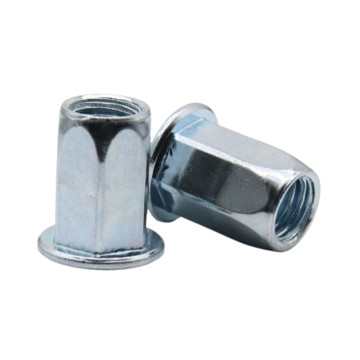
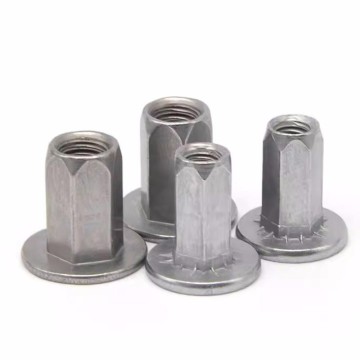
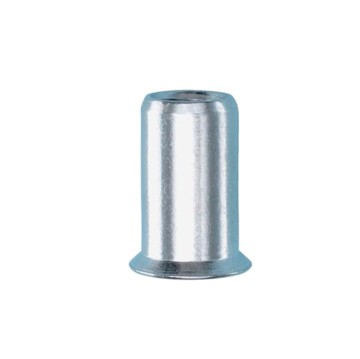
This industrial reality has propelled the rapid global adoption of the Hex Rivet Nut for corrosion-resistant outdoor joints. By installing entirely from one side (blind installation) into a pre-punched or laser-cut hexagonal aperture, hex rivet nuts introduce a permanent, high-strength internal thread. Crucially, the geometric hexagonal design eliminates the single greatest point of failure associated with round-body blind fasteners: rotational spin-out during high-torque bolt tightening or dynamic shear oscillations.
Unlike cylindrical or knurled inserts that rely purely on friction fit, the hex body locks directly against the six straight walls of the hexagonal hole. This form-fit geometry provides up to 300% higher torque-to-turn resistance, completely neutralizing spin-out failure during field assembly or servicing.
Because hex rivet nuts are cold-deformed via hydraulic-pneumatic pull mandrels, no thermal heat input occurs. The base metal's anti-corrosion barrier—whether hot-dip galvanizing, powder coating, or anodizing—remains 100% intact without spatter, scorch marks, or zinc burn-off.
Blind installation slashes total factory cycle times and jobsite labor expenditures. A single field operator equipped with an automated or battery-powered spin-pull riveting tool can set a durable structural thread in under three seconds with repeatable stroke and load consistency.
Achieving a durable 25- to 50-year design life for outdoor bolted joints requires a thorough understanding of metallurgical compatibility and electrochemistry. When a metallic joint is exposed to electrolytic solutions (rainwater infused with sodium chloride or industrial airborne nitrates), dissimilar metals generate galvanic potential differentials. If left unchecked, this voltage difference accelerates galvanic corrosion, transforming the fastener or adjacent substrate into a sacrificial anode.
To withstand these aggressive conditions, our hex rivet nut architectures utilize specific metallurgical grades and surface finishes engineered to eliminate galvanic degradation and pitting:
For temperate coastal installations, offshore maritime platforms, and chemical manufacturing zones, Marine Grade AISI 316/316L stainless steel remains the gold standard. Containing 16–18% Chromium, 10–14% Nickel, and crucially 2–3% Molybdenum, Grade 316 forms an instantaneous chromium-oxide passive film that specifically resists localized pitting and crevice corrosion caused by chloride ions. Cold-formed with tight hexagonal tolerances, our stainless hex rivet nuts deliver unyielding mechanical tensile integrity across high-humidity coastal zones.
In extreme heavy-industrial environments containing sulfur dioxide gas emissions, geothermal condensation, or hot splash zones, our High-Performance Nickel Alloy Full Hex Rivet Nuts provide unmatched metallurgical inertness. The nickel matrix prevents chloride-induced stress corrosion cracking (SCC) while maintaining stable load retention up to elevated thermal thresholds where standard ferritic materials undergo embrittlement.
| Material / Treatment Variant | Atmospheric Classification | Salt Spray Resistance (ISO 9227) | Primary Joint Application Scene |
|---|---|---|---|
| AISI 316 (A4) Marine Stainless | C4 High to C5-M Very High Marine | 1,500+ Hours (Zero Red Rust) | Coastal Solar PV, Harbor Cranes, Offshore Enclosures |
| AISI 304 (A2) Commercial Stainless | C3 Medium to C4 High Urban/Rural | 800+ Hours | EV Charging Stations, Architectural Facades, Traffic Signage |
| Zinc-Nickel (Zn-Ni 12-15%) + Passivation | C4 Industrial / Highway Deicing | 1,200+ Hours to Red Rust | Commercial Vehicle Undercarriages, Highway Crash Barriers |
| Nickel-Base Superalloy (Inconel Type) | Extreme Chemical / C5 Marine Severe | 3,000+ Hours Extreme Exposure | Desalination Plants, Geothermal Wellheads, Chemical Vents |
The practical deployment of hex rivet nuts spans mission-critical outdoor engineering sectors where structural failure is not an option. Below is an exhaustive technical breakdown of key application environments.
Modern solar tracker systems use large, rotating structural tubes (square, hexagonal, or octagonal profiles) that bear the dynamic wind and gravity loads of dozens of photovoltaic modules. Installing module clamping brackets and digital sensor enclosures onto these sealed steel torque tubes requires one-sided blind installation. When high wind gusts strike the array, vortex shedding induces extreme cyclic twisting loads into every single bolted connection. Standard round rivet nuts inevitably spin free inside their mounting holes over time, causing electrical disconnects or catastrophic module detachment. By utilizing closed-end or open-end Full Hex Rivet Nuts seated in laser-cut hex holes, the joint gains positive mechanical interlock. The fastener easily endures over 60 Nm of torque without micro-slipping, ensuring tracker components remain rigidly bound through decades of wind flutter and thermal baking.
Telecommunications hardware installed on mountaintops, coastal water towers, and cellular monopoles is perpetually subjected to severe marine atmospheres laden with salt aerosol. Remote Radio Units (RRUs), multiplexers, and 5G beamforming antenna arrays are mounted onto tubular steel and extruded aluminum brackets. Weight optimization requires thin-gauge sheet enclosures (1.5mm to 3.0mm thickness). Threading into such thin material cannot support the wind loads of heavy radio heads. Stainless Steel A4-70 hex rivet nuts inserted into the extruded aluminum or galvanized steel struts provide robust, deep female metric threads (M6 to M12). When paired with non-conductive dielectric isolating washers or zinc-rich sealants, the hex rivet nut completely mitigates galvanic corrosion between the aluminum frame and the stainless steel bolt, maintaining signal antenna alignment and preventing costly tower climbs for repairs.
Electric vehicle DC fast-charging terminals and municipal power grid substations operate outdoors 365 days a year under ambient temperature extremes, road de-icing salt sprays, and driving rain. These systems require strict NEMA 4X and IP66/IP67 weatherproofing to protect sensitive high-voltage electronics. Using Closed-End Full Hex Rivet Nuts creates an airtight, watertight threaded blind well. Water, moisture, and road contaminants cannot travel down the interior core of the bolt thread into the electrical compartment. Furthermore, high-voltage maintenance doors and cable management anchors can be unscrewed and re-torqued hundreds of times during scheduled preventative maintenance without stripping the internal thread or dislodging the nut.
In modern civil architecture, perforated aluminum panels, terracotta cladding, and transparent acoustic sound walls along busy highway corridors require completely concealed structural fixings. Noise barriers along interstates are constantly blasted with high-pressure air wakes from heavy freight trucks as well as winter chemical de-icing solutions (calcium chloride / rock salt). Countersunk head knurled and hex rivet nuts allow mounting flush against the backplate surface, eliminating protruding bolt heads that could interfere with thermal expansion gaps. The mechanical grip resists dynamic acoustic vibrations, safeguarding urban highways against component fatigue and joint loosening.
As the industrial manufacturing sector embraces Industry 4.0 principles, the specification and application of hex rivet nuts are evolving along three clear technological pathways:
High-volume battery module casing and solar frame fabrication lines are transitioning rapidly to robotic arm integration. Automated vibratory bowl feeders orient hexagonal rivet nuts directly into automated robotic setting heads, achieving sub-second cycle installations with zero operator fatigue.
Next-generation smart electric setting tools incorporate real-time transducer feedback to record both stroke length (mm) and pull force (kN) curves during the deformation of each hex rivet nut. Any out-of-tolerance condition (such as an oversized hex hole or misaligned insert) triggers instant digital rejection.
Environmental regulations (such as EU RoHS and REACH) have catalyzed the development of trivalent chromium and non-electrolytic zinc flake nano-coatings. These modern coatings deliver over 1,500 hours of neutral salt spray resistance with total elimination of hydrogen embrittlement risks.
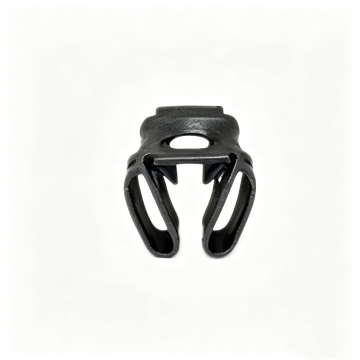
Lantern rivets are often used to connect components such as plastic instrument panels, interior trim panels and automotive interior decorations. These parts are mostly made of fragile or soft materials like plastics. The three folded feet formed after the riveting of lantern rivets can distribute the clamping force, avoiding damage to the riveted materials. Meanwhile, rivets with large caps can increase the riveting area and further disperse the riveting load.
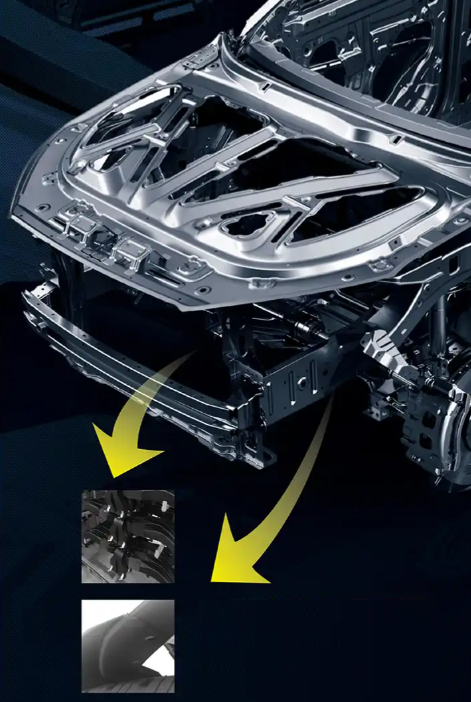
Lantern rivets are extensively applied in the assembly of automotive bumpers. They have good load - bearing capacity and stability, are suitable for connecting various metal and non - metal materials, and can meet the requirements of reinforced assembly between bumpers and vehicle body structures. In addition, lantern rivets are also used for fixing some automotive lamps, and their structure can provide reliable connection in vibrating environments.
In the automotive ventilation system, lantern rivets can be used to connect related components. The components of the ventilation system usually need to be connected with materials such as rubber and plastics, and the characteristics of lantern rivets make them well - adapted to these materials, ensuring the firmness and tightness of the connection.
Lantern rivets are also adopted for connecting the casings or brackets of electronic equipment inside the car, such as audio systems and on - board computers. They can realize the reliable connection of components like thin metal plates or plastic casings without damaging electronic components.
For some trucks or cars equipped with tarpaulins, lantern - type rivet nuts can be used to fix the tarpaulins. Their expanded structure has a large contact surface, which can fix the tarpaulins more firmly.
To guarantee that a corrosion-resistant hex rivet nut reaches its full theoretical mechanical and chemical performance envelope in outdoor service, strict adherence to hole preparation tolerances and tooling calibration is mandatory.
The anti-rotation advantage of a hex rivet nut is directly dependent on the dimensional fidelity of the parent hole. While laser-cutting and CNC punching are the preferred industrial fabrication methods for sheet metal, the across-flat (AF) clearance must be kept within strictly defined limits (+0.10mm / +0.15mm maximum). An oversized hexagonal hole reduces corner-to-corner surface contact, substantially degrading maximum torque-to-turn limits.
When setting stainless steel or nickel alloy hex rivet nuts, pneumatic-hydraulic spin-pull tools operating in "Force Control" mode should be utilized over pure stroke-based tools. Because sheet metal thickness tolerances can fluctuate by ±10%, force-controlled installation ensures the rivet nut's forming bulb collapses with identical clamping tension on every single joint cycle, completely preventing under-setting or stripped threads.
Engineered for demanding engineering environments—from industrial outdoor joints and marine assemblies to precision automotive systems. Click below to view detailed dimensional specifications, cad models, and technical data sheets.