
Leave Your Message
Engineered blind fasteners and threaded inserts delivering robust mechanical integrity across sheet metal fabrications.
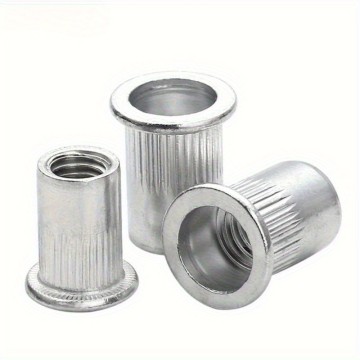
In modern industrial sheet metal fabrication, achieving high-integrity internal load-bearing threads in thin-walled profiles without compromising the substrate's metallurgy has long challenged production engineers. The Flat Head Rivet Nut (frequently designated as a flat head blind threaded insert or nutsert) stands at the forefront of this industrial transformation. By providing single-sided blind installation capability, flat head rivet nuts eliminate the need for tapping fragile thin sheet metals, welding clinch nuts, or tapping extrusions.
The global metal fabrication landscape is experiencing rapid modernization characterized by the continuous adoption of high-strength alloys, hydroformed tubing, composite sandwiches, and pre-coated galvanized metals. Traditional thermal joining processes like spot welding introduce excessive heat-affected zones (HAZ), weld spatter, warping, and surface oxide contamination that require costly secondary grinding and re-coating operations.
The rapid shift toward lightweight vehicular structures, modular renewable energy racking, and compact electronic enclosures has propelled the compound annual growth rate (CAGR) of industrial blind inserts above 5.8%. Fabricators demand fasteners that integrate seamlessly into automated robotic assembly cells while meeting stringent tensile, push-out, and torque-out thresholds.
Why the wide-flange flat head geometry outperforms low-profile and countersunk configurations in heavy-duty load-bearing assemblies.
The prominent flat head flange creates a substantial clamping footprint across the host material. This wide surface contact distributes axial tensile loads evenly, preventing pull-through failures in ductile metals, soft aluminum extrusions, and fiber-reinforced composite sheets.
Equipped with diamond or straight knurled body profiles (or full hexagonal shanks), flat head rivet nuts bite aggressively into parent metal walls during radial expansion. This geometric interlock prevents fastener rotation during high-torque machine screw tightening.
The controlled collapse of the unthreaded counterbore forms a robust, uniform bulb ring on the blind reverse side. This cold-formed secondary shoulder acts as an immovable mechanical stop against reverse axial loads, high vibration, and cyclic shock forces.
Exploring critical implementations from high-volume automotive production to solar infrastructure and precision electronics.
Lantern and flat head rivet fasteners connect fragile plastic instrument clusters, door cards, and decorative trims. The broad footprint distributes clamping pressure safely across brittle synthetic resins, preventing crack propagation while maintaining repeatable serviceability.
Applied extensively in front/rear bumper frameworks, radiator cowlings, and dynamic aerodynamic underbody shields. Their robust pull-out load profiles guarantee joint stability under severe road vibrations and heavy thermal expansion cycles.
Ventilation manifolds require airtight mechanical connections across disparate materials including stamped sheet steel, synthetic elastomeric seals, and molded plastics. Flat head blind fasteners prevent air leaks while damping resonance vibrations.
High-reliability fastening of on-board telematics units, infotainment chassis, and ECU brackets. Blind threaded inserts install securely into thin dashboard subframes without producing conductive metal debris or damaging sensitive PCB modules.
For heavy freight trucks and utility pickups with heavy tarpaulin covers, flat head expanding rivets offer oversized contact clamping, eliminating sheet tear-out during extreme aerodynamic wind shear at highway speeds.
In photovoltaic tracker arrays and outdoor battery energy storage systems (BESS), zinc-nickel or stainless steel flat head rivet nuts furnish permanent grounding-capable threads directly into galvanized hollow steel tubes and aluminum purlins.
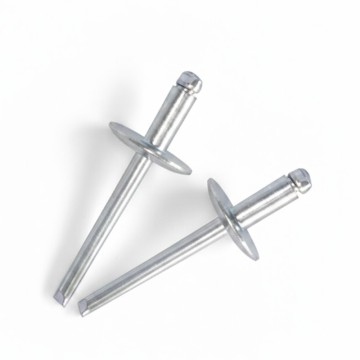
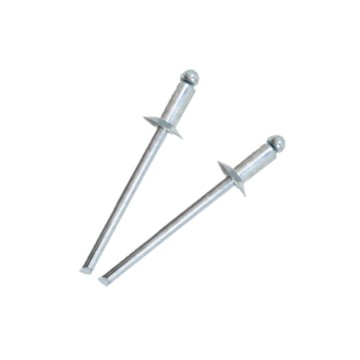
Trifold rivets and open-end knurled flat head rivet nuts are widely deployed across precision vehicular assembly lines owing to their unique multi-segment mechanical expansion. When setting in softer sheet materials, the clamping force is evenly dispersed across 360 degrees, mitigating stress concentration and preventing punch rupture or localized panel deformation.
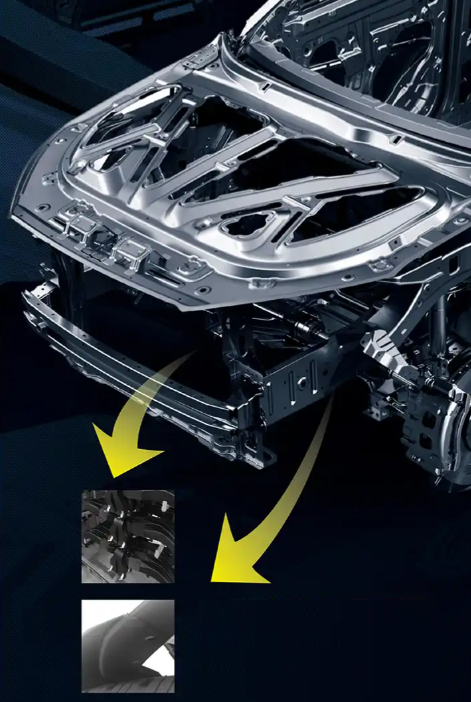
Evaluate structural performance, cost efficiency, and operational parameters across modern metal joining techniques.
| Joining Method | Access Requirement | Thermal Distortion / HAZ | Post-Finish Compatible | Torque Retention | Assembly Speed |
|---|---|---|---|---|---|
| Flat Head Rivet Nut | Single-Sided (Blind) | Zero (Cold Install) | 100% Post-Paint Safe | High (Knurled/Hex) | < 2.5 Seconds |
| Welded Cage Nut | Two-Sided / Fixture | Severe Thermal HAZ | Requires Pre-Weld Stripping | High | 15 - 30 Seconds |
| Clinch / Press Nut | Two-Sided Direct Access | Zero | Moderate Risk to Coating | Medium to High | 4 - 8 Seconds |
| Direct Sheet Tapping | Single-Sided | Zero | Compatible | Very Poor in Thin Sheet | 3 - 5 Seconds |
Trivalent blue-white zinc (Cr3+), yellow zinc, or high-end Zinc-Nickel electroplating. Ideal for automotive chassis, general enclosure frames, and industrial machinery where cost-effectiveness and high shear strength are mandatory.
Outstanding austenitic corrosion resistance suitable for marine environments, offshore wind platforms, chemical processing skids, and clean-room medical electronic housings requiring zero oxidative leaching.
Super lightweight solution engineered specifically for EV battery packs, aerospace cabin brackets, and architectural curtain walls, preventing galvanic cell corrosion when mating with aluminum profiles.
Transitioning from manual pneumatic tools to closed-loop digital insertion monitoring.
The transition toward smart fabrication facilities has revolutionized rivet nut installation. In automated production environments, flat head rivet nuts are fed via bowl feeders directly into end-of-arm robotic toolheads on 6-axis articulation arms.
Modern smart setting systems monitor both stroke displacement and pulling force in real time. If a sheet thickness variation, misaligned hole, or missing thread occurs, the digital controller instantly flags the deviation, guaranteeing zero-defect quality assurance under IATF 16949 and ISO 9001 protocols.
Explore our full line of precision blind rivets, heavy flange inserts, and knurled rivet nuts engineered for global metal fabricators.
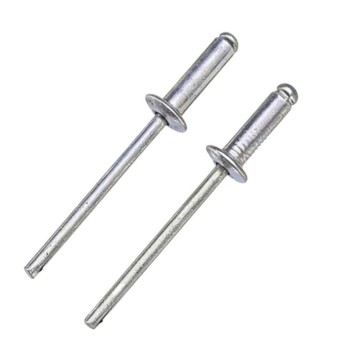
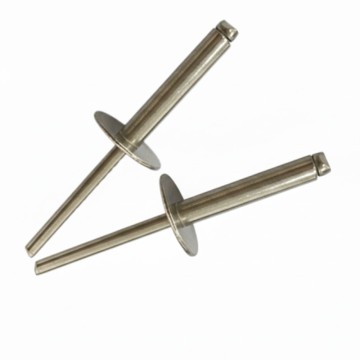
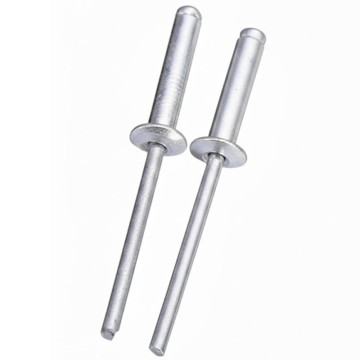
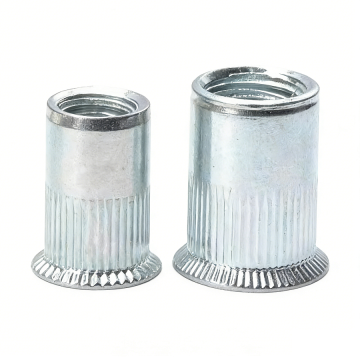
As manufacturing trends emphasize lightweight structural designs, circular economy disassemblies, and total elimination of hazardous chemical pre-treatments, flat head rivet nuts provide an unmatched technological bridge. With exceptional mechanical repeatability, compatibility with advanced composite and multi-metal hybrid joints, and full integration into Industry 4.0 automated lines, these high-performance fasteners remain fundamental to the advancement of next-generation metal fabrication worldwide.