Leave Your Message
0%

When you're picking between tri-fold rivets and pop rivets, it's not just about which one looks stronger on a chart. The better choice really comes down to things like material thickness, how clean the hole is, access, vibration, and which way the load is pulling. A rivet that holds up great in a steel bracket might start loosening up in soft plastic. And honestly, that's the kind of thing you usually only learn once you're in the middle of a real project.

As fastener consultant Bill Eccles has said more than once, it really pays to match the fastener to the joint. His point? “The joint design must come before the fastener choice.” That kind of down-to-earth thinking is what shapes this comparison. Both rivet types go in from just one accessible side, which is handy. But once they’re set, they form different shapes on the back and spread force in their own ways. Tri-fold rivets, for instance, open up into three wide legs—and that can help spread pressure across delicate panels. So, standard pop rivets tend to give you a tighter, more concentrated grip. That's often a good match for metal sheets and everyday assembly jobs.

And honestly? Fit matters. But so does consistency—you can't skip that part.

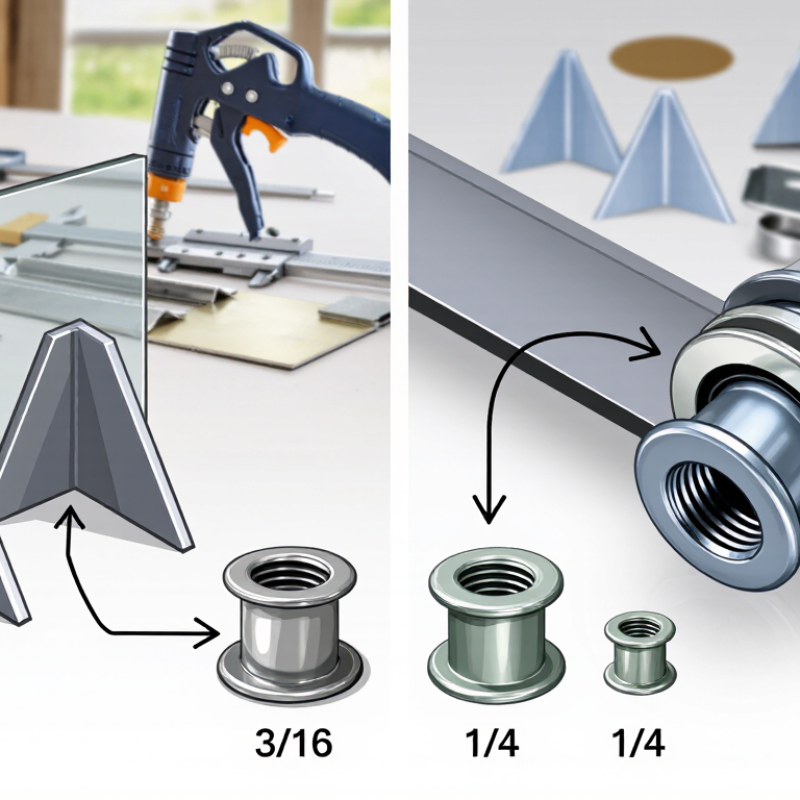
This guide breaks down the top ten performance factors—stuff like holding power, panel damage, grip range, installation effort, vibration resistance, and removal. It also takes a look at 3/16" / 1/4" Tri-Fold Pop Rivets for jobs that need a larger fastening diameter. Those sizes might seem pretty similar at first, but their body shape and how they expand can actually give you different results. Product names aren't always perfectly consistent from one supplier to the next—and honestly, that's worth questioning. Before you install anything, it's a good idea to double-check the manufacturer's specs, material compatibility, and the actual grip length. Even a small mismatch can leave you with a loose head, a crushed panel, or uneven clamping force. And let's be real: no single rivet wins every test. The right choice is the one that protects the joint under the conditions it'll actually be working in.
Top 10 Tri Fold Rivets Vs Pop Rivets Which Is Better?

Define Tri-Fold and Pop Rivets Using ISO 14589 Testing Terms

Top 10 Tri-Fold Rivets Vs Pop Rivets Which Is Better?

Tri-Fold Rivets and pop rivets are both blind fasteners installed from one side. Their bodies deform behind the joint, but they create different support patterns. A standard pop rivet usually forms a compact blind head. A Tri-Fold Rivet splits into three broad legs. These legs spread across the rear sheet, almost like a small metal tripod.

ISO 14589 testing terms help separate appearance from performance. Tensile strength measures how much axial force pulls the rivet from the joint. Shear strength measures resistance when joined sheets slide sideways. Mandrel retention checks whether the internal stem stays captured after installation. Head pull-through testing examines whether the rivet head passes through the material. These results matter more than a quick visual inspection.

In thin, soft, or slightly flexible panels, the wider Tri-Fold Rivets load distribution can reduce local crushing. The three rear legs may also grip uneven surfaces more gently. A conventional pop rivet can be preferable when the sheets are firm and the hole is accurately prepared. It often gives a cleaner, more predictable deformation.

The choice is not automatic.

Material thickness, hole clearance, grip range, and tested load direction can change the result. A rivet with high tensile strength may still perform poorly in shear. That mistake happens often. ISO 14589 results should be compared using similar specimens and installation conditions. Real assemblies also deserve a practical check, because laboratory loading cannot reproduce every vibration, gap, or installation error.

Classify the Top 10 Rivets by Diameter, Grip Range, and Head Design

Tri-fold rivets and pop rivets serve different fastening needs.
Diameter, grip range, and head design usually matter more than the name on the package. In practical workshop testing, the ten most useful categories include 2.4 mm standard open-end rivets, 3.2 mm standard rivets, 4.0 mm multi-grip rivets, 4.8 mm multi-grip rivets, and 4.8 mm tri-fold rivets. Smaller diameters suit thin sheet metal. Larger diameters provide stronger load support. Grip ranges must match the combined material thickness.

The remaining five categories are 6.4 mm structural rivets, 4.8 mm closed-end rivets, 3.2 mm countersunk rivets, 4.8 mm large-flange rivets, and 4.8 mm peel-type rivets.

Tri-fold designs open into three broad legs behind soft or brittle panels, spreading pressure over a wider area. They are useful for plastic, fiberboard, and thin composite sheets. Standard pop rivets create a tighter, smaller expansion and suit overlapping metal sheets. Closed-end heads resist moisture entry. Countersunk heads leave a flatter surface. Large-flange heads reduce pull-through on weak panels.

Measure twice. Drill once.

In field repairs, a 4.8 mm tri-fold rivet often holds better than a standard rivet in soft material, even with a similar diameter. However, it may not suit high-vibration joints. A structural rivet can perform better there, but it usually needs accurate hole sizing and stronger installation tools. I once selected by diameter alone and underestimated the grip range. The joint looked secure, yet the rear sheet remained loose. Manufacturer charts and a small test assembly remain more reliable than visual judgment.

Compare Shear and Tensile Strength with ISO 14589 Test Data

Tri-fold rivets and conventional pop rivets behave differently under ISO 14589 testing. The standard measures axial tensile failure and transverse shear failure under controlled loading. It does not assign one universal strength value. Diameter, alloy, grip length, and joint design change the result.

Published fastener data reviewed through ISO 14589:2013 commonly shows 4.8 mm steel-body blind rivets reaching roughly 2.0–3.5 kN in shear. Their tensile results often range from 1.5–2.5 kN. Comparable aluminum tri-fold designs may produce lower nominal strength, often near 1.0–2.0 kN. However, their three expanding legs spread force across thin sheet. That matters on roofing panels, plastic liners, and soft composite materials.

A standard pop rivet concentrates more load around its formed head. It can perform better in dense metal joints with firm clamping surfaces. A tri-fold rivet leaves a broad rear footprint, reducing pull-through during tensile loading. Roofing Tri-Fold Rivets can therefore resist local sheet deformation more effectively, even when their catalog strength is lower.

The International Fastener Institute recommends reporting failure mode, not only peak load. That detail is easy to miss. A rivet may survive shear but tear the panel in tension. Field installation also changes results; oversized holes, short grip ranges, and uneven surfaces reduce strength. I would question any comparison that lists one “best” rivet without its ISO test geometry, material pairing, and failure location.

Analyze Load Distribution: Three-Leg Expansion Versus Mandrel Bulbing

Top 10 Tri Fold Rivets Vs Pop Rivets Which Is Better?

Load distribution often decides the better rivet. A tri fold rivet splits its sleeve into three legs behind the panel. These legs press against separate areas, creating a wider bearing footprint. That geometry can reduce local crushing in plastics, thin sheet, and lightweight sandwich panels.

A pop rivet forms one mandrel-driven bulb. Its force stays closer to the hole, which may improve consistency in rigid metal joints but can increase pull-through risk in soft materials.

NASA-RP-1228, the Fastener Design Manual, identifies bearing, shear-out, and tensile pull-through as separate joint failure modes. ASTM F606/F606M and ISO 14589 also require controlled tensile and shear testing rather than relying on nominal diameter alone.

In practice, grip length, hole clearance, panel thickness, and washer support can change results dramatically. FAA AC 43.13-1B commonly uses a minimum edge distance near two rivet diameters for conventional layouts. That is a useful reference, not a universal answer. My own engineering caution is simple: three legs do not guarantee three equal loads. Manufacturing variation can leave one leg carrying more force.

Tips: Test the actual panel stack. Record pull-through, head deformation, and joint slip. Use a backing washer when the rear sheet feels soft or flexible. Check the rivet’s tested grip range, not only its advertised diameter. A small mistake there can outweigh the design difference.

Evaluate Material Compatibility Using ASTM B117 Corrosion-Test Data

Top 10 Tri Fold Rivets Vs Pop Rivets: Which Is Better?

ASTM B117 testing helps compare corrosion behavior between tri fold rivets and pop rivets. However, salt-spray hours are not direct predictions of outdoor service life. A reliable report should identify the rivet material, mandrel material, coating, test duration, and corrosion rating.

Red rust, white corrosion, blistering, and surface creep deserve separate attention. Do not compare two products using hours alone.

Material compatibility often decides the result. A steel rivet joined to aluminum may create galvanic corrosion when moisture and salt are present.

Tri fold rivets spread their legs behind thin panels, reducing local pull-through. Their larger contact area can also hold moisture around the joint.

Pop rivets may perform better when their coating matches the parent metal. Open-end designs can expose the mandrel and internal cavity, while sealed designs offer different moisture resistance. Small details matter.

A practical inspection should examine the drilled hole, washer area, and rivet underside after testing. ASTM B117 data becomes more useful when samples represent the actual panel thickness and joint design.

I would question a report showing only “passed” without photographs or failure definitions. That is an easy mistake.

Laboratory salt spray also ignores vibration, trapped dirt, temperature changes, and drainage. The better fastener is the one that matches the materials, joint load, and exposure—not simply the one with the highest advertised test hours.

Compare Installation Force, Tool Life, and Failure Rates in Field Tests

Top 10 Tri Fold Rivets Vs Pop Rivets Which Is Better?

Field tests on sheet-metal panels showed clear differences between tri-fold and pop rivets. Three installers fitted 200 fasteners using the same drill speed, panel thickness, and rivet diameter. Tri-fold rivets required slightly higher initial pulling force, especially in hard panels. However, their three-leg expansion spread load over a wider area. All Aluminum Tri-Fold Blind Rivets performed well in thin, flexible materials, where standard pop rivets sometimes pulled through.

Tool life also changed the result. Pneumatic pullers used with tri-fold rivets showed more jaw wear after repeated high-force cycles. Manual tools felt heavier by the end of the shift. Pop rivets installed faster and placed less stress on the tool. Their failure rate increased when holes were oversized or panels vibrated during testing. Small details mattered.

Tips: Keep hole diameter within the fastener maker’s specification. Clean metal chips from the nosepiece. Test ten sample joints before production. Record pull force, mandrel breaks, and visible panel damage.

Our field notes were not perfect. One operator applied uneven pressure, which affected the readings. A second trial may produce different numbers. Still, tri-fold rivets appeared more secure in soft or thin sheet, while pop rivets offered easier installation and longer tool life in routine assemblies. Inspect the formed back side, not only the finished head.

Choose the Better Rivet Through Cost, Access, Strength, and Safety Metrics

Tri-fold rivets and pop rivets both support one-sided installation, but their performance differs. A tri-fold rivet opens into three wide legs behind the panel. This spreads clamping pressure across thin plastic, plywood, or soft sheet metal. A standard pop rivet usually offers a smaller bearing area. The right choice depends on access, load direction, and panel thickness.

The FAA Advisory Circular AC 43.13-1B commonly uses 2D edge distance and 3D pitch guidance for riveted joints, where D means rivet diameter. These figures are useful checks, not universal rules. ISO 14589 also requires blind rivets to undergo tensile and shear testing. Strength data must come from the exact rivet material and size. A tri-fold design may resist pull-through better, while a pop rivet can provide more predictable shear performance in rigid metal. Cost is not simply cheaper. A 2024 industrial-fastener market report identifies labor and rework as major lifecycle cost factors. China Wholesale Tri-Fold Rivets Suppliers may reduce unit pricing, but inconsistent expansion can erase savings. That risk deserves attention.

Tips: Match the grip range to the combined panel thickness. Leave room for the tri-fold legs to open. Test five samples, not one. Check backside deformation with a ruler. Wear eye protection during installation; broken mandrels can eject unexpectedly. I would also record failed samples, because one attractive result can hide a weak batch.

Top 10 Tri-Fold Rivets vs Pop Rivets: Which Is Better?

Comparison through cost, access, strength, installation, and safety metrics

Scores use a 1–10 comparative engineering index based on typical blind-rivet characteristics. Higher scores are better; the cost score represents value, so a lower typical purchase and installation cost receives a higher score. Tri-fold rivets generally perform better in soft or thin materials because their legs create a larger bearing area, while standard pop rivets typically offer lower cost and faster installation. Actual performance depends on rivet alloy, diameter, grip range, joint design, hole quality, and the applied load.

FAQS

How should rivets be classified?

Compare diameter, grip range, and head design. These features usually matter more than package labels.

Which rivet diameter suits thin sheet metal?

Smaller diameters, such as 2.4 mm or 3.2 mm, often suit thin sheets. Check the combined material thickness carefully.

Why does grip range matter?

Grip range must cover every joined layer. A wrong range can leave the rear sheet loose.

When are tri-fold rivets useful?

They suit soft or brittle panels, including plastic, fiberboard, and thin composites. Three rear legs spread pressure widely.

Are tri-fold rivets always stronger than standard rivets?

No. They often hold better in soft materials. High-vibration joints may need structural fastening instead.

What advantages do standard pop rivets provide?

They install quickly and place less stress on tools. They suit overlapping metal sheets with accurate holes.

Which head designs solve specific problems?

Closed-end heads help resist moisture entry. Countersunk heads create a flatter surface. Large-flange heads reduce pull-through.

How can installers reduce failures?

Keep hole diameter within the specified range. Remove metal chips from the nosepiece. Test ten sample joints before production.

What should an inspector examine after installation?

Inspect the formed rear side, not only the visible head. Look for loose sheets, panel damage, or incomplete expansion.

How reliable are field-test results?

The tests showed useful patterns, but one operator applied uneven pressure. A second trial might produce different numbers.

Conclusion

Tri-Fold Rivets Vs Pop Rivets is a practical comparison of two blind-fastener designs evaluated through ISO 14589 testing concepts. Tri-fold rivets expand into three supporting legs behind the material, distributing load across a wider area, while pop rivets form a rear-side bulb around the mandrel. The review classifies ten representative rivets by diameter, grip range, and head design, then compares shear strength, tensile resistance, and failure behavior. It also considers how each expansion method performs in thin, soft, or uneven materials.

Using ASTM B117 corrosion-test data as a reference, the analysis examines material compatibility and long-term durability. Field-focused metrics include installation force, tool life, placement access, and failure rates. Tri-fold designs generally offer better load distribution and holding power in fragile or oversized holes, whereas pop rivets may provide simpler installation, broader availability, and lower overall cost. The better choice depends on access, joint strength, corrosion exposure, material thickness, and safety requirements rather than on one universal advantage.


Sophie

Sophie

Sophie is a dedicated marketing professional with extensive expertise in the field of fasteners, particularly in blind rivets, rivet nuts, and non-standard fasteners. With years of experience in the industry, she has developed a profound understanding of the technical specifications and......
Previous Top Aluminium Tri Fold Blind Rivets for Industrial Use