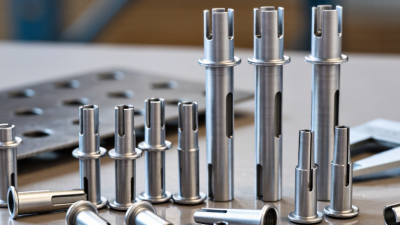
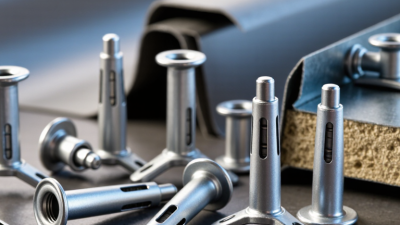
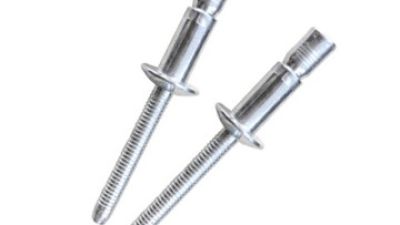
Picking an aluminum tri-fold blind rivet supplier isn't just about comparing catalog prices, honestly. You've gotta dig into things like alloy, rivet diameter, grip range, how the mandrel behaves, and whether they have documented quality controls. The whole point of tri-fold rivets is that they spread their legs behind soft or brittle materials, which helps distribute the load over a wider area. But fit still matters—a lot. If you get the grip range wrong, you might end up with a loose joint or wreck a thin panel.
John Bickford—a fastening engineer and author—once laid out a principle that really stuck with me, and I’m paraphrasing here: pick a fastener based on materials, load, and working conditions, not just what it costs. That’s easier said than done, honestly. So for this guide, we went ahead and looked at suppliers from all over the world. We didn’t just check product range either; we dug into technical support, how consistent their manufacturing is, and whether they’ll send samples. And hey, you want specs that are actually clear, batch info you can trace, and real, practical guidance on choosing rivets for actual assemblies—not just theory. Honestly, how a supplier responds when you send over a detailed drawing can tell you as much as their catalog can.
You know, All Aluminum Tri-Fold Blind Rivets can look pretty much the same in a product photo. But don't let that fool you—they're not really interchangeable just by appearance. You have to ask how each option actually performs with the sheet thickness you're using and in your specific application. And definitely test some samples before approving a full production order. It's the little details that end up mattering—like whether the flange seats properly against a painted panel, or if you can even get the setting tool in there. Of course, supplier rankings aren’t perfect. They only tell you so much—the published info might not capture every little twist and turn in production. So when you’re digging into them, it’s smart to keep some room for doubt.
What Aluminum Tri-Fold Blind Rivets Are
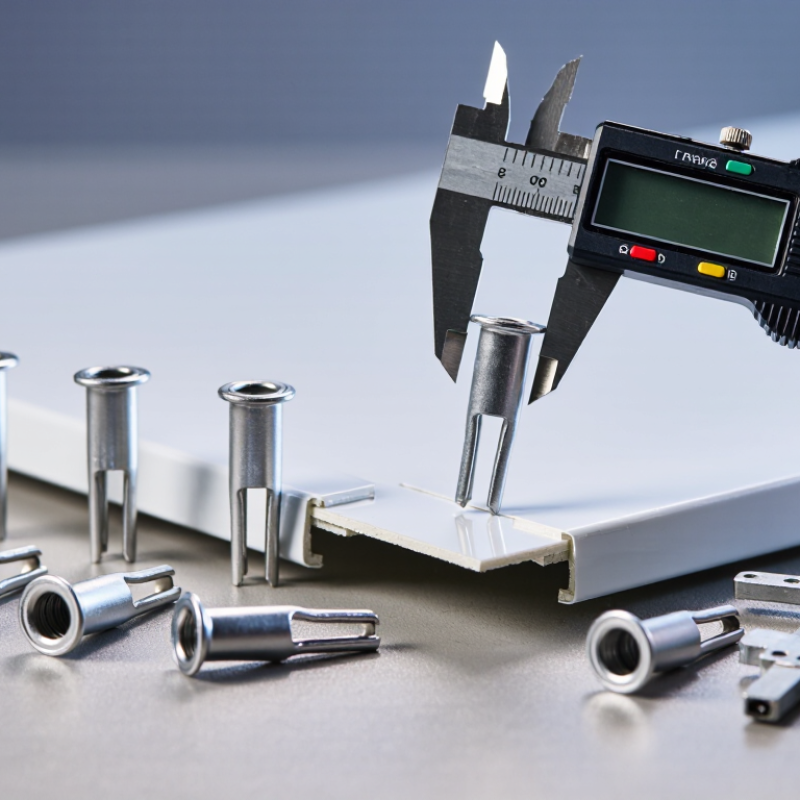
An aluminum tri-fold blind rivet is a fastener designed to join materials when only one side is accessible. It has an aluminum body and a mandrel that pulls through the body during installation. As the mandrel moves, the rivet’s tail opens into three legs on the hidden side. That is the key. These legs create a broad bearing area, helping distribute the clamping force across thin or relatively soft materials.
In practice, the three folded legs may be visible behind a panel, resting against its surface like a small tripod. This makes the rivet useful for sheet assemblies, covers, and components where access to the back is limited. Aluminum can help reduce weight, but the mandrel may be made from another metal, depending on the rivet specification. Check both materials for strength and compatibility with the parts being joined.
A wider grip range does not automatically mean a stronger joint. It is tempting to choose by diameter alone, but panel thickness, hole size, and expected load matter too. Small details matter. For critical joints, follow the manufacturer’s installation guidance and test the assembly under realistic conditions.
How Their Design and Installation Process Work
A tri-fold blind rivet is designed to fasten materials when workers can reach only one side of an assembly. Its body is usually a sleeve with three pre-formed sections near the blind end. During installation, a rivet tool pulls the mandrel through the sleeve. The sections open and fold outward, forming three broad legs against the rear surface. This spreads the clamping force over a wider area than a basic blind rivet can provide. The details matter. Material, hole size, and grip range all affect the finished joint.
Installation starts with matching the rivet’s grip range to the combined thickness of the parts. The hole should be clean and correctly sized; a loose fit can cause poor setting. Insert the rivet until its flange sits flat, then position the tool squarely over the mandrel. Squeeze the tool until the mandrel breaks at its designed point. It sounds simple. It is not always. A tilted tool or unsuitable grip range may leave uneven legs or a loose joint. Inspect the visible head and, where possible, the formed legs on the blind side. When comparing suppliers worldwide, ask for clear specifications, installation guidance, and consistent product checks. A neat-looking head alone is not proof of a sound fastening.
Key Materials, Sizes, and Performance Characteristics
aluminum tri-fold blind rivets use a three-leg body that spreads against the rear of a panel. This wider bearing area can help secure thin sheet without access to its back side. The body and mandrel are commonly aluminum, but alloy and temper affect strength and corrosion behavior. Check the supplier’s material declaration, not just the product name.
Diameter and grip range matter. Common diameters include 3.2, 4.0, and 4.8 mm; the correct grip range must match the combined thickness of the sheets. Too short, and the legs may not form properly. Too long, and the joint can loosen or deform. ISO 15977 covers open-end blind rivets with break-pull mandrels, offering a useful reference when comparing dimensions. Still, a standard does not replace a product’s tested shear and tensile values.
Performance depends on more than diameter. Hole quality, panel hardness, edge distance, and installation tool alignment all affect the finished joint. A slightly oversized hole can let the rivet rock under vibration. The USGS Mineral Commodity Summaries 2024 estimated global primary aluminum production at about 70 million metric tons in 2023, illustrating the material’s broad industrial supply base. That figure says little about rivet quality, however. A weakness in many comparisons is the lack of clear test conditions, so request load data for the exact size and grip range.
Common Industries and Applications
Aluminum Tri Fold Blind Rivet fasteners are used where installers can reach only one side of a joint. As the rivet sets, its tail opens into three legs, spreading pressure across the back of the material. This can help secure thin panels or softer substrates without crushing them as easily as a narrow expansion point might. Access is limited.
In vehicle interiors, these rivets can attach trim, panels, and lightweight covers. HVAC manufacturers use them in duct components and sheet-metal housings, while appliance makers may use them for brackets and enclosure panels. They also appear in electrical cabinets, signs, and light-duty building assemblies. A flush, tidy front is often useful.
The joint still needs careful planning. Panel thickness, hole size, grip range, and expected vibration all affect performance. Aluminum is lightweight and resists corrosion in many environments, but it may not suit every material pairing or exposure condition. That detail is easy to overlook. For demanding or load-bearing connections, engineers should verify the fastener’s capacity and test the assembled joint rather than relying on appearance alone.
Top Aluminum Tri-Fold Blind Rivets: Industries and Material Context
Approximate density of common rivet materials, in g/cm³
Tri-fold blind rivets are used in applications that benefit from a broad blind-side bearing area, including automotive components, HVAC equipment, construction products, and appliances. Aluminum is much lighter by volume than steel; confirm rivet strength, grip range, and substrate compatibility for each application. Densities shown are approximate room-temperature values.
Leading Supplier Regions and Company Profiles
Worldwide supplier regions include East Asia, South Asia, Europe, and North America. East Asian manufacturers often offer broad size ranges and high-volume production. South Asian suppliers may accommodate flexible order quantities, though lead times can vary. European producers often emphasize documented quality systems and technical support. North American distributors may provide local inventory and quicker replenishment. These are general patterns, not guarantees.
Company profiles matter more than location alone. Check whether a supplier manufactures or distributes its products. Request material specifications, dimensional tolerances, and test records. For tri-fold aluminum rivets, confirm the body alloy, mandrel material, grip range, and head dimensions against your joint design. Ask for samples and installation guidance. A polished catalog is useful, but it cannot replace testing parts in your application. Supplier websites sometimes leave gaps; treat those as questions, not proof of poor quality.
Tips: Share a drawing and expected demand when requesting quotes. Test samples in the actual workpiece, especially with thin or uneven panels. Record lot details. It sounds basic, but teams sometimes skip it. Compare delivery reliability and packaging alongside unit price.
How to Compare Suppliers and Select the Right Partner
When comparing worldwide suppliers of Aluminium Large Flange Tri-Fold Blind Rivets, look beyond the quoted price. Check alloy, flange diameter, body length, grip range, and mandrel material against your assembly drawing. A supplier should explain how the rivet’s legs form behind the panel and provide dimensional data you can verify.
Request samples from shortlisted suppliers and test them in your actual materials and hole sizes. Record installation force, visible flange seating, and joint movement; thin sheet can behave differently from a rigid test coupon. Ask for batch identification, inspection records, and clear packaging details. Details matter. If a supplier cannot answer basic questions consistently, treat that as a risk, not a minor delay.
Compare lead times, minimum order quantities, sample support, and how changes to specifications are handled. Ask what checks are performed during production, rather than relying only on a general quality claim. A perfect spreadsheet can still miss a poorly seated rivet or an awkward installation tool. Some comparisons take longer than expected. That is useful information: reliable cooperation often shows in precise answers, realistic delivery commitments, and willingness to investigate a failed sample without guessing.
High-Strength Steel Monobolt Rivets: Industry Context from World Steel in Figures 2024
World Steel in Figures 2024 offers a useful snapshot of the steel industry’s global scale and its importance to infrastructure, transportation, construction, machinery, and automotive manufacturing. As projects increasingly rely on strong, durable steel components, fastening methods must perform consistently under demanding loads and vibration. High-strength steel monobolt rivets are designed for these applications, helping create secure joints in assemblies where dependable structural performance matters.
Monobolt Structural Rivets feature mechanical locking mandrels and a proactive hole-filling design that supports close, stable contact between joined materials. This helps deliver strong vibration resistance, permanent high-shear bonding, and dependable joint integrity. Suitable for critical assembly work across transportation, infrastructure, construction, heavy machinery, and automotive sectors, these heavy-duty rivets offer suppliers and professionals a reliable fastening option for projects built around the strength and versatility of steel.
FAQS
Its tail opens into three legs during installation, spreading pressure behind the joint. Only one-side access is needed.
They can attach vehicle trim, HVAC duct parts, appliance brackets, electrical cabinets, signs, and light-duty building assemblies.
Three legs distribute pressure across a wider area. This can reduce crushing compared with a narrow expansion point.
Check panel thickness, hole size, grip range, vibration, body alloy, mandrel material, and head dimensions. Small details matter.
No. Aluminum is lightweight and resists corrosion in many environments, but material pairings and exposure conditions can affect performance.
Test samples in the actual workpiece, especially with thin or uneven panels. For demanding connections, verify capacity with an engineer.
Ask for material specifications, dimensional tolerances, test records, samples, and installation guidance. A polished catalog is not proof.
Compare delivery reliability, packaging, order flexibility, and technical support. Share a drawing and expected demand when requesting quotes.
Record lot details and test results. It sounds basic, but teams sometimes skip this step.
Conclusion
Aluminum tri-fold blind rivets are fasteners designed to join materials when access is available from only one side. During installation, a setting tool pulls the mandrel, causing the rivet body to form three supporting legs behind the workpiece. This broad bearing area can help secure thin, soft, or uneven materials while distributing the clamping force. Rivets are available in different body diameters, lengths, and grip ranges, with performance influenced by alloy, head style, and joint design.
These fasteners are used in applications such as transportation, construction, appliances, and general manufacturing. Suppliers operate across multiple regions and may differ in product range, production capacity, quality controls, and technical support. When choosing an Aluminum Tri-Fold Blind Rivets Supplier, buyers should compare material specifications, dimensional consistency, available sizes, testing documentation, lead times, and communication. Matching the rivet’s grip range and strength to the workpiece is essential for a reliable joint.