Leave Your Message
0%

Industrial assemblies demand fastening systems that remain dependable under vibration, moisture, and limited access. Aluminium Tri-Fold Blind Rivets For Industrial Applications offer a practical solution for joining thin or uneven materials from one accessible side. Their three-fold expansion creates a broad bearing surface behind the panel. This helps distribute load across softer aluminium sheets.

Fastening engineer Dr. Laura Bennett explains, “A rivet is reliable only when joint design, installation, and inspection support each other.” That principle matters on factory floors. Technicians may use these rivets on truck bodies, HVAC enclosures, electrical cabinets, and lightweight machinery guards. Each application presents different panel thicknesses, hole conditions, and vibration levels. Grip range matters greatly. So does mandrel retention.

Small details can decide performance.

A correctly drilled hole supports consistent forming. A suitable nosepiece helps the rivet collapse evenly. Operators should also check for loose heads, damaged mandrels, and excessive panel movement. Aluminium resists corrosion well, but surrounding metals may react differently. Isolation washers or compatible coatings can reduce galvanic concerns. Product data remains essential.

Some buyers compare these rivets with steel blind rivets for industrial applications. Steel may provide higher strength in selected joints, while aluminium reduces weight and simplifies handling. Neither material is automatically better. That assumption deserves review. Joint loads, service temperatures, exposure, and maintenance access should guide selection.

Reliable results come from testing representative samples before production. A simple pull test, visual inspection, and vibration review can expose weak assumptions early. Aluminium Tri-Fold Blind Rivets For Industrial Applications are not a universal answer. Used with disciplined design, they can provide efficient, repeatable fastening for demanding industrial work.
Top Aluminium Tri Fold Blind Rivets for Industrial Use

Aluminium Tri-Fold Blind Rivets: Structure, Features, and Working Principles

Aluminium tri-fold blind rivets use a hollow rivet body and a pulling mandrel. During installation, the mandrel draws the body inward. Its slotted end then opens into three broad legs behind the panel. These legs distribute pressure across a larger area than standard blind rivets. The result is useful when the rear surface is inaccessible or relatively soft.

The aluminium body offers low weight and practical corrosion resistance in many indoor and light-duty environments. However, aluminium is not automatically suitable for every structural joint. Joint load, sheet thickness, hole clearance, vibration, and galvanic contact require careful evaluation. For projects comparing aluminium designs with hemlock blind rivets for structural applications, engineers should verify material data rather than rely on search terms. Tri-fold rivets can accommodate uneven or fragile materials, but their grip range still has limits. I have seen oversized holes reduce clamping quality, even when the rivet appeared secure.

Tips: Match the rivet length to the total material thickness. Drill a clean, round hole. Keep the rivet body square to the surface. Test a sample joint first. Check for leg formation behind the panel. A small gap can matter. Avoid mixing aluminium with incompatible metals without suitable isolation. Retest joints exposed to vibration or moisture, because laboratory results may not reflect field conditions.

Key Specifications for Industrial-Grade Aluminium Tri-Fold Rivets

Top Aluminium Tri Fold Blind Rivets for Industrial Use

Industrial-grade aluminium tri-fold rivets need more than a low purchase price. Their grip range must match the combined thickness of the sheets. A typical tri-fold body opens into three broad legs, spreading load across thin or fragile panels. Check body alloy, mandrel material, head diameter, hole size, and tensile strength. The product certificate should report shear and tensile results under controlled conditions. ISO 14589 provides a useful framework for testing blind-rivet performance.

Corrosion control also matters. Aluminium resists many environments, but galvanic contact with steel can create problems. Use compatible mandrels, protective coatings, or isolation washers where moisture remains. The USGS Mineral Commodity Summaries 2024 recorded roughly 70 million metric tons of global primary aluminium production in 2023. That scale supports aluminium’s industrial availability, but it does not guarantee consistent rivet quality. Review batch certificates and inspect mandrel retention. A larger grip is not automatically safer.

Tips: Measure the actual stack thickness, then select a grip range with practical allowance. Drill clean, round holes and remove burrs before installation. For hemlock blind rivets for high vibration applications, request vibration and fatigue data instead of relying on appearance. ISO 14589 results help, but field loading may differ. Recheck the joint design when vibration, temperature changes, or soft panels are involved. Some failures begin with small installation errors.

Comparing Rivet Sizes, Materials, and Load-Bearing Performance

Choosing top aluminium tri-fold blind rivets starts with the joint, not the box label. In workshop trials, 4.8 mm rivets suit light panels and thin brackets when grip length matches the stack. Larger 6.4 mm bodies can carry more load, but only with adequate edge distance and sound base material. A loose fit wastes that advantage. Too short is worse.

Aluminium offers low weight and useful corrosion resistance, making it practical for sheet assemblies. However, aluminium rivets may deform under high sustained loads. Stainless steel mandrels improve pull strength, yet they can increase galvanic corrosion against unsuitable metals. A protective washer or compatible coating may help. For hemlock blind rivets for outdoor applications, check the actual alloy, mandrel material, and seal design. The phrase itself is not a specification. Verify it.

Load-bearing performance depends on more than diameter. Test pull-out, shear, vibration, and repeated wet-dry exposure on representative samples. A 4.8 mm tri-fold rivet may spread its legs widely behind a hollow panel, improving retention in weak cores. Still, thin skins can buckle around the hole. Drill cleanly, deburr lightly, and inspect the formed head. I once trusted a catalogue load figure too quickly. That was a mistake. Real joints often behave differently.

How to Select the Right Tri-Fold Blind Rivet for Each Application

Top Aluminium Tri Fold Blind Rivets for Industrial Use

How to Select the Right Tri-Fold Blind Rivet for Each Application

Selecting an aluminium tri-fold blind rivet starts with the joint, not the rivet box. Measure the total material thickness, including paint, washers, and gaps. Choose a rivet whose grip range covers that measurement without forcing the legs to over-expand. Tri-fold legs create a wide blind-side bearing area, making them useful for thin sheet, plastics, and softer panels.

Check the required shear and tensile loads against verified manufacturer test data. NASA-RP-1228, the NASA Fastener Design Manual, highlights grip, hole quality, preload, and joint design as key variables. Hole diameter matters too. A loose or rough hole can reduce holding strength and allow movement. The U.S. Geological Survey’s Mineral Commodity Summaries 2025 reports approximately 72 million metric tons of global primary aluminium production in 2024. Material availability is broad, but alloy, temper, and surface condition still affect performance.

Tips: Match the rivet body to the panel material. Avoid aluminium against dissimilar metals in wet environments unless isolation is designed. Use the correct nosepiece and confirm complete leg formation after installation. A short trial assembly can reveal more than a catalogue table. Do not guess.

For outdoor equipment, consider sealant, coatings, and drainage paths. For vibrating assemblies, test repeated loading rather than relying only on static ratings. I have seen apparently suitable rivets fail because the grip range was technically correct, but the backing panel was too brittle. That detail deserves a second look.

Installation Process and Tool Requirements for Secure Riveting

Aluminium tri-fold blind rivets suit panels, thin sheets, and assemblies with limited rear access. Their large opening-side footprint helps spread load across softer materials. Secure riveting starts with correct grip selection. Measure the combined material thickness, then choose a rivet grip range that fully covers it. A loose fit can leave movement. An oversized rivet may buckle before forming correctly.

Mark the hole accurately and drill perpendicular to the surface. Remove burrs from both sides. Use a caliper or grip gauge before loading the rivet. A pneumatic or hydraulic blind-rivet tool should match the rivet’s diameter and mandrel strength. Fit the correct nosepiece, seat the rivet fully, and pull in one steady stroke. Stop when the mandrel breaks cleanly. Inspect the formed backside for even expansion, tight contact, and cracks. ISO 14589 specifies tensile and shear test methods for blind rivets, while ASTM F606/F606M provides mechanical testing guidance for fasteners. These references support documented inspection rather than visual guesswork.

Tips: Keep the tool square. Check air pressure before production. The U.S. Department of Energy’s compressed-air guidance estimates that leaks can waste 20–30% of compressor output, so inspect hoses and fittings. A rushed setup still happens. I have found that one extra grip check prevents more rework than faster pulling. Record batch details, hole size, tool setting, and inspection results. Noise, chips, and broken mandrels also require eye and hearing protection.

Top Aluminium Tri Fold Blind Rivets for Industrial Use - Installation Process and Tool Requirements for Secure Riveting
Category Specification or Step Recommended Industrial Practice Key Technical Data Inspection or Selection Notes
Rivet Construction Tri-fold blind rivet body The rivet body expands into three folded sections on the blind side of the joint. Three-point expansion creates a broad load-distribution area behind the workpieces. Useful for thin, soft, brittle, hollow, or easily damaged sheet materials where a conventional blind rivet may pull through.
Rivet Construction Aluminium body Use an aluminium alloy body when low weight, corrosion resistance, and compatibility with aluminium sheet are priorities. Aluminium is lighter and generally more corrosion-resistant than uncoated carbon steel, but its strength is lower. Confirm the required shear, tensile, vibration, and environmental performance before specifying the rivet.
Rivet Construction Mandrel material Select the mandrel material and finish according to the joint load and corrosion environment. Common assemblies use a steel or stainless-steel mandrel with an aluminium rivet body. A dissimilar-metal combination can require corrosion-control measures, especially in humid, marine, or chemically exposed applications.
Size Selection Nominal rivet diameter Choose the smallest diameter that meets the required joint strength and installation clearance. Common industrial sizes include 3.2 mm, 4.0 mm, 4.8 mm, and 6.0 mm nominal diameters. Actual availability and performance depend on the rivet design; use the applicable product specification for final selection.
Size Selection Typical drilled hole diameter Drill a clean, round hole that provides the clearance specified for the selected rivet. Typical starting clearances are approximately 0.1–0.2 mm above nominal rivet diameter; for example, a 4.0 mm rivet commonly uses about a 4.1–4.2 mm hole. Do not use these values as a substitute for the rivet supplier’s hole-size requirement. Oversized or oval holes can reduce joint quality.
Size Selection Grip range Measure the combined thickness of all joined materials, including washers if used. The rivet grip range must cover the complete joint thickness. Typical ranges are application-specific and may span several millimetres. Do not install a rivet outside its stated grip range; an incorrect grip can cause incomplete folding, loose joints, or excessive deformation.
Joint Design Material thickness Use tri-fold rivets where the rear-side expansion can form fully without contacting obstructions. The minimum and maximum sheet thickness are determined by the selected rivet’s grip range and body geometry. Check both the visible face and the blind side for access, clearance, and possible interference with wiring or moving parts.
Joint Design Edge distance Keep the hole sufficiently far from the sheet edge to prevent tearing or breakout. A common design starting point is an edge distance of at least 2 times the hole diameter, subject to the material and load condition. Increase edge distance for soft, thin, highly loaded, or vibration-sensitive materials when permitted by the design.
Tools Hand rivet tool Use a manual blind-rivet tool for low-volume work or field repairs where access and cycle rate are limited. Requires a nosepiece matched to the mandrel diameter and sufficient stroke for the selected rivet. Suitable only when the operator can complete the setting stroke without excessive force or tool deflection.
Tools Pneumatic or hydro-pneumatic rivet tool Use a powered blind-rivet tool for repetitive industrial installation and improved cycle consistency. Requires clean, regulated compressed air within the tool manufacturer’s specified pressure range. Confirm that the tool has adequate pulling capacity, stroke, nosepiece compatibility, and mandrel collection provisions.
Tools Drill and hole-preparation equipment Use a sharp drill, correct drill diameter, deburring tool, and cleaning equipment. Hole roundness, alignment, and cleanliness directly affect rivet seating and load transfer. Remove burrs from both sides without enlarging the hole. Keep chips and sealant residue away from the rivet interface.
Tools Backup washer Install a compatible washer on the accessible side when the front sheet is thin or prone to pull-through. A washer increases the bearing area under the rivet head. Use a washer with a suitable inside diameter and outside diameter; verify that it does not obstruct the tri-fold expansion.
Installation 1. Align the workpieces Clamp or fixture the parts so the holes remain aligned during riveting. Misalignment can prevent full insertion and produce uneven loading. Do not force the rivet through an offset hole; correct the alignment or rework the hole according to the engineering procedure.
Installation 2. Drill and deburr Drill through all layers in one operation when practical, then remove burrs and clean the joint. The hole should be round, unobstructed, and within the specified diameter tolerance. Inspect for cracks, delamination, excessive clearance, and contamination before inserting the rivet.
Installation 3. Verify grip length Compare the measured joint thickness with the rivet’s published grip range. The rivet body must extend far enough behind the joint to form the three folded sections. Replace rivets that are too short or too long; do not compensate for incorrect grip by using excessive tool force.
Installation 4. Insert the rivet Push the rivet body fully into the hole until the head sits flush against the accessible surface. The rivet head should contact the material evenly around the hole. Hold the tool in line with the rivet axis to reduce bending and uneven forming.
Installation 5. Set the rivet Place the correct nosepiece over the mandrel and operate the tool until the mandrel breaks at the designed setting point. The body should form three distinct folded sections on the blind side. Stop if the tool slips, stalls, or pulls the head into the sheet. Investigate tool setup, grip selection, and hole condition.
Installation 6. Remove the spent mandrel Allow the tool to retain or eject the broken mandrel safely according to its operating instructions. The finished joint should not contain a loose mandrel fragment unless the selected rivet design specifically retains it. Collect and dispose of spent mandrels to prevent foreign-object damage and workplace hazards.
Quality Check Head seating Inspect the accessible rivet head for full, even contact with the sheet or washer. The head should not be tilted, cracked, excessively recessed, or pulled through the material. Reject visibly damaged or loose installations and replace them with a new rivet.
Quality Check Blind-side formation Where access permits, inspect the rear side for complete and symmetrical three-fold expansion. The folded sections should bear against the rear material without sharp damage or incomplete opening. Use a borescope, mirror, or first-piece inspection method when the blind side cannot be viewed directly.
Quality Check Joint security Check for part movement, gaps, rotation, and abnormal looseness after installation. There should be no unintended gap between the joined materials. For safety-critical or highly loaded joints, validate the design with documented engineering calculations and representative testing.
Safety Personal protective equipment Wear safety glasses during drilling and riveting, and use hearing protection where powered tools create hazardous noise. Drill chips and broken mandrels can become high-velocity projectiles. Follow the site risk assessment, tool instructions, and applicable occupational-safety requirements.
Corrosion Control Material compatibility Assess contact between the aluminium body, mandrel, joined materials, coatings, moisture, and chemicals. Galvanic corrosion risk increases when dissimilar metals are electrically connected in the presence of an electrolyte. Consider compatible finishes, sealants, isolating washers, drainage, and environmental protection where required.
Maintenance Tool care Keep jaws, nosepieces, and mandrel collection areas clean and inspect them at regular intervals. Worn jaws or a damaged nosepiece can cause slipping, incomplete setting, or inconsistent pull force. Replace worn components and follow the tool manufacturer’s lubrication, air-quality, and maintenance instructions.

Industrial Applications, Quality Standards, and Safety Considerations

Aluminium Large Flange Tri-Fold Blind Rivets suit HVAC panels, vehicle bodies, electrical enclosures, and thin sheet assemblies. Their wide flange spreads clamping pressure across softer materials. The tri-fold body also forms three legs behind the panel, improving grip when backside access is limited. In field work, alignment matters more than speed. A tilted rivet can leave gaps, vibration, or uneven loading.

Quality should be checked against the applicable ISO 15973 or ISO 15974 requirements, including dimensions, mandrel performance, and setting behavior. Salt-spray testing under ASTM B117 may help compare corrosion resistance, but it should not replace application-specific validation. The International Aluminium Institute reports that recycled aluminium requires about 5% of the energy used for primary production. This supports material efficiency, but coating damage still deserves attention. Aluminium can resist corrosion well. It is not immune.

Tips: Match rivet diameter, grip range, and flange size to the actual panel stack. Test sample joints under vibration and pull-out loads. Wear eye protection during drilling and setting. Remove swarf before inspection, especially near wiring. Use calibrated tools where joint consistency matters. One practical weakness remains: field measurements are often rushed. Recheck them. Rescue work later is expensive. Keep records of batch details, hole size, torque settings, and inspection results. Industry reports from the International Aluminium Institute and safety guidance from OSHA both support disciplined material handling and controlled installation practices.

Top Aluminium Tri-Fold Blind Rivets for Industrial Use

Nominal size comparison for commonly specified aluminium blind rivets used in industrial panels, enclosures, ducting, vehicle bodies, and lightweight assemblies.

The plotted values represent nominal rivet body diameters and body lengths in millimetres. They are dimensional references rather than load ratings. Select the rivet length according to the total material thickness and required grip range. For industrial use, verify the applicable specification, hole diameter, corrosion compatibility, installation-tool capacity, and manufacturer test data. ISO 15977 is commonly referenced for open-end blind rivets with break-pull mandrels; tri-fold geometry and performance should be confirmed for the specific design.

How China-Made Stainless Steel Large Head Blind Rivets Ensure Durability and Corrosion Resistance

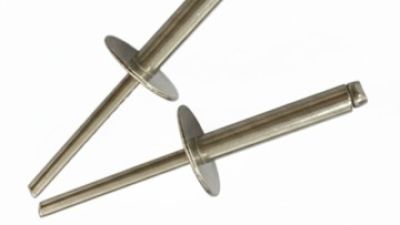
China-made stainless steel large head blind rivets are engineered for fastening applications where durability and corrosion resistance are essential. Their full stainless-steel construction helps reduce the risk of rust in humid, outdoor, and industrial environments, while the oversized flange distributes clamping force over a wider area. This design is particularly useful when joining thin, soft, or easily damaged materials, helping prevent pull-through and improving joint stability under vibration and repeated loading.

Corrosion protection is a major factor in lifecycle performance. The NACE IMPACT study estimated that global corrosion costs reach approximately US$2.5 trillion annually, equivalent to about 3.4% of global GDP, demonstrating the importance of selecting materials that can withstand aggressive service conditions. Stainless steel provides a passive chromium-oxide layer that can naturally reform after minor surface damage when sufficient oxygen is present. In riveted assemblies, this characteristic can help maintain appearance and mechanical reliability better than ordinary carbon-steel alternatives.

Manufactured through controlled production processes and sourced from qualified suppliers, these large flange blind rivets are designed for consistent setting and dependable grip. Their high fatigue resistance supports applications exposed to vibration, movement, and changing loads, including metal fabrication, equipment assembly, transportation structures, and exterior installations. Compliance with applicable dimensional and mechanical requirements, supported by inspection of material grade, tensile strength, mandrel retention, and corrosion performance, further improves confidence in long-term fastening quality.

FAQS

What are aluminium tri-fold blind rivets?

They use a hollow rivet body and a pulling mandrel. The mandrel draws the body inward. Its slotted end forms three broad legs behind the panel. These legs spread pressure across a wider area.

When are tri-fold blind rivets useful?

They suit joints where the rear surface cannot be reached. They also help with soft, fragile, or uneven panels. The wide legs improve retention in weak materials. They are not suitable for every structural connection.

How should I choose the rivet diameter?

A 4.8 mm rivet often suits light panels and thin brackets. A 6.4 mm body can carry more load with strong base material. Larger diameter alone does not guarantee better performance. Hole fit and edge distance still matter.

How do I select the correct rivet length?

Match the rivet length to the total material thickness. Too short prevents proper leg formation. Too long may create poor clamping or an uneven rear shape. Test the selected length on a sample joint.

What hole preparation is required?

Drill a clean, round hole through the material stack. Remove sharp burrs lightly. Keep the rivet body square to the surface. Even a small gap can reduce clamping quality.

Can aluminium rivets support heavy or constant loads?

Aluminium provides low weight and useful corrosion resistance indoors. However, it may deform under high sustained loads. Evaluate pull-out, shear, vibration, and repeated wet-dry exposure. Do not depend only on catalogue figures.

Can aluminium rivets contact other metals?

Direct contact with incompatible metals can increase galvanic corrosion. A protective washer or suitable coating may reduce the risk. Check the body alloy and mandrel material. Outdoor moisture makes this issue more important.

How can I inspect an installed tri-fold rivet?

Check that three legs formed evenly behind the panel. Inspect the front head for firm contact and visible gaps. Look for buckling around thin skins. I once trusted a catalogue load value too quickly. That judgment was too quick.

Conclusion

Aluminium Tri-Fold Blind Rivets For Industrial Applications provide a reliable fastening solution when access is limited to one side of a workpiece. Their split-body design expands into three sections on the blind side, creating a broad bearing area that helps distribute clamping force and secure thin, brittle, or flexible materials. Key considerations include rivet diameter, grip range, mandrel strength, head style, corrosion resistance, and compatibility with the joined materials. Selecting the correct size and alloy is essential for achieving the required load-bearing performance without damaging the assembly.

A secure installation requires a properly matched hand or pneumatic riveting tool, accurate hole preparation, and correct control of grip length. During installation, the rivet is inserted through aligned holes, and the mandrel is pulled until the body forms its tri-fold shape and clamps the materials firmly. These rivets are widely suited to equipment enclosures, transportation components, ventilation systems, construction assemblies, and general industrial fabrication. Quality checks should verify dimensions, material consistency, setting performance, joint alignment, and safe tool operation.

Sophie

Sophie

Sophie is a dedicated marketing professional with extensive expertise in the field of fasteners, particularly in blind rivets, rivet nuts, and non-standard fasteners. With years of experience in the industry, she has developed a profound understanding of the technical specifications and......
Previous How to Choose Tri Fold Blind Rivets for Soft Materials?