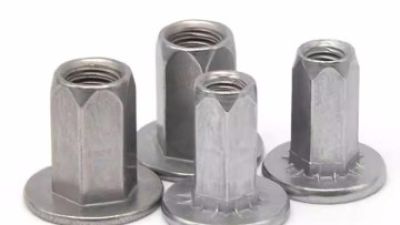
Ever wondered why you'd choose Threaded Rivet Nuts for reliable, strong fastening? Well, in today's product design world, it’s not just about holding two panels together. Manufacturers want something that’s repeatably strong, easy to install, and performs reliably over time. That’s where threaded rivet nuts come in—they provide internal threads in really thin sheet metal, tubing, or even composite panels—without needing access from behind the panel. Pretty handy, right? This small but mighty advantage can really simplify how you assemble equipment frames, vehicle interiors, electrical enclosures, and even some repairable consumer products.
And it’s not just me saying this—market research backs it up. According to Grand View Research, the global industrial fasteners market hit around 84 billion dollars in 2023 and is expected to keep growing up to 2030. MarketsandMarkets also points out that lightweight construction and modular setups are driving demand. Now, of course, not every single application needs rivet nuts, but these reports show why many manufacturers are chasing faster, more flexible ways to put things together.
John G. Bickford—who’s pretty much an authority on bolted joint engineering—once said, “The design of a bolted joint is not a simple matter.” That hit home. A rivet nut can spin, pull out, or lose grip if the parent material, hole size, or installation force isn’t just right. The trick is choosing the right style, thread size, material, and setting tool. For example, a steel insert in a thin aluminum panel behaves quite differently from a stainless insert in a reinforced composite—so, yeah, attention to detail matters.
And let’s be real—there’s no such thing as a magic fastener here. Threaded rivet nuts still need to be tested. When you choose the right type and do your homework, they can create durable threads, make assembly easier, and support simple maintenance. But before jumping to production, it’s super important to check things like pull-out strength, torque requirements, vibration resistance, corrosion, and how well the installation process works. Taking that extra step ensures that what you’re using is not just convenient, but also strong and reliable in the long run.
What Are Threaded Rivet Nuts and How Do They Work?
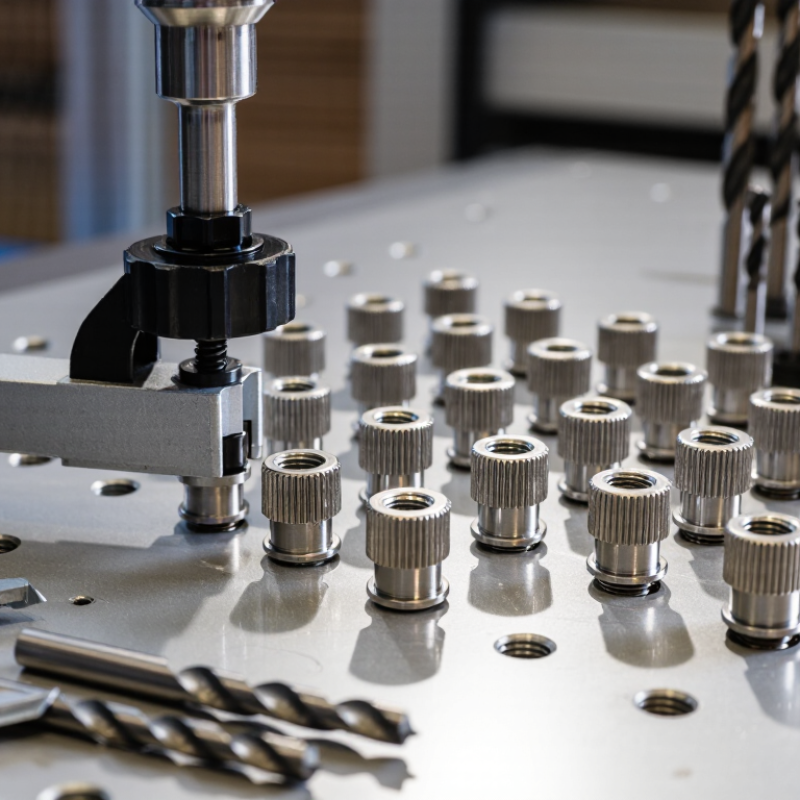
Threaded rivet nuts are tubular fasteners with internal threads. They create a strong fixing point in thin or hollow materials. Unlike a standard nut, they can be installed from one side. This helps when the rear of a panel is sealed, narrow, or impossible to reach. A threaded rivet nut is commonly made from steel, stainless steel, or aluminum.
Installation uses a special rivet nut tool. The tool screws onto the nut and pulls its threaded mandrel. As the mandrel retracts, the nut body collapses behind the panel. This forms a tight backside flange. The result is a permanent threaded anchor for bolts or machine screws. The process feels simple. Precision still matters.
The drilled hole must match the specified diameter. An oversized hole may allow the insert to spin. An undersized hole can distort the panel. Grip range is equally important, especially with thin sheet metal. In workshop testing, a clean hole and steady tool pressure produced more consistent results than excessive force.
Global Leading Threaded Rivet Nuts Factories
often emphasize torque control and batch inspection for this reason. A rushed installation can weaken the joint. It is not a magical fix. Technicians should check thread engagement, panel movement, and final torque before service.
Which Materials and Designs Suit Different Fastening Needs?
Threaded rivet nuts provide strong internal threads in thin panels, tubes, and assemblies with limited rear access. Their material and body design determine performance. Steel suits high-load frames and equipment exposed to repeated tightening. Stainless steel works better where moisture, cleaning chemicals, or outdoor exposure may cause corrosion. Aluminum is lightweight and useful in transport panels, enclosures, and softer structures. Brass offers good conductivity, but it is usually chosen for lighter mechanical loads.
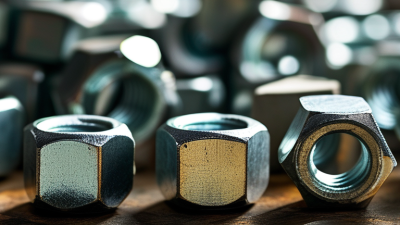
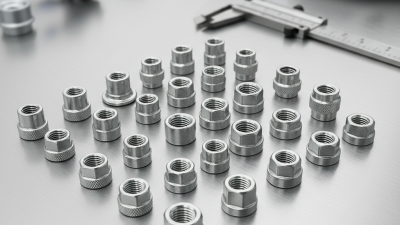
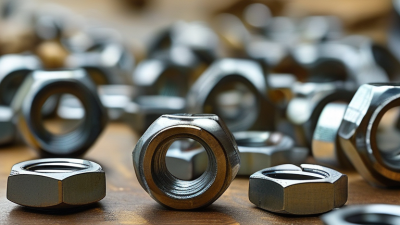
Design matters just as much as material. A knurled body improves resistance against rotation in softer sheets. Hexagonal bodies provide stronger anti-spin performance under higher torque. Open-end rivet nuts suit ordinary through-bolts, while closed-end versions help protect threads from dirt and moisture. Large flanges spread force across thin sheet metal. Always match the grip range to the actual panel thickness. Too much length can weaken the installation.
Tips: Check the sheet thickness with calipers. Test one sample before production. Use the recommended installation stroke and torque. A perfect choice on paper can still fail if the hole is oversized. I have seen loose inserts caused by rushed drilling, not poor hardware. That detail is easy to overlook. Material compatibility also deserves review, especially where dissimilar metals may contact moisture. When uncertain, inspect the joint after several tightening cycles and reconsider the design.
Why Use Threaded Rivet Nuts for Strong Reliable Fastening? - Which Materials and Designs Suit Different Fastening Needs?
| Fastening Need |
Recommended Material |
Suitable Body Design |
Typical Thread Range |
Key Advantages |
Important Limitations |
Common Applications |
| General-purpose fastening in sheet metal |
Zinc-plated carbon steel |
Round-body or hex-body, open-end |
Commonly M4–M10; selection depends on panel thickness and load |
Good strength-to-cost ratio; suitable for repeated screw installation and removal |
Zinc plating can wear or corrode if the protective surface is damaged or exposed to harsh moisture |
Cabinets, brackets, vehicle panels, machinery covers, and general fabrication |
| High corrosion resistance |
Stainless steel |
Hex-body or knurled-body, open-end or closed-end |
Commonly M4–M10 |
Strong resistance to moisture and many industrial environments; supports durable threaded joints |
Higher material cost; galling may occur during assembly if compatible tools and suitable lubrication are not used |
Outdoor equipment, food-processing equipment, marine hardware, and chemical-service enclosures |
| Lightweight fastening in thin panels |
Aluminum |
Round-body or knurled-body; large-flange head for improved bearing area |
Commonly M3–M8 |
Low weight; useful where galvanic compatibility with aluminum panels is important |
Lower strength and wear resistance than steel; avoid excessive installation torque |
Lightweight enclosures, electronics housings, transport equipment, and aluminum frames |
| High resistance to spinning under torque |
Carbon steel or stainless steel |
Full hex-body; knurled versions can suit lower-load applications |
Commonly M4–M12 |
Hexagonal external geometry mechanically resists rotation in the prepared hole |
Requires a correctly sized hexagonal or formed hole; poor hole preparation can reduce retention |
Structural brackets, access panels, equipment frames, and joints exposed to tightening torque |
| Improved pull-through resistance in thin material |
Steel or stainless steel |
Large-flange head, usually with a hex or round body |
Commonly M4–M10 |
Larger flange distributes clamp load over a wider area and helps limit pull-through |
Needs sufficient clearance around the flange; actual load capacity depends on sheet thickness, hole quality, and installation |
Sheet-metal assemblies, panels carrying accessories, guards, and service covers |
| Sealed or contamination-resistant joint |
Stainless steel or plated steel |
Closed-end, often with a flange |
Commonly M4–M10 |
Closed end blocks direct passage through the insert and can help limit moisture, dust, or loose debris migration |
Not a substitute for a tested sealing system; thread depth and screw length must be matched carefully |
Enclosures, exposed panels, instrument housings, and assemblies requiring a blind internal thread |
| Low-profile appearance or restricted clearance |
Steel, stainless steel, or aluminum according to load and environment |
Reduced-head or countersunk-head design |
Commonly M3–M8 |
Minimizes surface protrusion and can provide a neater finish where the panel is prepared for the head shape |
Countersinking can weaken thin material; the panel must be thick and strong enough for the preparation |
Compact equipment, flush panels, trim assemblies, and products with limited surrounding clearance |
Selection note: Actual pull-out, push-out, and torque performance varies with insert material, thread size, grip range, panel thickness, hole diameter, installation method, and the direction of applied load. Verify the fastener manufacturer's tested values for the specific assembly.
Why Do Threaded Rivet Nuts Provide Strong, Reliable Connections?
Why Do Threaded Rivet Nuts Provide Strong, Reliable Connections?
Threaded rivet nuts create permanent internal threads in thin panels, tubes, and boxed sections. Their strength comes from controlled deformation behind the parent material. Once set, the collapsed body forms a broad bearing surface. It resists pull-out, rotation, and vibration better than a simple sheet-metal screw. In field inspections, alignment matters as much as material strength. A crooked installation can reduce thread engagement and create uneven loading. That detail is easy to miss.
NASA Fastener Design Manual RP-1228 identifies preload, grip length, friction, and joint stiffness as major factors in connection reliability. Its torque relationship, T = KFd, also shows why torque alone cannot confirm clamp force. Friction changes the result. ASTM F606/F606M provides recognized tensile and proof-load test methods for threaded fasteners. These methods help engineers compare rivet-nut materials and installation results. Global Leading Threaded Rivet Nuts Suppliers should provide traceable material data, dimensional tolerances, and test conditions. Without that evidence, “high strength” remains only a claim.
Tips: Match the rivet nut body to the panel thickness. Keep the hole round and free from burrs. Verify setting stroke before production. Test pull-out and spin-out on sample panels. Check thread engagement with the actual bolt. I would not call these fasteners foolproof. Corrosion, over-torquing, and poor hole preparation can still cause failure. A small installation log can reveal patterns before they become expensive repairs.
How Are Threaded Rivet Nuts Installed Step by Step?
Threaded rivet nuts create strong internal threads in thin panels, hollow sections, and materials that cannot accept a conventional nut. Their reliability depends heavily on correct installation. A China Wholesale Threaded Rivet Nuts Factory should provide accurate dimensions, consistent thread quality, and clear grip-range information.
Start by checking the panel thickness and selecting a rivet nut with a suitable grip range. Mark the hole location carefully. Drill the recommended diameter, then remove burrs from both sides. Measure twice. A rough hole can reduce holding strength. Next, fit the correct mandrel and nosepiece into the installation tool. Thread the rivet nut onto the mandrel without forcing it.
Insert the nut straight into the hole. Squeeze the hand tool slowly, or activate the powered tool using the specified setting. The rivet nut should collapse behind the panel and form a firm backside bulge. Stop when the nut is secure. Do not over-compress it, because distorted threads may reject the bolt. In real workshops, the first sample is not always perfect. A test panel can prevent expensive rework.
After installation, inspect the flange and confirm that it sits evenly against the surface. Insert a matching bolt by hand before applying torque. The bolt should turn smoothly and remain aligned. Check for spinning, loose movement, or panel deformation. If the nut rotates, remove it and investigate the hole size, tool stroke, and material thickness. These small checks often separate a dependable fastening joint from a frustrating repair.
What Factors Affect Their Load Capacity and Service Life?
Why Use Threaded Rivet Nuts for Strong, Reliable Fastening?
Load capacity depends on more than the insert’s published strength. Material thickness, thread size, grip range, and hole quality all matter. A loose hole can let the rivet nut spin or tilt under load. Thin aluminum sheets also need careful installation control.
NASA’s Fastener Design Manual, NASA-RP-1228, warns that friction creates major torque variation. In practical assembly, torque scatter can reach 20–30% when surfaces and lubrication differ. Excessive setting force may deform the panel. Insufficient force may leave the insert unstable. ASTM F606/F606M test methods support checking tensile and proof performance under controlled conditions. Still, laboratory results cannot fully predict vibration, moisture, or repeated loading.
Tips: Match the insert material to the panel. Measure the actual sheet thickness. Use a calibrated installation tool. Inspect the first and last samples. For outdoor equipment, test corrosion exposure and thread wear. A Global Leading Threaded Rivet Nuts Manufacturer should provide traceable test data, not only a load table. That detail matters.
Service life also changes with temperature, galvanic contact, vibration, and installation damage. A crushed thread may hold today but fail after repeated cycles. Engineers sometimes trust static pull-out numbers too much. I have found field inspection more revealing: witness marks, loose threads, and panel distortion often appear before failure. Then, redesign may be wiser than simply increasing torque.
Why Use Threaded Rivet Nuts for Strong, Reliable Fastening?
Threaded rivet nuts provide reusable internal threads in thin or inaccessible materials. The chart shows the calculated tensile reference load for common coarse metric thread sizes, based on ISO tensile-stress-area values and an assumed 400 MPa proof stress. Actual rivet-nut performance also depends on parent-sheet thickness, hole quality, installation force, material strength, grip range, thread engagement, corrosion, vibration, and applied load direction.
Reference calculation: tensile load = tensile stress area × 400 MPa. These values describe the threaded fastener section and are not guaranteed pull-out or spin-out ratings for a specific rivet nut and sheet assembly.
How Should Threaded Rivet Nuts Be Selected and Maintained?
Threaded rivet nuts create strong internal threads in thin sheets, tubes, and panels. Their performance depends on correct selection, not appearance alone. Choose the nut material according to the base metal and environment. Steel suits many indoor assemblies, while stainless steel helps resist moisture and corrosion. Aluminum reduces weight but may need extra care under repeated loads.
Check the sheet thickness and the rivet nut’s grip range before ordering. A nut that is too short may spin, while one that is too long may not clamp firmly. Match the thread size to the bolt, expected load, and service vibration. Hole diameter matters greatly. An oversized hole can weaken the joint. I once saw a carefully installed nut fail because the pilot hole was only slightly too large.
Use a calibrated installation tool and follow the recommended setting force. Excessive force can deform the nut or damage the surrounding panel. After installation, inspect the flange for full contact and test the thread with a clean bolt. During maintenance, look for rotation, loose bolts, cracked coating, and rust around the joint. Remove dirt before inspection. In outdoor assemblies, apply suitable corrosion protection and avoid trapping water near the flange. Recheck high-vibration joints periodically. This step is easy to skip. It should not be. If a joint repeatedly loosens, review the load, grip range, and installation method instead of simply tightening the bolt harder.
Nickel Alloy Full Hex Rivet Nuts: A Guide to Extreme-Duty Performance and China Sourcing
Nickel Alloy Full Hex Rivet Nuts are engineered for extreme-duty fastening where ordinary steel or stainless-steel inserts may lose strength, corrode, or seize. Featuring a full hexagonal body, these rivet nuts resist spinning during installation and provide dependable, permanent internal threads in thin panels, tubes, and fabricated structures. Their nickel-based construction offers excellent resistance to salt spray, marine exposure, corrosive chemicals, and high-temperature oxidation.
Depending on the selected alloy, these inserts can perform reliably from cryogenic conditions to temperatures exceeding 1200°F. Their natural resistance to galling supports smoother high-torque assembly, while their strong yet relatively lightweight design benefits aerospace, automotive racing, and other weight-sensitive projects. Available in various thread sizes, grip ranges, and finishes, they can be matched to demanding structural and maintenance requirements.
As a China-based factory and supplier, we provide nickel alloy rivet nuts for aerospace and defense components, exhaust manifolds, turbine housings, offshore instruments, subsea hardware, acid-handling equipment, and heat exchangers. Consistent manufacturing, configurable specifications, and direct technical communication help international buyers source reliable threaded inserts for harsh operating environments. Each order can be evaluated according to alloy selection, temperature exposure, corrosion conditions, panel thickness, and installation method.
FAQS
It is a tubular fastener with internal threads. It creates a fixing point inside thin or hollow panels. The rear side does not need access.
A special tool pulls a threaded mandrel through the insert. The body collapses behind the panel and forms a tight backside flange. It becomes a permanent anchor for bolts or machine screws.
Steel suits high-load frames and equipment facing repeated tightening. Stainless steel handles moisture, cleaning chemicals, and outdoor exposure better. Aluminum reduces weight in panels and enclosures. Brass supports conductivity but usually handles lighter loads.
Match the hole diameter to the specified measurement. A hole that is too large may let the insert spin. A hole that is too small can distort the panel. Check the sheet with calipers.
Grip range must match the actual panel thickness. A poor match can create a weak backside flange. Excessive insert length may weaken the installation. This detail is easy to miss.
Knurled bodies resist rotation in softer sheets. Hexagonal bodies provide stronger anti-spin performance under higher torque. Large flanges spread force across thin metal. Open-end versions suit ordinary through-bolts, while closed-end versions protect threads from dirt and moisture.
Rushed drilling can create loose inserts, even when the hardware is suitable. Excessive tool force may damage the panel or insert. Use steady pressure, the recommended stroke, and controlled torque. Precision still matters.
Confirm thread engagement and inspect the panel for movement. Check the final torque before service. Test one sample before production. After several tightening cycles, inspect the joint again and reconsider the design if it loosens.
Conclusion
Threaded Rivet Nuts are practical fastening components that create strong internal threads in thin, hollow, or difficult-to-access materials. They are installed from one side, making them useful for sheet metal, tubes, panels, and composite structures where traditional nuts cannot be easily reached. Available in different materials, thread sizes, body shapes, and head styles, they can be selected to match strength, corrosion resistance, installation space, and appearance requirements.
A reliable connection depends on choosing the correct rivet nut, hole size, grip range, thread type, and installation tool. During installation, the fastener should be positioned accurately, compressed evenly, and checked to ensure it is firmly seated without damaging the surrounding material. Load capacity and service life are affected by material thickness, applied torque, vibration, environmental exposure, and joint design. Regular inspection, proper tightening, and protection from corrosion help maintain performance and extend the life of Threaded Rivet Nuts.