Leave Your Message
Picking the right tri-fold blind rivets for soft materials isn't just about matching a diameter to a drilled hole. These rivets open up behind the panel, so they spread the load over a wider area than your standard blind rivets. That can help stop pull-through in plastics, thin sheet, composites, leather, and insulated panels. But use the wrong rivet, and you can still crush the surface.
And there's research backing up the idea that you shouldn't just grab any rivet. Grand View Research’s Fasteners Market Size, Share & Trends Analysis Report points to automotive, construction, and industrial equipment as big demand sectors. The Freedonia Group’s World Fasteners analysis also flags lightweight materials and assembly efficiency as ongoing market drivers. So yeah, these trends make fastening systems that protect flexible substrates—without killing production speed—more important than ever.
Start with the material itself: thickness, hardness, compressive strength. Then check the rivet’s grip range, body material, mandrel design, and head diameter. A wide flange or backing washer can help spread force more evenly. Stainless steel boosts corrosion resistance; aluminum can cut weight and galvanic worries. Compatibility really matters.
The small stuff? That's often what gets you.
With tri-fold blind rivets for soft materials, pay attention to installation torque and nosepiece alignment. If the tool is tilted, you can get uneven legs and a damaged visible surface. Pull-through testing, vibration testing, and temperature cycling tell you way more than looks alone. Manufacturer tables are helpful, sure—but they're not universal guarantees. Real assemblies vary. Even a clean install might fail under repeated loading, so prototype testing is still a must. This guide walks through practical choices, but let's be honest: no single rivet works for every soft material, thickness, or service environment.

Tri-fold blind rivets are fasteners designed for joining materials from one accessible side. Each rivet has a tubular body and a central mandrel. During installation, a tool pulls the mandrel through the body. The blind end then splits into three broad legs. These legs press against the rear surface, creating a larger bearing area than a standard blind rivet. This spreading action helps secure soft materials, such as thin plastic, fiberboard, fabric-backed panels, and lightweight insulation.
When selecting Rivets for Soft Materials, match the rivet’s grip range to the combined material thickness. A rivet that is too short may not form properly. One that is too long can leave loose legs or create unnecessary pressure. Check the hole diameter carefully. A tight, clean hole supports better alignment. I also consider a wide head or backing washer when the front surface may deform. In practice, I test a sample first. Soft materials vary greatly, and a choice that works on one panel may crush another. This is an easy detail to underestimate.
Tips: Keep the surfaces flat. Avoid excessive pulling force. Watch for surface whitening, cracking, or fabric tearing. A small test often reveals more than a specification sheet. Tri-fold rivets can distribute force well, but they are not perfect for every flexible or brittle material.
| Selection Dimension | Typical Options or Range | What It Means for Soft Materials | Recommended Practice |
|---|---|---|---|
| Rivet diameter | 3.2 mm, 4.0 mm, 4.8 mm, or 6.4 mm nominal diameter | A larger diameter generally provides a broader load path and higher shear capacity, but requires a larger hole. | Use the smallest diameter that meets the required load and installation space. 4.0–4.8 mm is commonly suitable for many light-to-medium assemblies. |
| Grip range | Select a rivet whose grip range covers the total material thickness, typically from about 1 mm to more than 12 mm depending on rivet size. | The three legs must open fully behind the material. An incorrect grip can leave the joint loose or prevent proper leg formation. | Measure all layers, including fabric, rubber, foam, washers, and backing sheets. Choose a grip range that includes the measured stack without forcing the rivet beyond its limits. |
| Hole diameter | Usually slightly larger than the rivet body diameter; commonly about 0.1–0.3 mm clearance for smaller rivets. | A hole that is too large can allow movement and reduce support in soft materials. A hole that is too small may damage the material during insertion. | Follow the rivet dimensional specification. Reinforce soft or stretchy materials with a washer, eyelet, or backing plate where appropriate. |
| Rivet body material | Aluminum alloy, steel, or stainless steel | Aluminum is light and relatively gentle on delicate substrates. Steel offers higher strength. Stainless steel provides better corrosion resistance but requires greater installation force. | Choose aluminum for lightweight indoor assemblies, steel for higher mechanical loads, and stainless steel for wet, outdoor, or corrosive environments. |
| Mandrel material | Aluminum, zinc-plated steel, or stainless steel | The mandrel affects installation force, residual strength, corrosion behavior, and compatibility with the rivet body. | Avoid combinations that may create galvanic corrosion in humid or salty environments. Match mandrel and body materials to the service conditions. |
| Head style | Large flange, standard dome, or countersunk head | A large flange spreads clamp load over a wider area and helps prevent pull-through in soft or thin materials. | Prefer a large-flange head for fabric-backed panels, thin plastics, insulation, leather, and other low-strength surfaces unless a flush finish is essential. |
| Formed backside | Three expanded legs or petals | When the mandrel is pulled, the rivet body splits and folds into three broad legs, distributing the load over a larger area than a standard blind rivet. | Confirm that there is enough clearance behind the workpiece for the legs to open without contacting nearby parts. |
| Material thickness | Single-layer or multi-layer stacks within the specified grip range | Soft materials can compress during installation, so the nominal thickness may not equal the final compressed thickness. | Measure the assembly under realistic compression. Avoid excessive clamping that could crush foam, distort plastic, or mark fabric. |
| Load direction | Shear, tensile pull-out, vibration, or combined loading | Tri-fold rivets are useful where the backside needs a broad bearing area, but performance depends on substrate strength and joint design. | Use washers or backing plates for significant tensile or pull-through loads. Do not rely on the rivet alone when the soft substrate is weak. |
| Installation tool | Manual, pneumatic, battery-powered, or hydraulic blind-rivet tool | The tool must provide adequate stroke, nosepiece compatibility, and pulling force for the selected diameter and material. | Use the correct nosepiece and test several samples before production. Stop if the material wrinkles, tears, or becomes excessively compressed. |
| Corrosion environment | Dry indoor, humid, outdoor, marine, or chemically exposed | Moisture and dissimilar metals can accelerate corrosion at the joint and may stain adjacent fabrics or plastics. | Select corrosion-resistant materials and compatible washers. Consider sealing the hole when water ingress could damage the soft material. |
| Visual and surface requirements | Visible head, coated finish, color match, or flush installation | The head can affect appearance, surface pressure, and the risk of marking delicate coverings. | Choose a smooth, wide head for decorative or flexible coverings. Use a flush head only when the surface can be properly countersunk without weakening the material. |
The blind rivet market is gaining attention as manufacturers seek faster installation, lower maintenance, and dependable performance in demanding environments. Grand View Research estimates that the global fasteners market was valued at approximately USD 90 billion in 2023, with continued growth expected through 2030. MarketsandMarkets similarly projects the fasteners sector to expand at more than 6% annually during its forecast period, supported by construction, transportation, industrial equipment, and infrastructure investment. These trends highlight the need for fastening solutions that provide both mechanical strength and environmental protection.
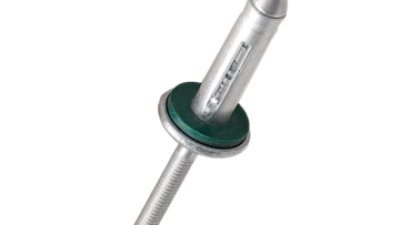
Tri-firm Blind Rivet–Waterproof Lantern Rivets are designed for applications where ordinary blind rivets may allow moisture or dust to penetrate. Their sealed lantern expansion creates a broad internal grip and forms a waterproof barrier after installation, helping protect joints against rain, humidity, vibration, and contamination. Available in aluminum or stainless steel, they can be selected according to weight, corrosion resistance, and structural requirements. The one-sided installation process is suitable for enclosed sections, panels, vehicle bodies, outdoor enclosures, and other assemblies where access to the rear side is limited. As market demand increasingly favors durable, low-maintenance fastening systems, waterproof lantern rivets offer a practical option for improving joint reliability and service life.
Measure every layer in the joint. Include coatings, washers, seals, gaps, and compressed fabric. Clamp the layers before measuring. The real thickness may change.
Select a grip range that comfortably covers the measured stack. Avoid using its absolute maximum. A small margin helps the folds form evenly. Too short may create a loose joint.
Not always. Excess length can over-expand the legs and crush soft surfaces. Add support instead when the material feels spongy. The design may need changing.
Keep the hole clean and only slightly larger than the rivet body. Match the diameter closely. Excess clearance can cause movement. A rough hole can damage the material.
Keep the hole several rivet diameters from the edge when possible. Soft plastic, foam board, and leather can tear easily. An edge washer may spread the pressure.
Use one when the surface is thin, weak, or slightly oversized around the hole. It spreads pressure across a wider area. Check that it sits flat.
Consider both shear and tensile loads. Add a practical margin for vibration and handling. Lightweight assemblies may need lighter material. Heavier loads may require a larger diameter.
Build a small sample joint first. Inspect the rear legs for balanced folds and firm contact. Look for cracking, crushing, looseness, or a tilted head. Hand pressure can hide problems.
Recheck the compressed thickness and grip range. Vibration can reveal hidden looseness. I once underestimated soft-sheet compression. The measurement looked correct, but the joint still failed.
Choosing Tri-Fold Blind Rivets For Soft Materials requires careful attention to how the rivet forms and distributes clamping force. Unlike standard blind rivets, tri-fold designs open into three broad sections on the blind side, helping spread pressure across materials that may be flexible, layered, or prone to deformation. This makes them useful for creating secure joints without excessively crushing the surrounding surface.
Begin by measuring the combined material thickness and selecting a rivet with a suitable grip range. Consider the joint design, hole diameter, access limitations, and the direction of expected loads. Rivet length, body diameter, and head style should work together to provide reliable setting and adequate support. Material and finish selection should also match the application’s environment, while rivet strength should correspond to the joint’s loads and the installation tool’s capabilities. Proper sizing and controlled installation help prevent loosening, tearing, distortion, and uneven clamping in soft materials.