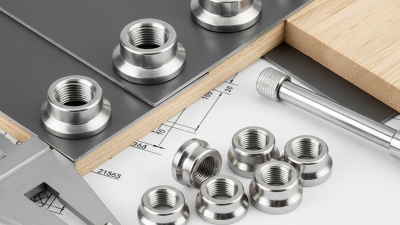
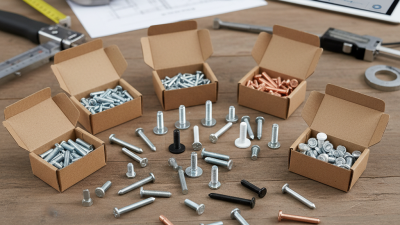
Picking the right Aluminum Rivets isn’t just about comparing prices. It’s a bit more complicated than that. If you’re buying from all over the world, you’ve gotta consider things like the alloy type, diameter, grip range, head shape, mandrel quality, and how well it resist corrosion. A rivet that works great in a dry workshop might totally fail in salty environments, with heavy machinery, or during outdoor transport. So, it’s worth paying attention.
As fastening expert James R. Dwyer, who’s an independent consultant for industrial manufacturers, puts it: “Reliable riveting starts with matching the rivet to the joint, not the other way around.” Basically, aluminum rivets aren’t all the same—they differ in strength, flexibility, how much force they need for installation, and whether they work well with steel or aluminum sheets. It’s not a one-size-fits-all deal.
In this guide, I’ve rounded up ten aluminum rivets that are suitable for real-world buying scenarios. We’re looking at common grades like 5052, 5056, and 2117 aluminum, and exploring different styles—like open-end versus closed-end, countersunk versus dome heads, and the usual sizes used across global supply chains. While ISO and ASTM standards matter, the truth is, having the specs alone doesn’t guarantee how they’ll perform in actual use.
Don’t forget to ask for batch traceability, and be sure to double-check the grip range—it's one of those details that can trip you up. Sometimes a rivet looks super sturdy but might not be what you need. Some might resist corrosion well but have lower shear strength, while others install fast but come with inconsistent mandrels or unclear packaging. Those little weaknesses can cause headaches later.
When choosing, also pay attention to how well the supplier communicates, whether the dimensions stay consistent, if they offer sample testing, and what kind of after-sales support they provide. These little things can save you from costly rework when thousands of rivets arrive at your factory. That said, no list is perfect—conditions vary, and lab tests can only tell you so much. The best approach? Use this as a solid starting point, then do your own testing on the actual materials before making big orders.

Aluminum Rivet Types Defined by ISO 15973–15976 and ASTM B316/B316M
For global buyers, the “10 best” aluminum rivets should be selected by standard, alloy, head form, and joint conditions. ISO 15973–15976 defines blind-rivet configurations, including open, countersunk, large-head, and sealed designs. These details affect hole coverage, pull-through resistance, and moisture protection. A dome head suits general sheet joining. A countersunk head leaves a flatter surface. Sealed versions help protect hollow sections from water and dust.
ASTM B316/B316M addresses aluminum-alloy rivet and cold-heading wire requirements, including alloy and temper controls. Buyers should compare the specified alloy with the required shear and tensile performance, rather than relying on diameter alone. The USGS Mineral Commodity Summaries 2024 reported approximately 70 million metric tons of global primary aluminum production in 2023. That scale supports broad material availability, but it does not guarantee consistent rivet quality. Traceability still matters.
In practice, inspect mandrel retention, head concentricity, and surface damage before installation. Check the rivet grip range against the combined sheet thickness. Too short, and the joint may loosen. Too long, and the rear bulb can deform unevenly. A 4.8 mm rivet is common, but “common” is not proof of suitability. One imperfect assumption deserves attention: ISO classification does not replace application testing. Sample joints should undergo pull, shear, and corrosion checks under realistic conditions. That extra step is slower, yet often exposes problems hidden by a neat product datasheet.
10 Best Aluminum Rivet Sizes for Global Buyers
A neutral buyer shortlist based on common nominal diameters used with aluminum rivets. ISO 15973–15976 cover open-end blind-rivet configurations and head styles, while ASTM B316/B316M covers aluminum and aluminum-alloy rivets. The inch-to-millimetre conversions below use 25.4 mm per inch.
Larger diameters generally provide greater bearing area, while smaller diameters reduce installation space and material usage. Final selection should also verify alloy, head style, grip range, hole diameter, mandrel design, shear and tensile requirements, corrosion exposure, and the exact edition of the applicable standard.
Alloy Comparison: 5052, 5154, 5056, and 2117 Aluminum Rivet Data
10 Best Aluminum Rivets for Global Buyers?
Aluminum rivet selection starts with alloy behavior, not price. In field assembly, 5052 performs well where corrosion resistance and easy forming matter. It suits light panels, ducting, and outdoor enclosures. The joint stays workable.
5154 offers a modest strength improvement over 5052, while retaining useful corrosion resistance. It fits structural covers and equipment exposed to moisture. Check the temper carefully. Temper can change installation force and final joint performance.
5056 is stronger and commonly chosen for demanding, marine-related assemblies. Its higher magnesium content supports better strength, but forming may require more controlled riveting. For
Long Aluminum Rivets,
bucking access and shank expansion deserve close inspection. A long shank can bend instead of filling the hole.
2117 behaves differently from the work-hardening alloys. It is widely used for general aircraft-style riveting because it combines reliable strength with practical installation characteristics. However, its performance depends on diameter, temper, and heat treatment history. Published data should include tensile strength, shear strength, hardness, and corrosion results.
I once compared alloy labels without checking temper. That was a mistake. Two rivets with the same diameter can install very differently. Reliable buyers should request mill certificates, batch traceability, dimensional records, and sample testing. Hole clearance also matters. A clean, properly sized hole often improves joint quality more than a stronger alloy. Small details decide it.
Size, Grip Range, and Load Ratings for Global Buyer Requirements
Choosing among the 10 best aluminum rivets requires more than comparing prices. Size, grip range, and load ratings must match the joint design. FAA AC 43.13-1B commonly uses rivet diameter near three times the sheet thickness for aircraft repairs. Its guidance also references edge distances of about two diameters. For global purchasing, specify both metric and imperial sizes, such as 4.8 mm and 3/16 inch. Measure the complete material stack, including coatings and washers. For solid rivets, grip means the total clamped thickness. A small mismatch can create looseness or an oversized shop head.
Load ratings are not universal. NASA Reference Publication 1228 explains that fastener strength depends on shear, tension, bearing, hole quality, and joint configuration. Alloy and temper also change performance. Aluminum rivets are lightweight, but steel counterparts may carry higher loads. Check published minimum shear and tensile values under ASTM or ISO test conditions. Then apply the required design safety factor. Do not treat a catalog number as a guaranteed working load. Solid Rivets Aluminum selections should include head style, alloy, diameter, length, and installation method. Shorter is not always better. Longer may distort the joint. My practical concern is often ignored: painted surfaces and uneven holes can reduce real strength. Test samples when the assembly carries vibration, pressure, or repeated loading. These details matter across different national standards and supply chains.
Top 10 Aluminum Rivets Ranked by Shear Strength, Corrosion, and Cost
10 Best Aluminum Rivets for Global Buyers?
Top 10 Aluminum Rivets Ranked by Shear Strength, Corrosion, and Cost
For global purchasing, shear strength is only one filter. Engineering tables in FAA AC 43.13-1B and MMPDS show aluminum rivet shear values can range from about 80 to 350 MPa, depending on alloy, temper, diameter, and installation. The practical ranking is: 2024-T4 for maximum shear, 2017-T4 for high-load joints, 2117-T4 for balanced performance, 7050-T73 for demanding aerospace structures, 6061-T6 for strength and availability, 5056-H32 for marine corrosion resistance, 5052-H32 for humid environments, 3003-H14 for light-duty fastening, 1100-H14 for low-cost soft assembly, and aluminum-clad rivets for improved surface protection.
Corrosion changes the order in real service. AMPP guidance identifies salt, trapped moisture, and dissimilar-metal contact as major corrosion accelerators. A rivet exposed beside a wet aluminum panel may outlast a stronger rivet used inside a sealed joint. The Aluminum Association’s alloy data also shows that magnesium-containing alloys generally offer useful marine resistance, while high-strength copper-bearing alloys need better protection. Cost comparisons remain unstable. USGS Mineral Commodity Summaries reports that energy, alumina, and recycled-metal availability strongly influence aluminum pricing. Softer 1100 and 3003 rivets usually reduce installation cost, but their lower shear capacity increases rivet count.
This ranking is imperfect. Laboratory strength is not field reliability. A 2024-T4 rivet may win a test, yet fail the buying decision when corrosion control is weak. Check diameter, grip length, washer use, coating compatibility, and batch certification before approval. Small details matter.
10 Best Aluminum Rivets for Global Buyers? - Top 10 Aluminum Rivets Ranked by Shear Strength, Corrosion, and Cost
| Rank |
Rivet Type and Aluminum Alloy |
Typical Form |
Typical Ultimate Shear Strength
(MPa) |
Corrosion Resistance |
Recommended Environment |
Relative Cost Index
(1–5) |
Best Use |
| 1 |
2024-T4 Aluminum Solid Rivet |
Countersunk or universal head |
260–310 |
Moderate; requires protection |
Dry indoor and protected structural assemblies |
4 |
High-strength aerospace and transport structures |
| 2 |
2017-T4 Aluminum Solid Rivet |
Universal or countersunk head |
230–285 |
Moderate; coating may be needed |
General structural assemblies with controlled exposure |
4 |
Strong, formable connections requiring heat treatment after installation |
| 3 |
2117-T4 Aluminum Solid Rivet |
Universal or countersunk head |
175–220 |
Moderate to good |
Indoor, transport, and moderately exposed applications |
3 |
Balanced strength, cost, and installation convenience |
| 4 |
5056-H32 Aluminum Solid Rivet |
Universal head |
155–200 |
Good to very good |
Marine, outdoor, and humid environments |
4 |
Corrosion-sensitive aluminum structures |
| 5 |
5052-H32 Aluminum Solid Rivet |
Universal or large-flange head |
115–155 |
Very good |
Outdoor panels, ducting, and light marine fabrication |
3 |
Good corrosion resistance with easy forming |
| 6 |
Aluminum-Body, Stainless-Mandrel Blind Rivet |
Open-end blind rivet |
140–210 |
Good; galvanic isolation required |
One-sided installation in equipment and vehicle panels |
4 |
High accessibility where the rear side cannot be reached |
| 7 |
Aluminum-Body, Aluminum-Mandrel Blind Rivet |
Open-end blind rivet |
90–145 |
Good in compatible aluminum assemblies |
Indoor equipment, sheet metal, and low-load panels |
2 |
Low-cost, lightweight general fastening |
| 8 |
Aluminum Sealed Blind Rivet |
Closed-end blind rivet |
110–175 |
Good to very good |
Weather-exposed housings and fluid-resistant enclosures |
4 |
Sealing against moisture, dust, and light fluid ingress |
| 9 |
1100-O Aluminum Solid Rivet |
Universal or countersunk head |
55–85 |
Very good |
Light-duty indoor and nonstructural assemblies |
1 |
Lowest-cost option with maximum ductility |
| 10 |
Aluminum Drive Rivet, 5052-Type Body |
Drive-pin rivet |
45–90 |
Good |
Light panels, signage, and noncritical enclosures |
2 |
Fast installation without access to the rear side |
Data basis: Shear-strength values are representative ultimate ranges for commonly available aluminum rivet materials and configurations. Actual performance depends on rivet diameter, grip length, head style, hole quality, installation method, temperature, and joint design. Cost index is a comparative purchasing indicator, where 1 represents the lowest typical cost and 5 represents the highest typical cost. Corrosion ratings assume proper material compatibility and suitable surface protection.
Blind, Solid, Tubular, and Structural Rivets: Standards-Based Selection
10 Best Aluminum Rivets for Global Buyers?
Selecting aluminum rivets requires more than comparing prices or surface finishes. Blind rivets suit one-sided installation, such as joining a thin enclosure against a frame. Check the grip range, hole diameter, mandrel design, and shear strength. A loose grip can leave movement around the joint. A short grip can damage the sheets.
Solid rivets provide dependable strength when both sides remain accessible. They work well in formed assemblies, but installation needs controlled pressure and proper bucking support. Tubular rivets use less force and suit lighter materials, including signs, panels, and small housings. Their partial hollow shank needs careful inspection. Aluminum Trifold Rivets spread the load behind soft or brittle panels. They can reduce pull-through, especially in thin plastic or composite sheets.
Structural blind rivets deserve stricter checks. Review tensile and shear ratings, locking features, mandrel retention, and approved installation tools. Standards-based purchasing should reference applicable ISO, EN, or ASTM requirements. Confirm alloy temper, corrosion resistance, dimensional tolerance, and lot traceability before ordering internationally. Mixed metal contact can create galvanic corrosion in humid or coastal locations. Add isolation washers or compatible coatings where necessary. A shiny finish proves little. My earlier assumption that larger rivets always improve strength was incomplete. Joint design, edge distance, sheet thickness, and load direction often matter more. Suppliers should provide test reports, dimensional drawings, and clear packaging labels for each rivet type.
Global Compliance: ISO, ASTM, EN, RoHS, and REACH Requirements
Global buyers should evaluate aluminum rivets through compliance, not appearance alone. Aluminum Multigrip Rivets may suit variable material thicknesses, but their alloy, mandrel, coating, and grip range require verification. ISO documents can support quality management, while ASTM and EN references define relevant material or performance expectations. They do not automatically prove every product requirement.
Ask for a batch-specific inspection report. Check tensile strength, shear strength, hole size, and corrosion resistance. The report should identify the alloy, production lot, test method, and sampling conditions. RoHS verification helps address restricted substances in electrical and electronic applications. REACH documentation should clarify substance status and communication duties. These requirements can overlap, but they are not interchangeable. A certificate can still be incomplete.
Tips: Match the rivet specification with the final market. Request a declaration of conformity, material certificate, and current laboratory evidence. Inspect sample cartons for lot numbers and labeling. Review coating chemistry carefully, especially for outdoor use. Small gaps matter. Some buyers check standards but overlook the mandrel material or installation tool. That mistake can cause poor clamping and premature loosening. Also, standards and regulations may change, so confirm the latest customer and destination-market requirements before shipment.
FAQS
: 5052 offers easy forming and strong corrosion resistance for panels, ducts, and outdoor enclosures. 5154 provides slightly higher strength. 5056 suits demanding assemblies but may need controlled installation. 2117 offers reliable strength and practical installation.
Temper affects installation force, hardness, and final joint performance. Check the temper. Two identical diameters may install differently because their tempers differ.
Blind rivets work when only one side is accessible. Solid rivets suit joints with access from both sides. Tubular rivets need less force and fit lighter panels or housings.
Inspect grip length, bucking access, hole clearance, and shank expansion. A long shank can bend instead of filling the hole. Longer is not always stronger.
Use suitable load-spreading designs for thin plastic, composite, or brittle panels. Check grip range and bearing area carefully. A loose grip may allow movement around the joint.
Request material certificates, batch traceability, dimensional records, and sample test results. Reports should identify alloy, lot number, test method, and sampling conditions. Certificates can still be incomplete.
Review applicable ISO, ASTM, and EN requirements for materials and performance. Request restricted-substance declarations for relevant applications. These documents are not interchangeable. Check the destination market.
No. Edge distance, sheet thickness, hole quality, and load direction often matter more. I once assumed larger rivets were automatically stronger. That assumption was incomplete. Clean holes matter.
Conclusion
This guide explains how Aluminum Rivets are selected for international engineering and procurement projects. It defines blind, solid, tubular, and structural rivet types through ISO 15973–15976 and ASTM B316/B316M, then compares 5052, 5154, 5056, and 2117 aluminum alloys by strength, corrosion resistance, formability, and typical application needs. It also shows how diameter, length, grip range, head style, and load ratings affect fastening performance across different materials and joint designs.
The ranking of the top 10 Aluminum Rivets evaluates shear strength, corrosion protection, installation practicality, service reliability, and overall cost. A standards-based selection process helps buyers match rivet construction with indoor, outdoor, marine, transportation, and general industrial requirements. The guide also highlights documentation and compliance considerations, including ISO, ASTM, EN, RoHS, and REACH expectations, enabling global buyers to assess product suitability, traceability, material declarations, and responsible market access before purchase.