Leave Your Message
0%

Picking reliable suppliers for Custom Aluminum Tri-Fold Blind Rivets isn’t just about who has the lowest online price. By 2026, manufacturers really need to show consistent material, accurate forming, and stable production capacity. These rivets usually hold panels, enclosures, signage, and lightweight assemblies together. And honestly, even a small change in mandrel strength can mess with installation quality. That detail matters.

This intro looks at the main supplier types and the criteria that actually help in practice. We cover aluminum grades, rivet body dimensions, flange options, grip ranges, and surface finishes. It also touches on sampling, inspection records, packaging, and how well a supplier communicates during custom development. If you’re an experienced buyer, ask for drawings, dimensional reports, and batch traceability before you commit to larger orders. Solid evidence beats fancy catalog talk every time.

Some people search using the phrase “hemlock blind rivets custom size,” though it might actually point to a different product need. So suppliers should confirm the exact application before quoting. A good engineering team can check hole size, joint thickness, load expectations, and tool compatibility. The advice should be specific—not generic.

No supplier ranking is ever perfect. Production data changes, and a polished website can’t replace factory verification. That’s why our comparison leans on repeatable evidence, responsive service, and realistic technical support. It may need revision as new testing results come in. Worth saying out loud.

The right partner should deliver consistent Custom Aluminum Tri-Fold Blind Rivets, not just a cheap first quote. Buyers can use this guide to weigh experience, manufacturing discipline, and long-term reliability. In the end, the small details often decide the result.
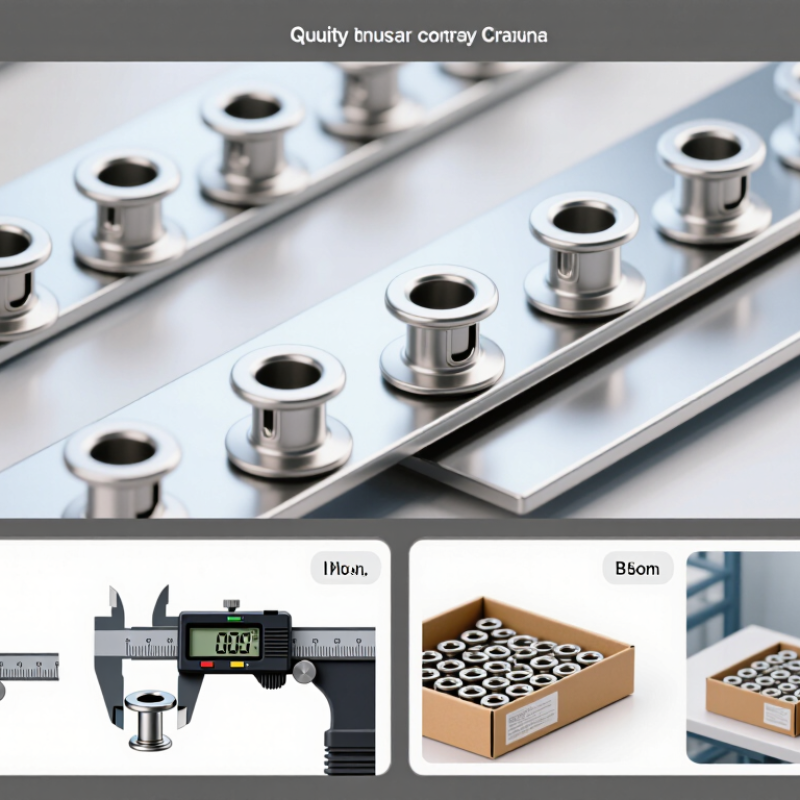
2026 Top Custom Aluminum Tri Fold Blind Rivets Suppliers?

What Are Custom Aluminum Tri-Fold Blind Rivets?

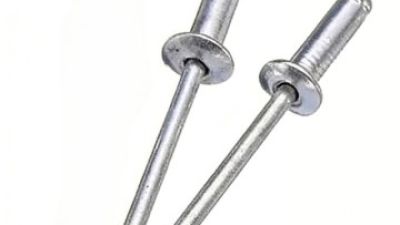
Custom aluminum tri-fold blind rivets are fasteners for joining thin, flexible, or weak back-side materials. Their body expands into three broad legs when the mandrel is pulled. This distributes pressure across a larger area than a standard blind rivet. The result is less crushing around the hole. It is useful for plastic panels, insulation boards, thin sheet metal, and composite surfaces.

The 2024 International Aluminium Institute production data recorded about 72.9 million tonnes of primary aluminium worldwide. That scale supports aluminium’s strong industrial availability. However, availability does not guarantee the right rivet. Custom selection must consider diameter, grip range, head style, alloy, mandrel design, and surface treatment. All Aluminum Tri-Fold Blind Rivets can reduce galvanic corrosion risks between matching aluminium parts. They may not provide enough strength for heavy structural joints. That detail is often underestimated.

Tips: Measure the combined material thickness first. Leave no guesswork. A 4.8 mm rivet with an unsuitable grip range may expand poorly or leave loose panels. Test samples with the actual drill size and installation tool. Check the formed backside visually: three legs should open evenly, without splitting the sheet. ISO blind-rivet guidance and supplier test reports can support verification, but field testing still matters. My practical caution is simple: a neat installation can still hide weak holding power. Specify tensile and shear requirements before ordering large batches.

How Are Aluminum Tri-Fold Blind Rivets Designed and Manufactured?

aluminum tri-fold blind rivets are designed for thin, soft, or hollow panels where ordinary rivets may pull through. Their tubular body divides into three folding legs during setting. These legs spread behind the panel, creating a broad bearing area and reducing local crushing. A controlled mandrel fracture helps form the joint without requiring rear-side access. Small details matter.

Manufacturing usually begins with aluminum wire, cold heading, and precision forming. The body is then drilled or pierced, while the mandrel receives a defined grip and break point. According to the International Aluminium Institute’s 2024 statistics, global primary aluminum production exceeded 70 million tonnes annually. This scale supports stable material availability, but alloy selection still affects strength, ductility, and corrosion behavior.

Factory checks should include body diameter, grip range, mandrel retention, and tensile and shear performance under ASTM B557/B557M methods.

The three-leg geometry is not automatically stronger. Poor forming can leave uneven legs, sharp edges, or incomplete expansion behind the sheet. That weakness may appear only after vibration or repeated loading. European Aluminium reports that recycling aluminum can require up to 95% less energy than primary production, making scrap separation and process yield important manufacturing measures.

In practice, reliable suppliers document alloy certificates, dimensional sampling, setting-force tests, and batch traceability. One overlooked issue remains coating compatibility. A rivet can pass a static test yet develop galvanic corrosion against a dissimilar panel. Testing should reflect the real assembly.

Which Specifications Matter When Choosing a Rivet Supplier?

Choosing a reliable Aluminum Tri Fold Blind Rivet supplier requires more than comparing unit prices. Start with the rivet diameter, length, and grip range. These dimensions must match the panel thickness, washer depth, and drilled hole. A practical supplier should provide clear tolerance data, not vague measurements. Ask about aluminum alloy, mandrel material, head diameter, and surface finish. These details affect corrosion resistance, pull-through performance, and installation quality.

Testing records also matter. Request tensile and shear strength results for the exact rivet specification. Batch traceability is valuable when production problems appear months later. A dependable supplier should explain inspection methods, sampling levels, packaging protection, and delivery controls. Custom colors or lengths need sample approval before mass production. I have learned that a perfect-looking sample can still hide inconsistent grip ranges. Recheck the second batch. It may differ slightly.

Tips: Measure the assembled material, not just one sheet. Confirm the working grip range with a real fixture. Ask for several samples from different production lots. Check whether the mandrel remains secure after installation. Small details matter. Also review communication speed and technical support. A supplier who answers specifications clearly is often easier to trust when unexpected fit issues arise. Avoid choosing solely by price; unstable dimensions can create loose joints, damaged surfaces, and expensive rework.

How to Evaluate Top Custom Aluminum Rivet Suppliers in 2026

How to Evaluate Top Custom Aluminum Rivet Suppliers in 2026

Evaluating a custom aluminum tri-fold blind rivet supplier requires more than comparing unit prices. The USGS Mineral Commodity Summaries 2025 estimates global primary aluminum production reached about 74 million metric tons in 2024. This scale makes material traceability essential. Ask for alloy certificates, batch records, and documented temper conditions. A low quotation may hide inconsistent aluminum chemistry or mixed production lots.

Check whether the supplier understands tri-fold expansion. Request samples using your actual panel thickness, hole diameter, and grip range. Measure the formed legs, head seating, pull-through resistance, and mandrel retention. ISO 15977 provides a useful reference for open-end blind rivets, but custom designs still need application testing. Do not accept a polished sample alone. Real assemblies reveal more.

Reliability is measurable.

The International Aluminium Institute reports that recycled aluminum requires roughly 5% of the energy used for primary aluminum production. Ask suppliers to disclose recycled content, melting location, and inspection methods. Useful evidence includes dimensional reports, tensile and shear results, salt-spray data, and corrective-action records. Also review production capacity, tooling ownership, packaging controls, and lead-time history. My caution is practical: supplier audits can miss problems when they examine only documents. Repeat testing from random shipments may expose variations that an impressive factory visit does not.

What Quality Standards Should Suppliers Meet?

For 2026 custom aluminum tri-fold blind rivets, suppliers should prove quality through measurable controls, not attractive catalogs. ISO’s 2023 Survey recorded more than 1.26 million ISO 9001 certificates worldwide, yet certification alone does not guarantee consistent rivets. Buyers should request alloy and temper records, dimensional reports, and lot-level certificates of conformity. Each report should identify body diameter, head diameter, grip range, mandrel material, and production batch.

Mechanical performance requires documented testing. Suppliers should reference applicable International Fastener Institute requirements and use recognized methods such as ASTM F606/F606M where relevant to fastener testing. Pull-through, shear, and tensile results should match the customer’s design load, not merely pass an internal checklist. A practical sample includes checking 3.2 mm and 4.0 mm rivets with calibrated gauges, then recording mandrel break location and visible body expansion. Small details matter.

Corrosion control also deserves evidence. ASTM B117 salt-spray testing can compare finishes, but exposure hours should never replace a real application assessment. Aluminum alloy selection, washer compatibility, and contact with steel can change results. Suppliers should maintain calibrated equipment, traceability, corrective-action records, and documented sampling plans. Material declarations should address applicable substance restrictions. Some suppliers provide impressive paperwork but weak batch discipline. That gap needs questioning. Request recent test data, not old examples, and inspect sample lots before approving long-term production.

How to Compare Pricing, Lead Times, and Customization Services

When comparing tri-fold aluminum rivets, start with a like-for-like quotation. Ask suppliers to price the same diameter, grip range, head style, alloy, and surface finish. A low unit price may exclude tooling, packaging, inspection, or shipping. Request a cost breakdown instead of accepting one figure.

Lead time needs equal attention. Separate sample production, tooling preparation, and mass production dates. A supplier quoting seven days may mean only standard sizes are available. Custom colors, special mandrels, or altered head dimensions can add several weeks. Confirm daily capacity, raw material availability, and the planned inspection date. Put every milestone in writing. Verbal promises are easy to misunderstand.

Customization quality depends on technical communication. Send drawings with tolerances, application photos, and required pull-out performance. Reliable suppliers should provide material certificates, dimensional reports, and sample approval records. For tri-fold aluminum rivets, check whether the open legs form evenly without sharp edges or loose movement. Test samples with your actual panels, not only laboratory coupons. The first sample may pass, but production consistency still needs checking. That part is often underestimated. Compare carton counts, moisture protection, labeling, and replacement terms alongside price. A slightly higher offer may reduce sorting labor and delayed assembly, but only if the supplier proves those controls.

2026 Top Custom Aluminum Tri Fold Blind Rivets Suppliers? — How to Compare Pricing, Lead Times, and Customization Services
Supplier Profile Primary Production Region Typical Rivet Sizes Aluminum Material Options Indicative Price
(USD / 1,000 pcs)
Typical MOQ Sample Lead Time Production Lead Time Customization Services Quality and Compliance Documents Packaging Options Overall Fit
Profile A East Asia 3.2 × 6–16 mm
4.0 × 8–25 mm
4.8 × 10⁻³⁰ mm
Aluminum alloy body with steel or aluminum mandrel; standard and low-carbon options available $18–$42 10,000 pcs 5–8 business days 18–28 business days Custom grip range, head diameter, mandrel length, color coating, logo-free neutral packaging, and carton labeling Material certificate, dimensional inspection report, tensile and shear test data, RoHS and REACH declarations on request Bulk cartons, partitioned cartons, plastic bags, or customer-specified pack counts Best for high-volume OEM programs
Profile B East Asia 3.2 × 6–20 mm
4.0 × 8–25 mm
4.8 × 10⁻³² mm
Aluminum body with steel mandrel; options for corrosion-resistant mandrel finishes $22–$48 5,000 pcs 4–7 business days 20–30 business days Custom tri-fold leg geometry, closed-end variants, painted heads, plating coordination, and barcode labels Certificate of conformity, batch traceability, dimensional report, salt-spray data for coated parts, RoHS and REACH support Retail-ready boxes, bulk cartons, blister-compatible inner packs, and export pallets Best balance of flexibility and cost
Profile C South Asia 3.2 × 6–16 mm
4.0 × 8–20 mm
4.8 × 10⁻²⁵ mm
Commercial-grade aluminum body with steel mandrel; standard alloy selection $16–$36 20,000 pcs 7–10 business days 25–40 business days Basic length and color customization, standard head styles, carton printing, and lot separation Basic material declaration, inspection report, packing list, and certificate of conformity Bulk cartons and moisture-protected export packaging Best for cost-sensitive standard parts
Profile D Europe 3.2 × 6–16 mm
4.0 × 8–20 mm
4.8 × 10⁻²⁵ mm
Specified aluminum alloy grades with controlled batch traceability; steel or aluminum mandrel options $52–$95 2,000 pcs 7–12 business days 30–45 business days Engineering review, custom tooling, controlled finishes, small-batch trials, and application-specific pull-out testing Full material traceability, inspection plan, dimensional capability data, RoHS, REACH, and ISO-based quality documentation Lot-controlled cartons, tamper-evident labels, and serialized or traceable packaging Best for regulated or high-specification applications
Profile E North America 3.2 × 6–16 mm
4.0 × 8–20 mm
4.8 × 10⁻²⁵ mm
Aluminum body with steel mandrel; domestically stocked standard materials and imported custom sizes $48–$88 1,000 pcs for stocked sizes 2–5 business days for stock
10–15 days for samples
7–15 business days for stock
35–50 days for custom production
Short-run customization, kitting, vendor-managed inventory, custom labels, and local technical support Certificate of conformity, dimensional report, country-of-origin documentation, and compliance declarations when requested Standard cartons, custom pack quantities, kitting, and warehouse replenishment packaging Best for fast regional replenishment
Profile F East Asia 4.0 × 8–25 mm
4.8 × 10⁻³² mm
6.0 × 12–40 mm
High-strength aluminum body with steel mandrel; heavy-duty and weather-resistant options $28–$62 8,000 pcs 6–9 business days 22–35 business days Extended grip ranges, larger head diameters, sealed variants, custom mandrel retention, and application testing Tensile, shear, mandrel-retention, dimensional, and coating reports; RoHS and REACH declarations available Heavy-duty cartons, moisture barriers, batch-separated packaging, and palletized export loads Best for construction and outdoor fastening
Profile G Southeast Asia 3.2 × 6–16 mm
4.0 × 8–25 mm
4.8 × 10⁻³⁰ mm
Aluminum body with steel mandrel; standard alloy and recycled-content options subject to approval $20–$44 10,000 pcs 6–10 business days 24–36 business days Custom surface colors, printed cartons, pack-count changes, mixed-size orders, and production samples Material declaration, factory inspection report, batch records, certificate of conformity, and environmental declarations on request Bulk cartons, recyclable inner bags, custom carton markings, and export palletization Best for sustainable packaging and mixed orders
Profile H East Asia 3.2 × 6–20 mm
4.0 × 8–25 mm
4.8 × 10⁻³² mm
Aluminum alloy body with steel mandrel; anodized, painted, and weather-resistant surface options $24–$55 3,000 pcs 5–8 business days 20–32 business days Rapid prototyping, custom tooling, color matching, laser-mark-free packaging, sample approval, and inspection checkpoints Dimensional inspection, performance test report, material certificate, RoHS, REACH, and ISO 9001-based process records Small-batch cartons, retail packs, neutral packaging, and customer-defined labeling Best for custom development and medium volumes
Comparison note: Prices are indicative 2026 market ranges for standard aluminum tri-fold blind rivets, quoted in USD per 1,000 pieces. Actual pricing depends on rivet diameter, grip range, mandrel material, finish, order volume, testing requirements, packaging, tooling, freight, duties, and payment terms. Lead times generally begin after drawing approval, sample approval, and deposit receipt. Request a dimensional drawing, material certificate, performance test report, and a landed-cost quotation before making a supplier decision.

China 5052 Aluminum Dome Head Blind Rivets: Grade 11 Strength, Applications, and Factory Sourcing

China 5052 Aluminum Dome Head Blind Rivets are designed for applications requiring dependable fastening, low weight, and strong resistance to environmental exposure. Manufactured to meet IFI-114 Grade 11 requirements, these industrial-strength rivets provide consistent setting performance and reliable load retention when access is available from only one side. The 5052 aluminum alloy offers excellent corrosion resistance, while its non-magnetic characteristics make it suitable for marine equipment, electronic enclosures, transportation components, and general industrial assemblies.

Material selection is supported by broader industry trends. The U.S. Geological Survey’s *Mineral Commodity Summaries 2024* identifies aluminum as a major engineering material valued for its low density, corrosion resistance, and recyclability. In addition, the International Aluminium Institute reports that aluminum demand continues to expand across transportation, construction, and electrical applications, where weight reduction and long service life are important design priorities. These characteristics help explain the growing use of aluminum blind rivets in environments where steel fasteners may add unnecessary weight or create magnetic interference.

For factory sourcing, buyers should verify alloy certificates, IFI-114 Grade 11 test results, dimensional tolerances, mandrel retention, coating options, and batch traceability. A capable Chinese manufacturer should also provide controlled forming, automated inspection, salt-spray evaluation, and dependable packaging for export shipment. Dome-head geometry distributes clamping pressure over a broad surface, helping protect thin sheet materials while producing a clean, uniform finish.

FAQS

What panels are aluminum tri-fold blind rivets designed for?

They suit thin, soft, or hollow panels. Their three legs fold behind the sheet and create a wider bearing area. This reduces pull-through and local crushing.

How does a tri-fold rivet form its joint?

A setting tool pulls the mandrel through the tubular body. The body divides into three folding legs. The legs expand behind the panel without rear-side access. That hidden side is useful.

What materials and processes are used during manufacturing?

Production commonly starts with aluminum wire. Cold heading forms the body, followed by drilling or piercing. The mandrel receives a defined grip length and break point. Small forming errors can matter later.

Does three-leg geometry always provide greater strength?

No. Uneven legs may expand incompletely or create sharp edges. The joint can appear acceptable but weaken under vibration. Static strength alone may not reveal this problem.

Which dimensions should buyers check?

Check body diameter, head diameter, grip range, and mandrel retention. A practical inspection can include 3.2 mm and 4.0 mm rivets. Use calibrated gauges and record each batch. Do not rely only on catalog drawings.

What performance tests should suppliers provide?

Request pull-through, shear, tensile, and setting-force results. Testing should match the actual design load. Inspect mandrel break location and visible body expansion. A passing internal checklist may still be inadequate.

How can corrosion risks be evaluated?

Review the aluminum alloy, finish, washer, and adjacent panel materials. Contact with steel can create galvanic corrosion. Salt-spray exposure helps compare finishes, but it cannot represent every assembly. Test the real combination when possible.

What supplier records support consistent quality?

Request alloy certificates, dimensional reports, conformity records, and batch traceability. Recent sample-lot data is more useful than old examples. Suppliers should also document equipment calibration and corrective actions. Paperwork can look complete. Verify it.

Conclusion

Custom Aluminum Tri-Fold Blind Rivets are specialized fasteners designed to join materials securely when access is available from only one side. Their three-fold expansion creates a broad bearing surface behind the panel, making them suitable for applications involving thin, soft, or layered materials. This article explains how these rivets are engineered and manufactured, including aluminum alloy selection, mandrel design, dimensional control, surface treatment, and performance testing.

When evaluating suppliers in 2026, buyers should compare rivet diameter, grip range, head style, mandrel strength, corrosion resistance, and compatibility with installation tools. Reliable suppliers should demonstrate consistent production control, traceability, inspection procedures, and compliance with relevant quality standards. The article also outlines practical methods for comparing quotations, minimum order quantities, sample services, tooling support, customization capabilities, production lead times, packaging, and after-sales communication. A balanced assessment of technical expertise, quality assurance, delivery reliability, and total cost can help customers select the most suitable source for Custom Aluminum Tri-Fold Blind Rivets.


Lila

Lila

Lila is a dedicated marketing professional with extensive experience in the fastener industry, specializing in blind rivets, rivet nuts, and non-standard fasteners. With a profound understanding of the technical aspects and applications of products such as open-end blind rivets, grip blind rivets,......
Previous 7 Tips for Aluminium Tri Fold Blind Rivets for Trucks