
Leave Your Message
Explore our premium industrial fasteners engineered specifically to resolve thin-sheet thread strip-out, thermal distortion, and single-access constraints.
How blind rivet nuts eliminate tapping limits, structural warping, and weld spatter in sheets from 0.5 mm to 3.0 mm.
Traditional fastening methods such as standard bolts and nuts demand simultaneous access to both sides of a workpiece. Blind nuts, alternatively known as threaded rivet inserts, compress entirely from the installation face, creating robust internal female threads in closed tubular sections and structural chassis where rear access is structurally impossible.
Unlike thermal projection welding or resistance stud welding, cold mechanical installation eliminates heat-affected zones (HAZ). Pre-painted, galvanized, anodized, or composite-bonded thin sheet metals retain their factory corrosion protection without discoloration, metal warping, or costly post-weld slag cleanup cycles.
Directly tapping into sheet metal under 2.0 mm thickness yields only 1 to 2 thread pitches, causing premature stripping under nominal dynamic tightening torques. Blind nuts expand into a wide clamping bulge behind the parent sheet, distributing tension evenly and delivering ultimate pull-out strengths exceeding standard grade bolt ratings.
Joining thin sheet metals poses fundamental mechanical dilemmas across lightweight manufacturing. As automotive Body-in-White (BIW), electrical enclosures, and aviation skins transition toward ultra-thin high-strength steels (UHSS) and structural 5000/6000-series aluminum alloys, conventional thermal tapping or flow-drilling reaches severe physical boundaries.
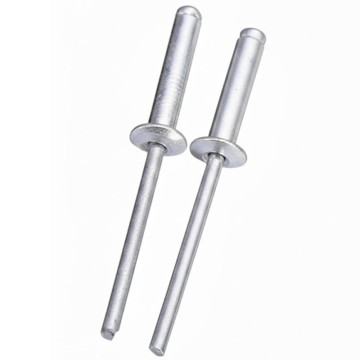
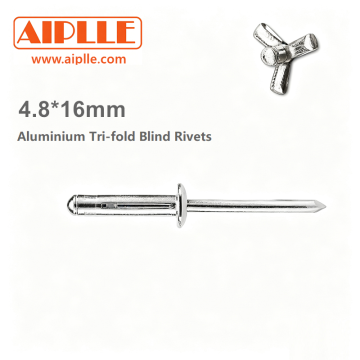
A blind nut operates on progressive axial upset deformation. A threaded mandrel pulls the internally threaded counterbore of the fastener toward the parent plate. Because the unthreaded collapsible shank is engineered with controlled wall thicknesses, it buckles predictably against the rear blind face of the metal panel. This creates a 360-degree radial bulb—or in the case of slotted lantern designs, triple folded legs—that firmly sandwiches the sheet metal between the head flange and the formed bulb.
Under repeated high-torque pneumatic screw installations, cylindrical blind nuts can risk spinning out inside soft aluminum or pre-lubricated coated sheets. Advanced fastener engineering circumvents this through splined, knurled, or full-hexagonal body geometries. Hexagonal laser-cut or punched holes lock the hexagonal rivet nut firmly into place, providing superior torsional resistance against reverse disassembly.
Furthermore, in multi-material joins—such as bonding carbon fiber reinforced plastics (CFRP) or polycarbonate brackets directly to thin rolled aluminum—blind nuts act as structural thread anchors that isolate fragile composite fibers from concentrated compressive shearing, ensuring permanent joint integrity.
A quantitative overview evaluating process speed, mechanical resilience, and material compatibility across modern thin-gauge fastening practices.
| Joining Method | Access Required | Heat / Thermal Impact | Thin Sheet Stripping Risk | Post-Finish Compatibility | Automation Readiness |
|---|---|---|---|---|---|
| Blind Nuts (Rivet Nuts) | Single-Sided Only | Zero (Cold Formation) | Extremely Low (Multi-thread body) | Excellent (Coated/Painted OK) | High (Robotic Feeders) |
| Resistance Weld Nuts | Double-Sided Recommended | Severe Thermal Distortion | Moderate (Weld brittle zones) | Poor (Destroys zinc/paint) | Moderate (High power lines) |
| Direct Thread Tapping | Single or Double | Zero | Critical (Less than 2 thread teeth) | Good | High (Self-tapping screws) |
| Clinched / Press Nuts | Dual-Sided (Press + Anvil) | Zero | Low | Moderate (Edge deformation) | Moderate (Press tooling required) |
| Structural Blind Rivets | Single-Sided Only | Zero | Low (Permanent clamp) | Excellent | High (Pneumatic tools) |
Detailed performance review of lantern trifold rivets and blind nuts in automotive mass production environments.
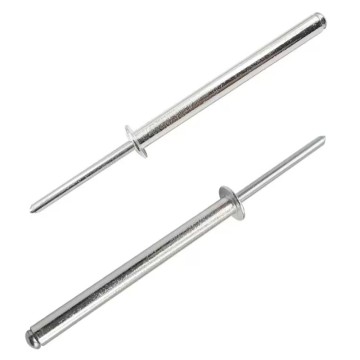
Lantern rivets are often used to connect components such as plastic instrument panels, interior trim panels and automotive interior decorations. These parts are mostly made of fragile or soft materials like plastics. The three folded feet formed after the riveting of lantern rivets can distribute the clamping force, avoiding damage to the riveted materials. Meanwhile, rivets with large caps can increase the riveting area and further disperse the riveting load.
Lantern rivets are extensively applied in the assembly of automotive bumpers. They have good load - bearing capacity and stability, are suitable for connecting various metal and non - metal materials, and can meet the requirements of reinforced assembly between bumpers and vehicle body structures. In addition, lantern rivets are also used for fixing some automotive lamps, and their structure can provide reliable connection in vibrating environments.
In the automotive ventilation system, lantern rivets can be used to connect related components. The components of the ventilation system usually need to be connected with materials such as rubber and plastics, and the characteristics of lantern rivets make them well - adapted to these materials, ensuring the firmness and tightness of the connection.
Lantern rivets are also adopted for connecting the casings or brackets of electronic equipment inside the car, such as audio systems and on - board computers. They can realize the reliable connection of components like thin metal plates or plastic casings without damaging electronic components.
For some trucks or cars equipped with tarpaulins, lantern - type rivet nuts can be used to fix the tarpaulins. Their expanded structure has a large contact surface, which can fix the tarpaulins more firmly.
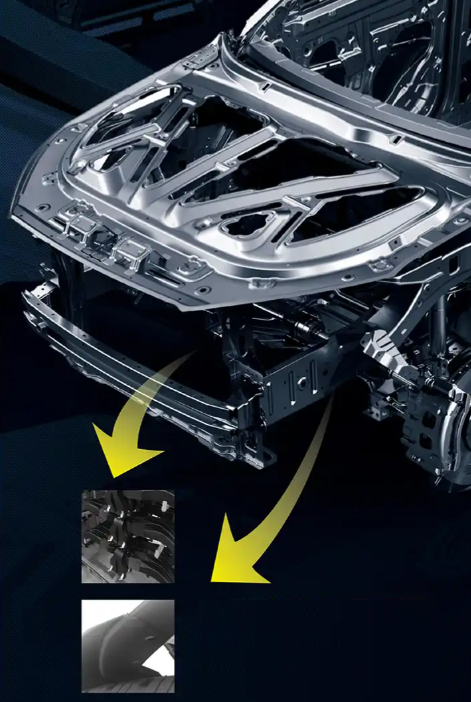
Market forces driving blind nuts toward high-speed automation, EV battery safety, and sustainable circular manufacturing.
The rapid electrification of passenger and commercial vehicles demands drastic weight savings alongside rigorous structural ingress protection. EV battery trays and pack cover enclosures frequently utilize thin cast or extruded 6000-series aluminum sheets bonded with composite underbody skid plates. Welding these multi-material sandwiches risks breaching thermal run-away containment layers or causing pinhole coolant leaks.
Blind nuts provide watertight (IP67/IP68 rated) encapsulated threaded bushings sealed with integrated silicone or EPDM O-rings. When installed into battery lids, they allow recurring service access for battery cell maintenance, modules replacement, or end-of-life recycling without degrading the thread integrity of the thin aluminum frame.
Modern assembly plants operate with high-speed 6-axis collaborative robotic cells equipped with automated blow-feed systems. Today's smart blind rivet nut setting tools leverage embedded piezo-electric force transducers and optical position sensors to calculate the exact force-stroke displacement curve in real time (sampling over 1,000 data points per rivet cycle).
By comparing setting curves against trained AI predictive models, the fastening system immediately flags under-sheet burrs, hole misalignment, or material gauge variations before the assembly moves down the line. This zero-defect traceability is critical for Tier-1 automotive and aerospace certification standards.
In utility-scale solar tracker systems and commercial rooftop photovoltaic arrays, modules must withstand severe dynamic wind flutter on thin galvanized cold-formed steel purlins. Blind nuts deliver rapid field assembly with cordless electro-hydraulic setting tools, negating the logistical bottleneck of double-sided wrench holding. In HVAC air-handling plenums, vibration-dampening neoprene-sleeved blind nuts eliminate acoustic resonance while maintaining airtight duct seals.
When joining dissimilar metals—such as stainless steel fasteners into thin aluminum chassis—electrochemical potential differences can cause catastrophic galvanic corrosion over time. Leading fastener manufacturers now deploy specialized geomet and inorganic zinc-flake coatings, along with specialized nickel alloy and A4 marine-grade stainless blind nuts, providing salt-spray endurance exceeding 1,500 hours without red rust breakdown.
Comprehensive technical specifications designed for industrial sheet metal fastening, automotive structures, and architectural assemblies.
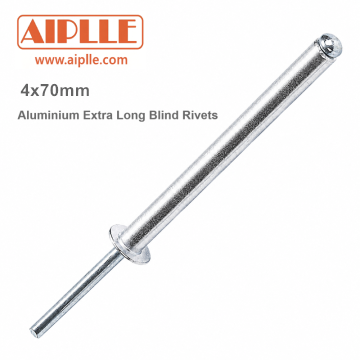
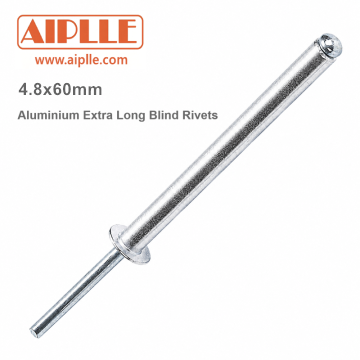
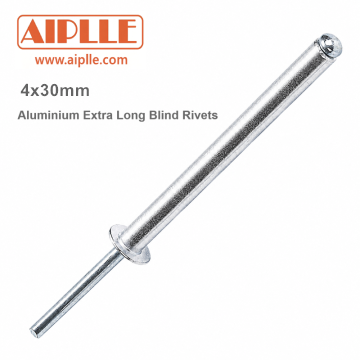
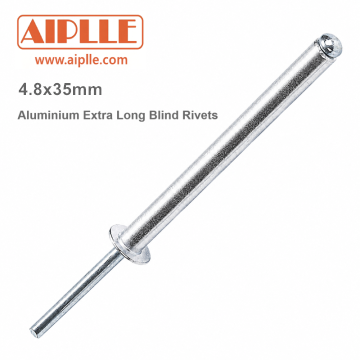
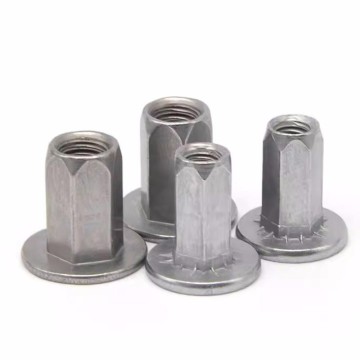
Key design factors engineers must evaluate when planning blind nut implementations for thin-gauge metal fabrications.
Proper hole preparation is paramount. Laser cutting, CNC punching, or clean reaming must maintain manufacturer diameter tolerances within ±0.05 mm. Additionally, ensure the distance from the hole center to any sheet edge is at least twice the hole diameter to avoid perimeter bulging during blind upsetting.
Every blind rivet nut is calibrated for a specific material thickness band (e.g., 0.5–2.0 mm or 2.0–4.0 mm). Installing a fastener outside its specified grip range results either in an incomplete rear bulb with inadequate clamping force, or an over-compressed collapsed shank that risks stripping the internal threads.
Choose between flat (wide) flanges and countersunk or low-profile heads. Flat flanges maximize bearing surface area, ideal for soft aluminum and high vibration. Low-profile countersunk versions sit virtually flush with the sheet metal plane, ensuring unobstructed mating surface contact without secondary chamfering operations.