
Which is more stable screws or blind rivets?
Stability is the top priority when selecting fasteners for industrial manufacturing, structural assembly, outdoor equipment.
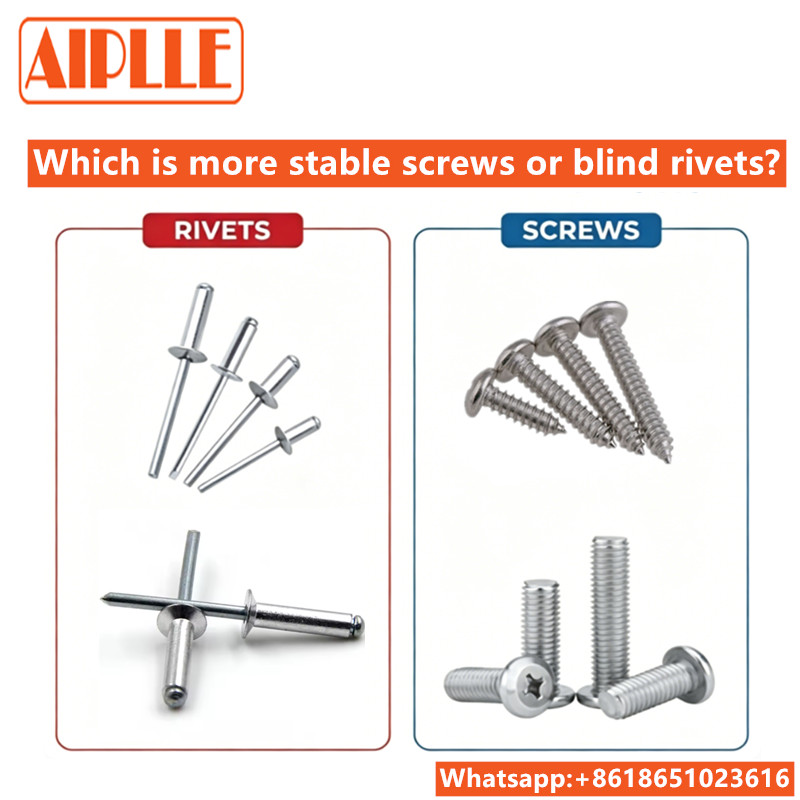
1. Core Structural Difference Decides Fundamental Stability Performance
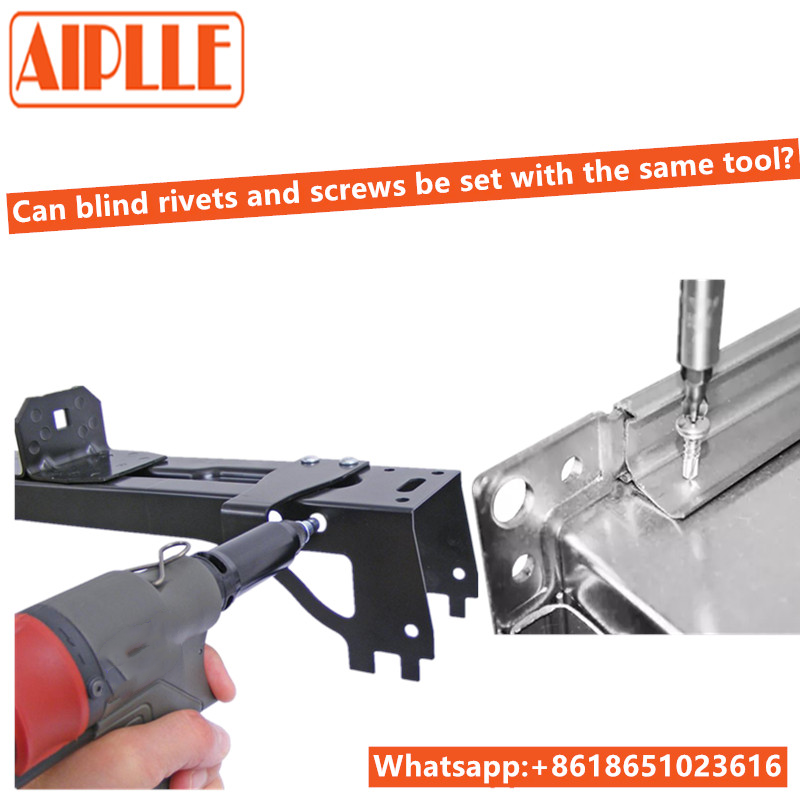
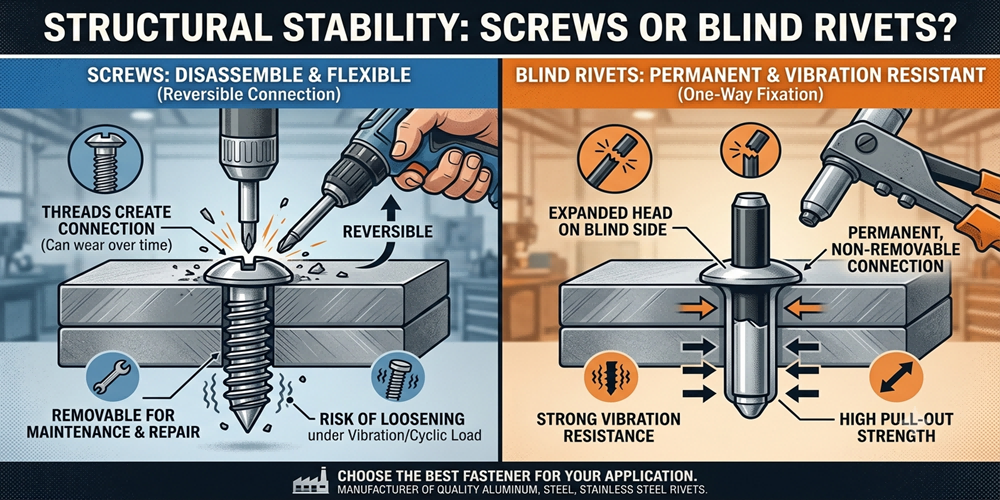
Screws Its fastening force is dependent on the friction between thread teeth and the pre-tightening force during installation. The biggest structural flaw is that the thread gap and friction coefficient are susceptible to external interference, which easily leads to loose fixation over time.
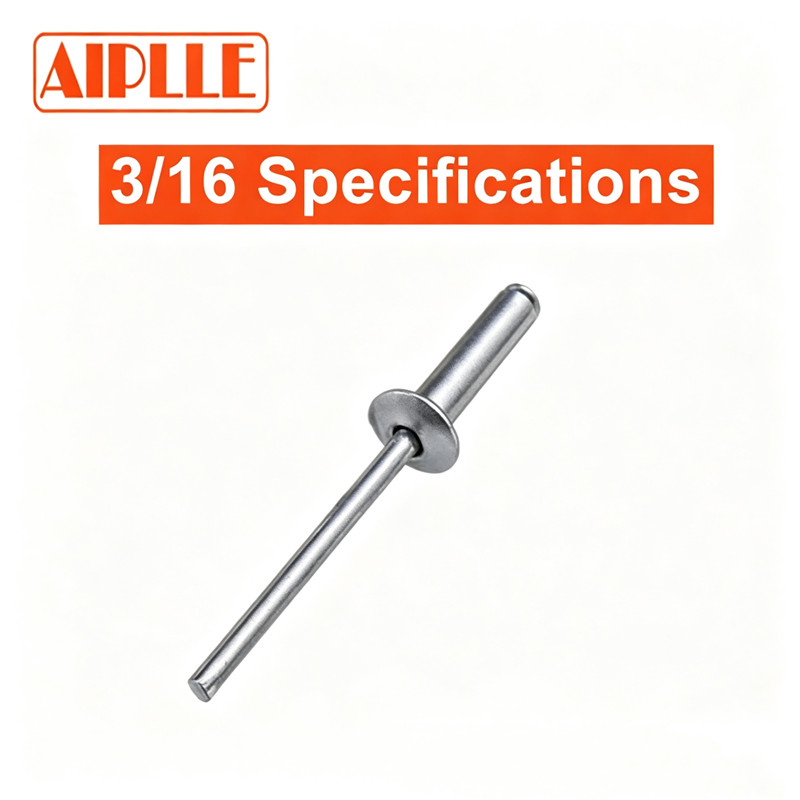
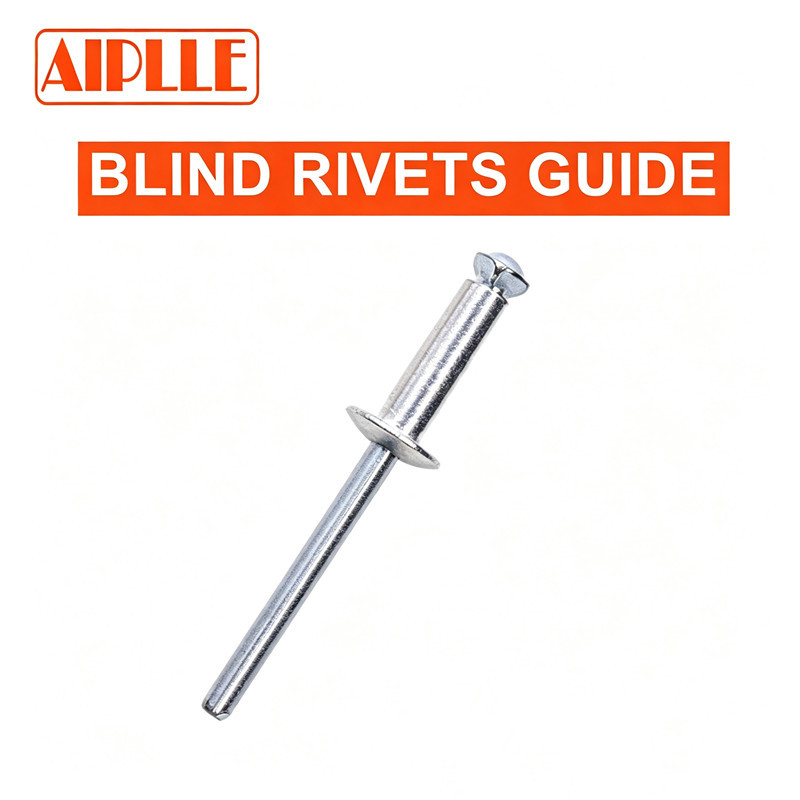
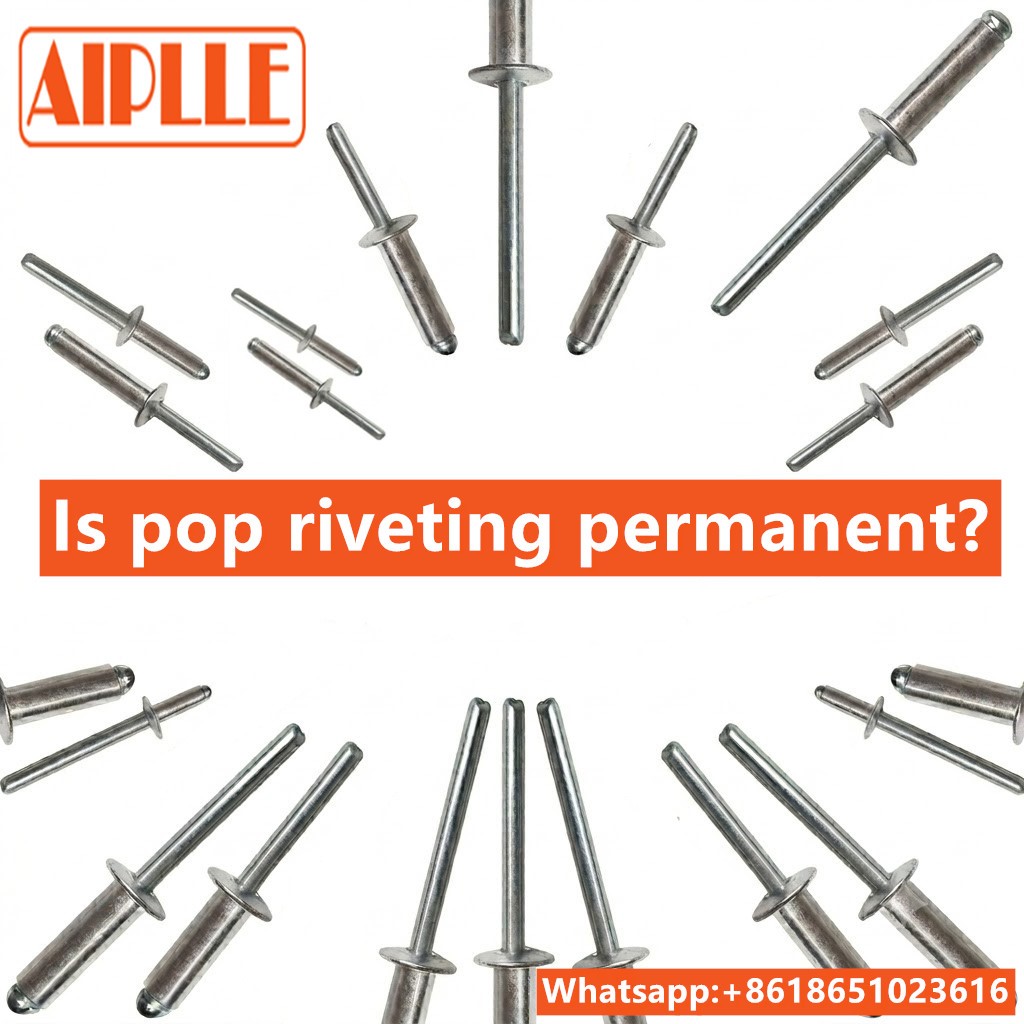
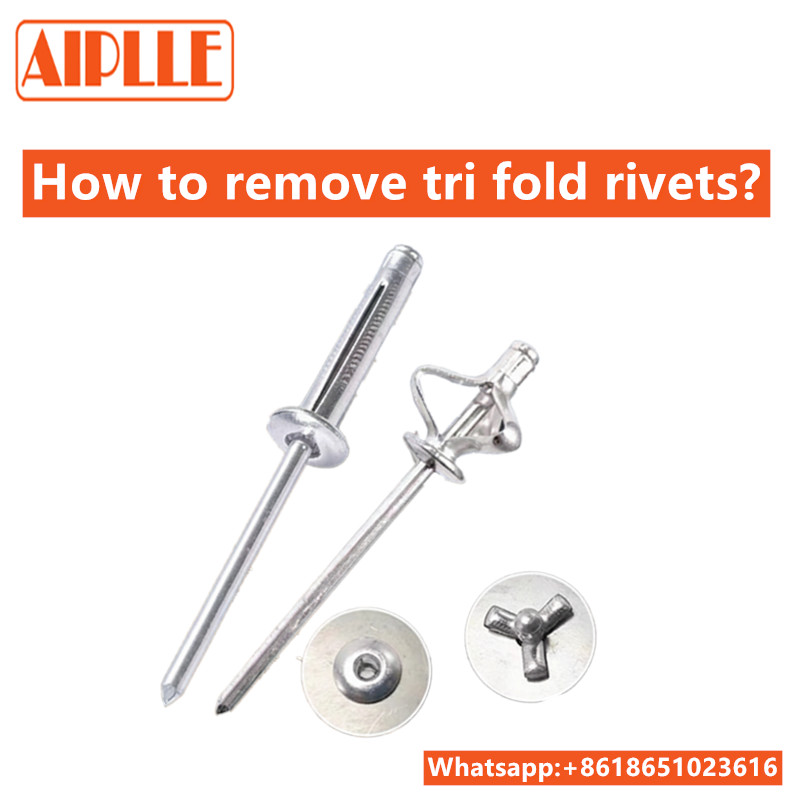
Blind rivets This structural feature makes blind rivets inherently more stable in continuous dynamic working environments.
2. Installation & Structural Matching Stability
Screws require double-sided operation in most structural scenes and have high requirements for hole position accuracy and base material thickness. When used for thin plates and soft materials such as plastic and plywood, screws are easy to over-tighten, causing hole wall cracking and thread stripping, resulting in unstable connection. In addition, screw installation relies on manual torque control, and improper operation will leave hidden dangers of loose fastening.
Blind rivets only need single-sided installation, which is suitable for closed and semi-closed structures that cannot be operated on both sides. It has good adaptability to thin plates, fragile composite materials, and porous materials. The expansion and locking process will not damage the base material, and the installation consistency is high. The unified mechanical deformation ensures that each fastening point has stable and consistent strength, avoiding the stability difference caused by human operation errors.
3. When to Choose Screws for Better Stability
Screws are not inferior in stability, and they are the more stable choice in specific scenarios. You should prioritize screws in the following situations:
Static fixed structures without vibration and impact load
Equipment and parts that require later disassembly, maintenance, and adjustment
Thick solid workpieces with high requirements for static tensile strength
Indoor dry environment with low corrosion risk and stable working conditions
4. When Blind Rivets Are More Stable Than Screws
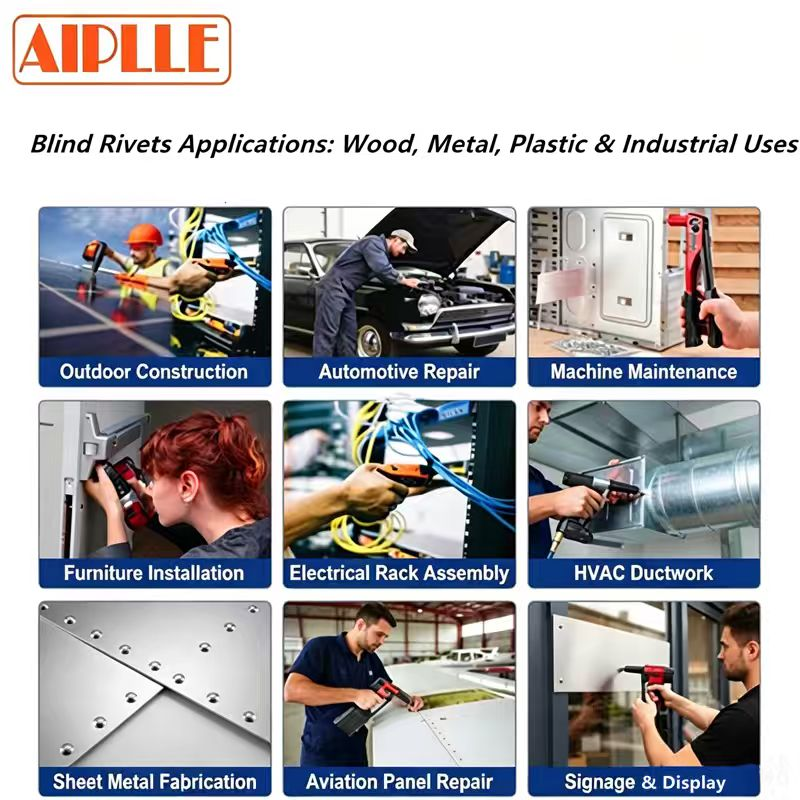
Blind rivets show absolute stability advantages in dynamic and harsh environments, and are the preferred stable fasteners for the following scenarios:
Mechanical equipment, vehicle parts, and transmission devices with long-term vibration
Thin metal plates, plastic parts, and composite material assemblies
Closed structures and blind holes that only support single-sided installation
Outdoor, marine, and high-low temperature alternating harsh environments
Engineering projects that require zero loosening and long-term maintenance-free
For more details ,you can search our website: