

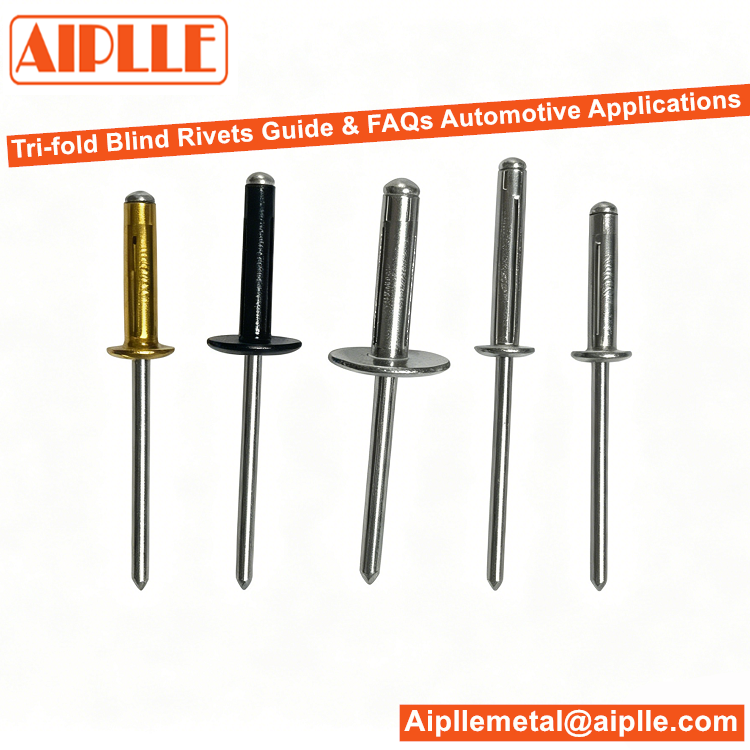
What is Multigrip blind rivet used for ?
Application of Aluminium steel multi-grip blind rivet ,steel multi-grip blind rivet,304SUS multi-grip blind rivet
Aiplle Advantage of Multi-grip blind rivet.
● High Quality: We strictly control the selection of raw materials and production processes, conduct real-time monitoring during production, and adhere strictly to the factory’s ISO 9001 management and quality standards. This ensures uniform dimensions, smooth surfaces, complete deformation after riveting, no burrs, and stable performance, eliminating “false riveting” (where the surfaces are joined but not secured internally).
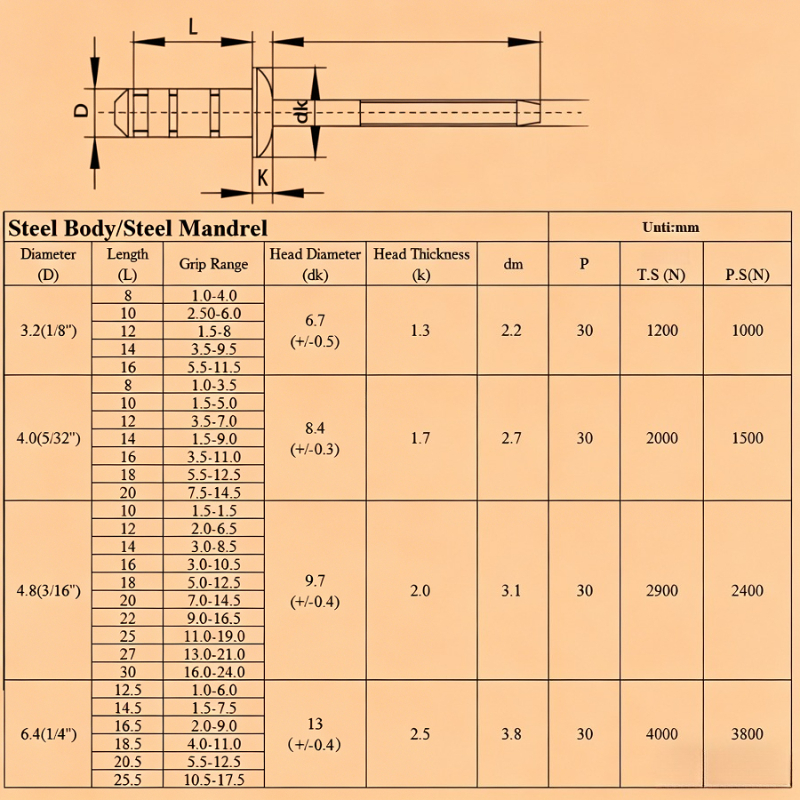
● Comprehensive Range: We offer three materials (aluminum-iron, all-iron, and stainless steel) and standard diameters (3.2mm, 4mm, 4.8mm, 6.4mm) to meet the diverse needs of various industries and applications, eliminating the need for customers to source from multiple suppliers.
● Direct from Factory: No middlemen, competitive pricing, and support for both bulk and small-scale wholesale orders (minimum order quantities are negotiable). We also offer customization services for logos, packaging, and designs based on customer needs (minimum order quantity for customization: 50,000 pieces). Additionally, we provide retail-sized packaging to meet the needs of small-scale wholesalers and retail buyers.
● Easy Installation: Compatible with various riveting tools, requiring no special equipment. Installation is efficient, effectively improving the assembly efficiency of our customers’ products.
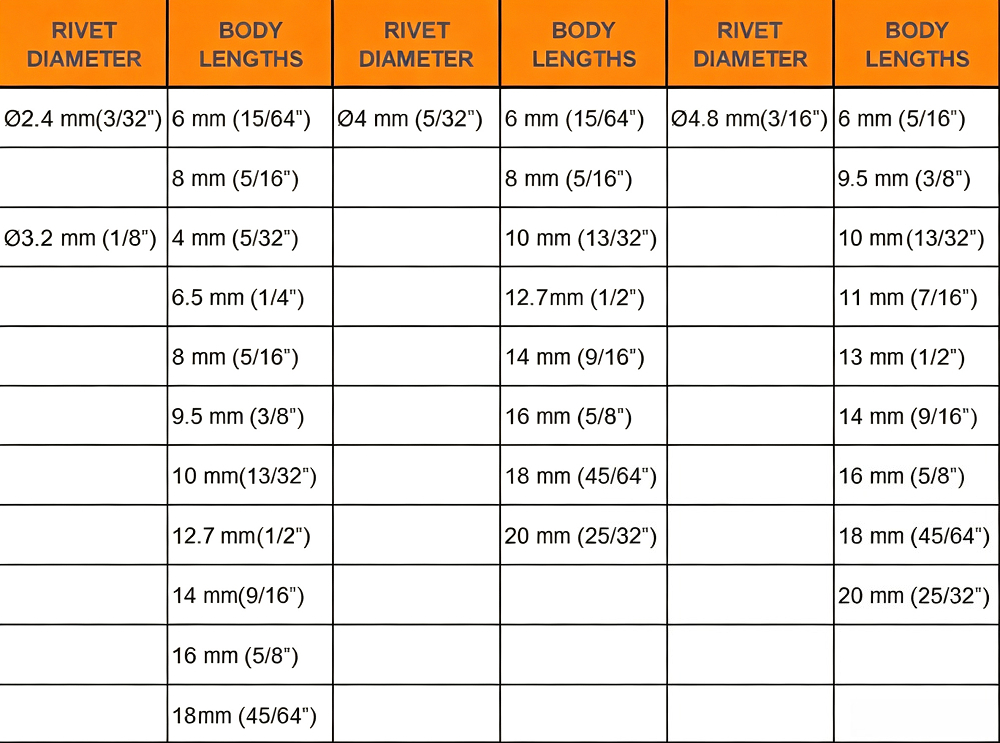
Check Aiplle Multigrip Blind Rivets Standard Technical Specifications
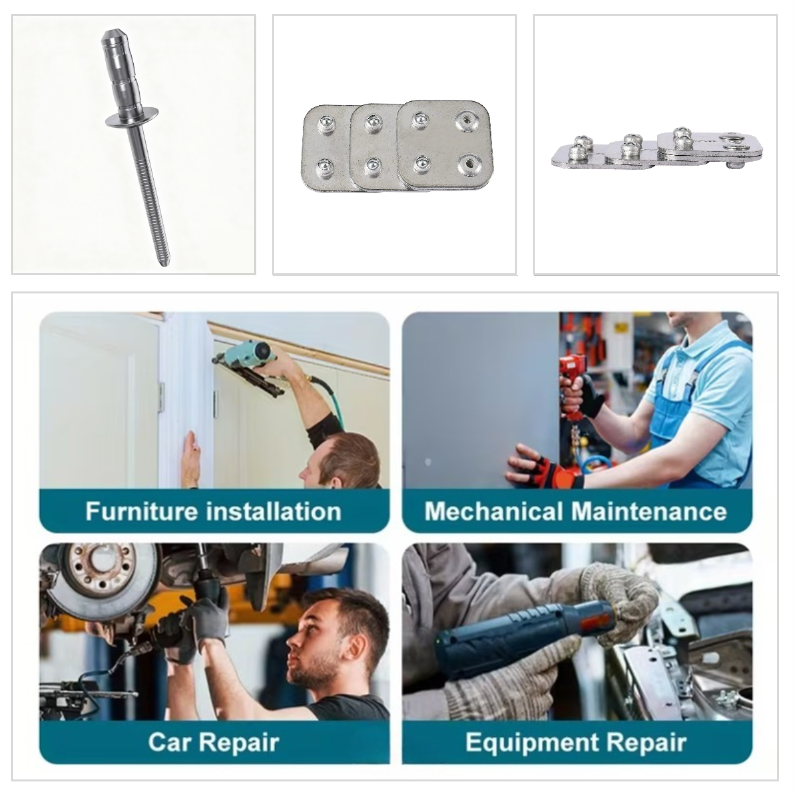
Multigrip Blind Rivets Application Fields
Our multi-grip blind rivets are widely used in various industries due to their excellent performance, including but not limited to: automobile manufacturing (interior parts, chassis non-core parts, body frame), mechanical equipment (protective cover, bracket), home appliances (shell, internal bracket), furniture hardware, construction engineering, ship manufacturing, electronic equipment, power equipment, and light industry manufacturing, etc..
As a multigrip blind rivet manufacturer, we are committed to providing customers with high-quality, cost-effective products and thoughtful after-sales service. If you have any questions about double drum rivets, or need to customize products according to your specific needs, please contact us. We will provide you with professional solutions and competitive prices.
Multigrip blind Rivets Installation
The installation process for multigrip blind rivets is straightforward and compatible with standard riveting tools such as manual, pneumatic, and hydraulic models. The key is to ensure the structure deforms fully to create a two-point clamping effect. The specific steps are as follows (universally compatible with 3.2 mm, 4 mm, 4.8 mm, and 6.4 mm sizes, as well as aluminum-iron, all-iron, and stainless steel materials):
Drilling Preparation: Based on the rivet diameter (3.2mm/4mm/4.8mm/6.4mm), drill through holes of the corresponding size in the workpieces to be joined. Ensure the holes are uniform in diameter, free of burrs, and have smooth walls (to avoid affecting the riveting result). If joining multiple layers of workpieces, ensure that the through holes in all workpieces are aligned with no misalignment.
Rivet Insertion: Insert one end of the double-crown rivet’s shank into the drilled through-hole, ensuring the double-crown structure is positioned between the gap of the two workpieces to be joined (this is critical to prevent the double-crown from tilting to one side, which could result in an unstable bond).
Tool Clamping: Align the chuck of the riveting tool (manual rivet gun, pneumatic rivet gun, etc.) with the exposed shank of the rivet, clamp the shank securely, and ensure the tool remains coaxial with the rivet to prevent tilting (to avoid uneven deformation of the rivet during riveting).
Compression Deformation: Activate the riveting tool and slowly apply pressure to compress the rivet shank, causing the two dome-shaped structures in the center of the rivet to undergo simultaneous plastic deformation. These structures will embed into the gaps between the hole walls of the two workpieces, creating a bidirectional clamping force until the two workpieces are tightly joined with no looseness.
Completion and Inspection: Stop applying pressure and remove the riveting tool; inspect the riveted joint to ensure that the double-bulge deformation is complete, the workpieces fit tightly together, and there is no looseness or burrs. Once these conditions are met, the installation is complete.
For more blind rivets ,You can link to our webiste: