

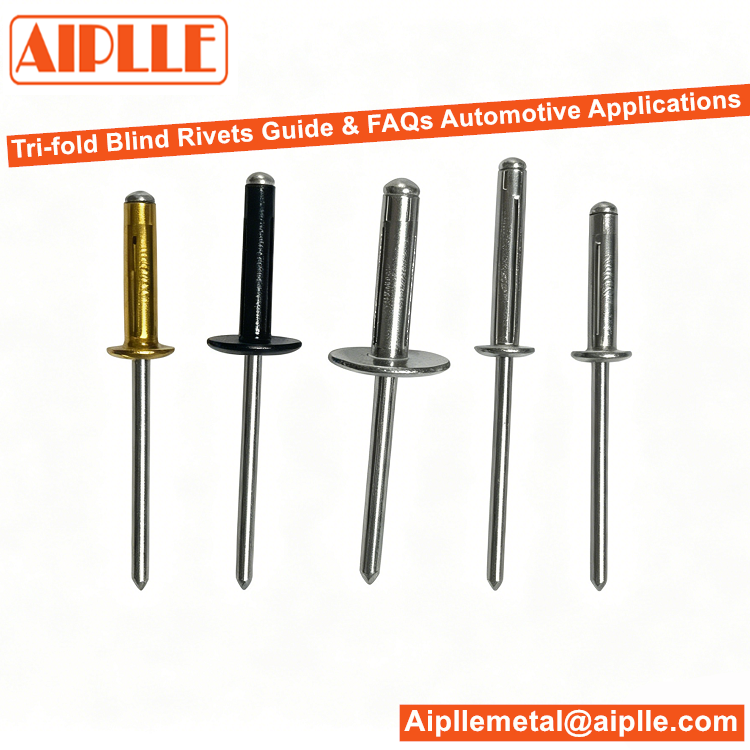
Blind Rivets Guide-How to Pick Correct Rivet Dimensions
1.Understand Standard Rivet Sizes and Rivet Diameter
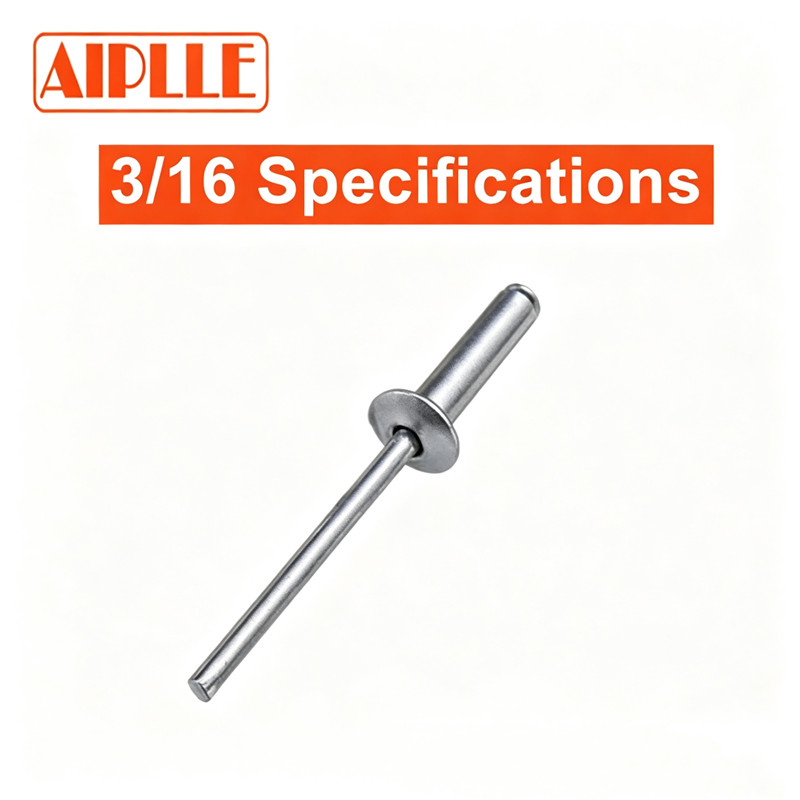
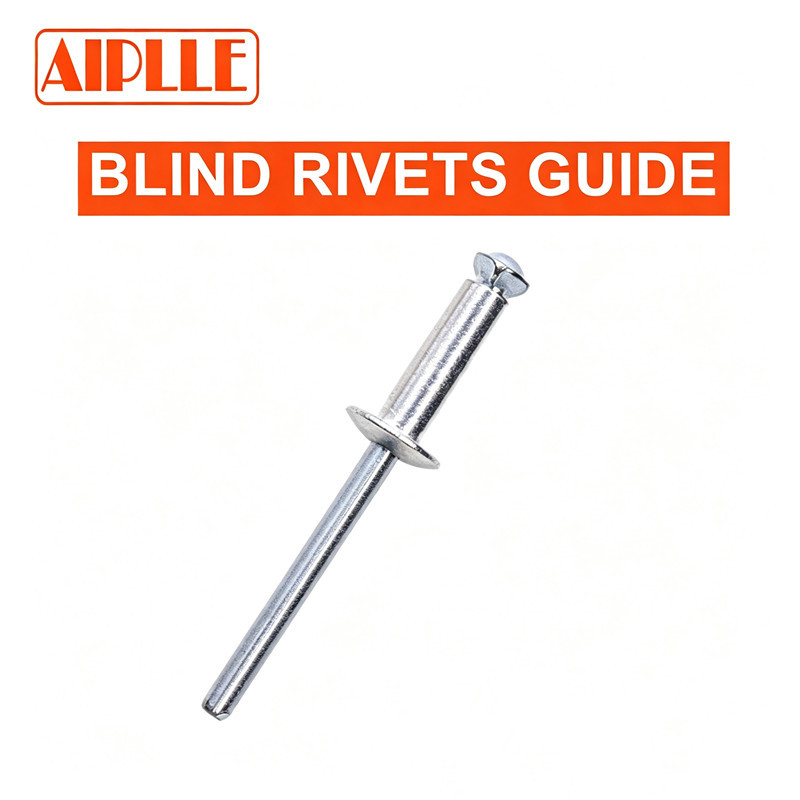
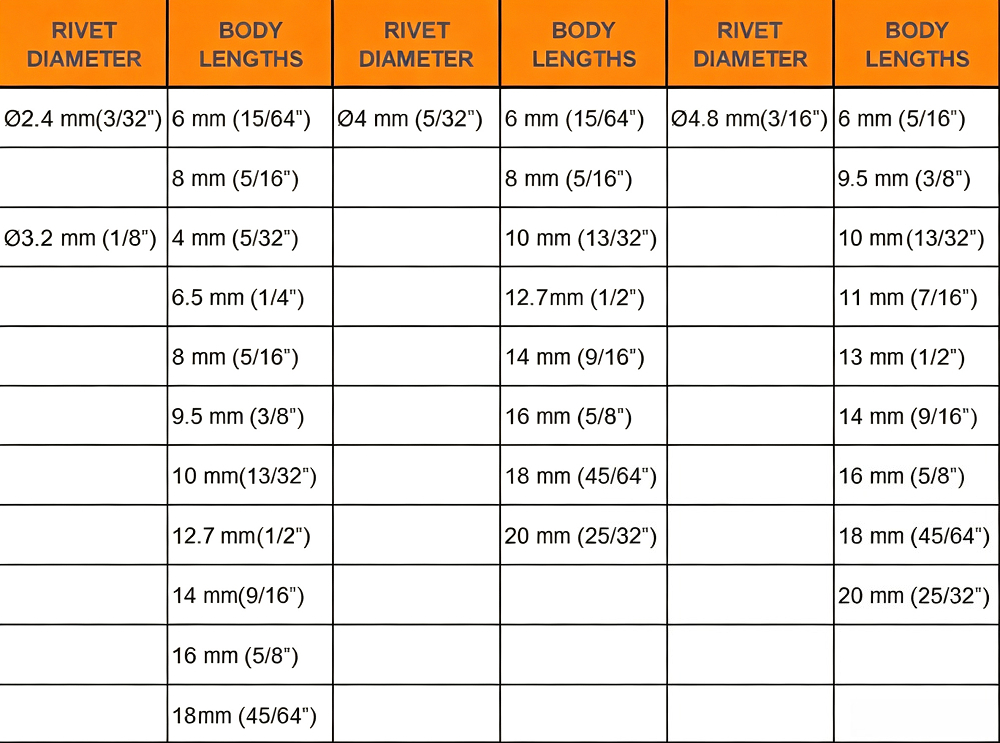
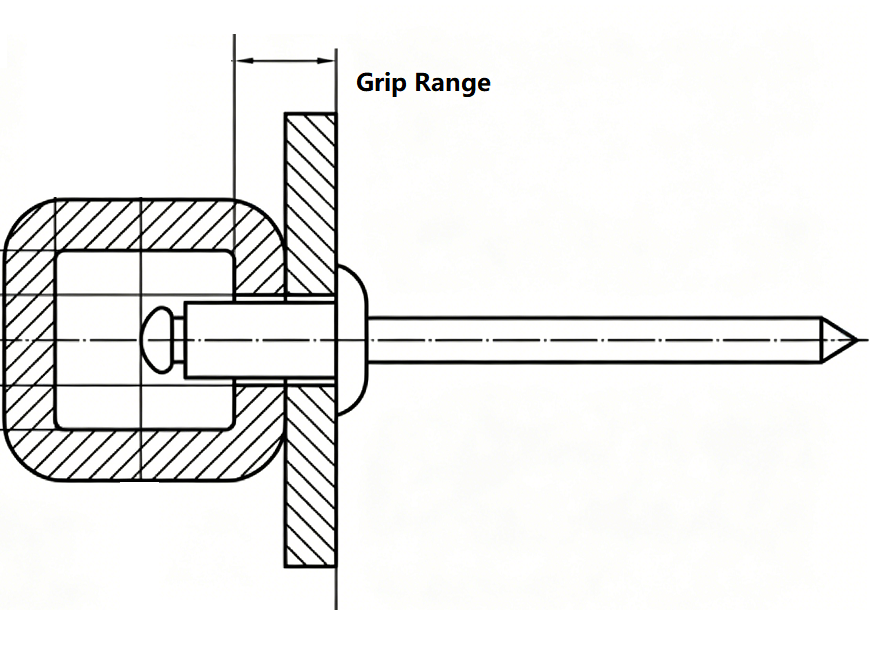
Blind rivets are measured by two numbers: the body diameter and grip range The diameter is the thickness of the rivet body itself, and it dictates how strong the joint will be. Standard rivet sizes run from 2.4 mm (3/32") up to 6.4 mm (1/4"), with 3.2 mm (1/8"), 4.0 mm (5/32"), and 4.8 mm (3/16") being the workhorses you'll see on almost every assembly line.
When someone refers to blind rivet dimensions, they're usually talking about this diameter plus the available body lengths. Pop rivet diameters follow the same sizing system, since a pop rivet is just one common type of blind rivet.
For a quick visual reference of every standard size, our rivet size chart has the full table, including metric and imperial size details.
How to Read a Rivet Grip Range Chart
The grip range is the number that trips up more people than anything else. It tells you the total thickness of material a rivet can safely clamp. A rivet grip range chart lists each body length alongside the minimum and maximum material thickness it's designed for.
What "Grip Range" Actually Means
Imagine you're joining a 1.5 mm sheet to a 2 mm bracket. Total material thickness is 3.5 mm. You need a rivet whose grip range covers 3.5 mm—not one that's rated for 0–3 mm and not one that starts at 4 mm. Pick too short and the mandrel won't set properly; pick too long and the rivet body buckles before it clamps.
How to Measure Grip Length for Your Assembly
Measure the combined thickness of every layer being joined, including any paint, powder coating, or gasket material. People often forget the finish adds a few hundredths of a millimeter, and on thin-gauge work that's enough to push you out of range. Once you have that number, find a rivet grip length where your measurement sits comfortably in the middle of the stated range, not right at the edge.
Rivet Drill Size & Drill Bit Size Chart Explained
A blind rivet needs a hole that's slightly larger than its body diameter—too tight and the rivet won't seat, too loose and it won't hold. The rivet drill size is usually just a hair above the rivet diameter, and the difference is small enough that using the wrong bit is an easy mistake to make.
Why Matching the Rivet Drill Bit Size Matters
If the hole is oversized, the rivet fills less of it and the joint loses shear strength. If it's undersized, you'll force the rivet in and risk cracking the material or bending the mandrel. A rivet drill bit size chart takes the guesswork out by pairing each standard diameter with its recommended hole size.
Common Drill Hole Recommendations by Rivet Diameter
As a starting point, a 3.2 mm rivet typically uses a 3.3 mm or 1/8" drill bit, a 4.0 mm rivet uses 4.1 mm or 5/32", and a 4.8 mm rivet uses 4.9 mm or 3/16". Always confirm against the manufacturer's spec, since sealed and structural rivets sometimes call for a slightly different clearance. For the full set of pairings, refer to the rivet drill size chart on our size chart page.
|
Rivet Diameter(inch) |
Rivet Diameter(mm) |
Grip Range(mm) |
Hole Size (mm) |
|
3/32” |
2.4mm |
0.5-2mm |
2.5mm |
|
1/8” |
3.2mm |
0.5-3mm |
3.3mm |
|
5/32” |
4.0mm |
1-4.5mm |
4.1mm |
|
3/16” |
4.8mm |
1.5-6mm |
4.9mm |
|
1/4” |
6.4mm |
2.5-9mm |
6.5mm |
Pop Rivet Size Guide: What's Different About the Dimensions
Pop rivets are the most common style of blind rivet, and they use the same sizing system. A pop rivet size guide will list the same diameters and grip ranges, because the dimensions are standardized across the category.
The difference shows up in body length options and head styles. Standard pop rivet dimensions tend to cover the lighter-duty range, while structural and sealed blind rivets are offered in longer lengths and larger diameters for heavier loads. If you're used to working with pop rivet size chart references, those numbers carry over directly to any blind rivet you spec.
Getting the size right is necessary for a good rivet joint. Once you've matched the diameter, grip range, and drill hole to your material, the rest comes down to material choice and installation tooling. We stock a full range of blind rivet in aluminum, steel, and stainless steel, including customized lengths for non-standard assemblies. If you're working through a sizing question on a specific job, send us the material thickness and we'll point you to the right part.