
Part1:Production Rivet Raw Material-Aluminum
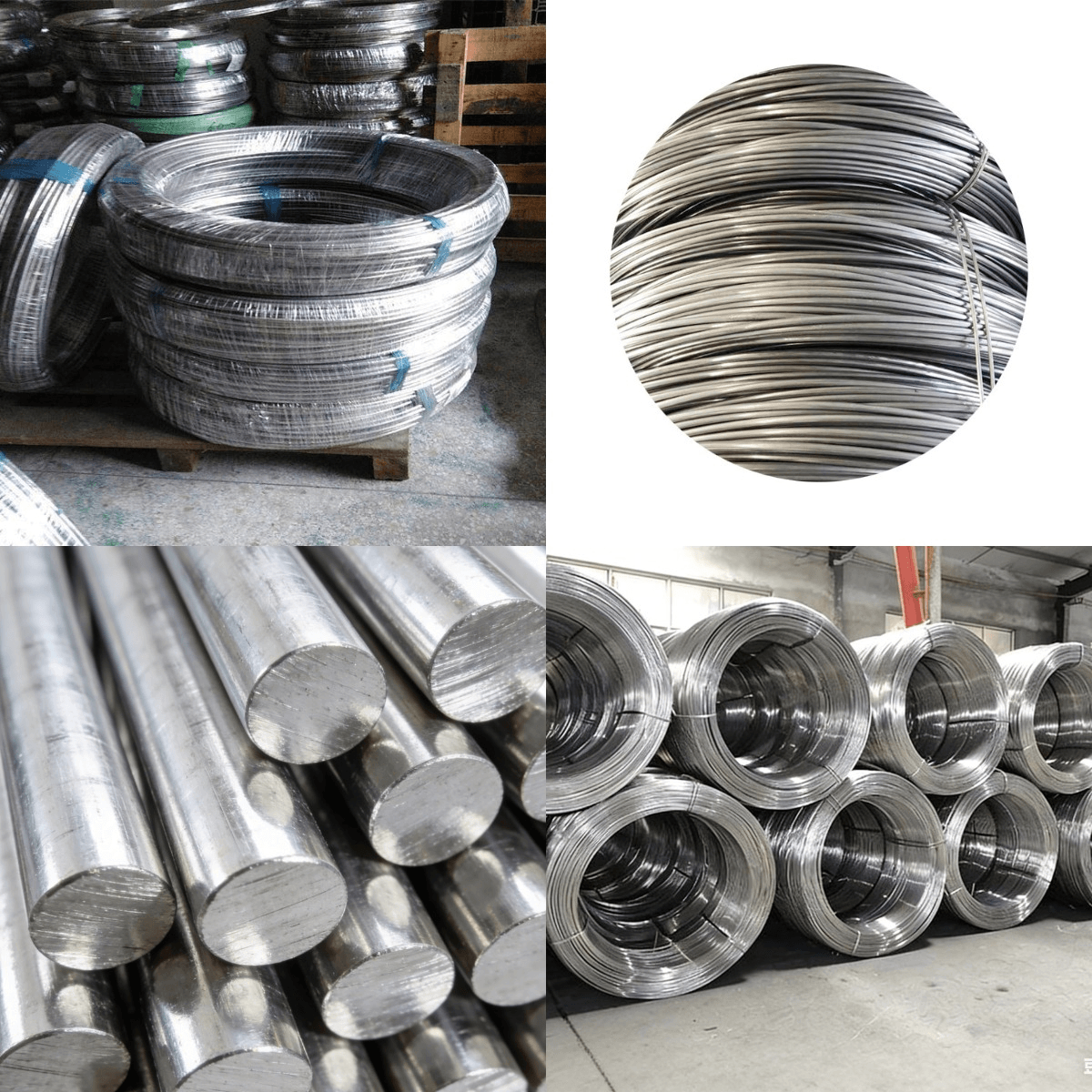
Due to its lightweight, high ductility, corrosion resistance, and cost-effectiveness, aluminum is widely used in the production of rivets. Different types of rivets—such as blind rivets, solid rivets, and aircraft rivets—require aluminum with specific mechanical properties, chemical compositions, and machinability. Below, we provide a detailed description of the aluminum alloys commonly used in rivet production, along with their specifications, characteristics, and applications.
1. Common Aluminum Alloys for Rivet Production
Rivet production rarely uses pure aluminum (such as 1050, 1060) because of its low strength. Most rivets adopt aluminum alloys, which are divided into three main categories according to their performance and application fields: anti-rust aluminum alloys, hard aluminum alloys, and super-hard aluminum alloys. Each alloys has different Mg percentage.Each category has specific grades and applicable scenarios.
1.1 Anti-Rust Aluminum Alloys
Anti-rust aluminum alloys are mainly aluminum-magnesium (Al-Mg) alloys, featuring excellent corrosion resistance, good ductility, and no heat treatment strengthening. They are suitable for rivets used in mild environments, low-load connections, and occasions requiring good welding performance.
● (5052 Aluminium): The most widely used anti-rust aluminum for rivets. It has low strength, high plasticity in the annealed state, excellent corrosion resistance, and good weldability, but poor machinability. It is suitable for manufacturing low-load rivets working in liquid or gas media, such as rivets for oil tanks, oil pipes, and ordinary light-duty structures. It is often used in wire form to make rivets due to its good cold deformation performance.such as5052 multigrip blind rivet .
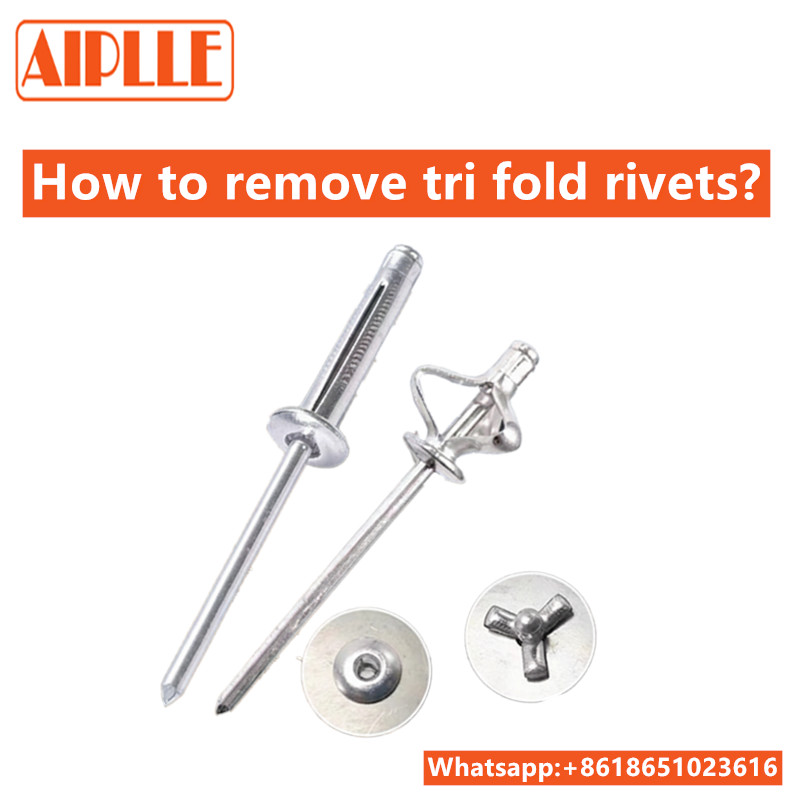
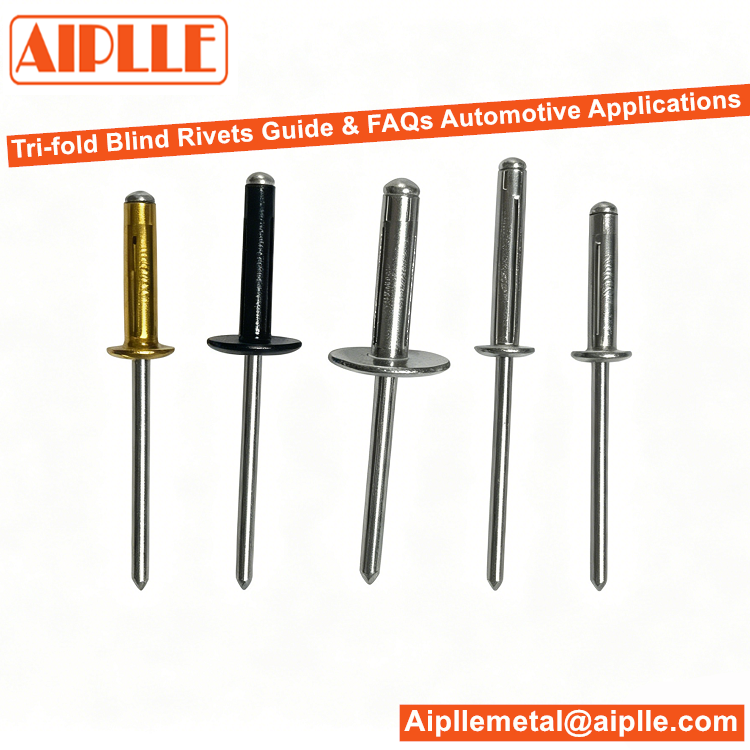
● (5056 Aluminum): A magnesium-aluminum-based corrosion-resistant aluminum alloy with a magnesium content slightly higher than that of standard aluminum alloys. This material cannot be strengthened through heat treatment; it exhibits high ductility in the annealed condition and has good weldability. It is primarily used in the manufacture of rivets, particularly for joints requiring better corrosion resistance than 5052, such as rivets in marine equipment and light-duty automotive components.such as trifold blind rivet ,seal end blind rivet
● (5054 Aluminum): with moderate strength and high plasticity. It is suitable for making rivets for welded parts, pipelines, and containers working in liquids, and can also be used in ordinary mechanical equipment connections where corrosion resistance is required.
1.2 Hard Aluminum Alloys
Hard aluminum alloys are mainly aluminum-copper-magnesium (Al-Cu-Mg) alloys, which can be strengthened by heat treatment (quenching + natural aging). They have higher strength than anti-rust aluminum alloys, making them suitable for medium-load rivets, such as those used in mechanical equipment, automotive structures, and aviation parts.
Since this type of aluminum is rarely used for blind rivets, we won’t go into detail about it here.
1.3 Super-Hard Aluminum Alloys
Super-hard aluminum alloys are mainly aluminum-zinc-magnesium-copper (Al-Zn-Mg-Cu) alloys, which have the highest strength among aluminum alloys after heat treatment. They are suitable for high-load, high-strength rivets, such as those used in aviation, aerospace, and high-end mechanical equipment.Since this type of aluminum is rarely used for rivets, we won’t go into detail about it here.
2. Key Performance Requirements of Aluminum Materials for Rivets
Rivets need to withstand shear force, tensile force, and deformation during installation and use, so the aluminum materials must meet strict performance indicators. The key performance requirements are as follows:
2.1 Mechanical Properties
● Shear Strength: The core performance indicators of a rivet determine the load-bearing capacity of the joint. For rust-resistant aluminum rivets (such as 5052, 5054, and 5056), the shear strength is typically 80–120 MPa; for hard aluminum rivets, the shear strength is 180–280 MPa; For ultra-high-strength aluminum rivets, the shear strength can reach 300–400 MPa. For example, the shear strength of 2A04 aluminum alloy rivets is ≥274 MPa, and that of 2B12 aluminum alloy rivets is ≥265 MPa.
● Ductility: Rivets need to be deformed (such as expanding the tail of blind rivets) during installation, so the material must have good ductility (elongation ≥10%). Anti-rust aluminum alloys have the best ductility, followed by hard aluminum alloys, and super-hard aluminum alloys have relatively poor ductility.
● Tensile Strength: Ensures that the rivet does not break during installation and use. The tensile strength of rivet aluminum materials generally ranges from 100MPa (5052) to 500MPa , matching the shear strength.
2.2 Chemical Composition Control
The chemical composition of aluminum materials directly affects their performance. For example, the magnesium content in anti-rust aluminum alloys (5052.5054,5056etc) is usually 3-5%, which determines their corrosion resistance and ductility; the copper content in hard aluminum alloys is 2-5%, which is the key element for heat treatment strengthening. Impurity elements (such as Fe, Si) need to be strictly controlled to avoid reducing the material's ductility and corrosion resistance. For example, in the corrosion-resistant aluminum alloy rivet formula, Si content is controlled at 0.20-0.25wt%, Fe content at 0.15-0.20wt%, and Si/Fe ratio ≥1 to avoid forming brittle phases that damage performance.
2.3 Processing Performance
● Cold Heading Performance: Most rivets are formed by cold heading, so the aluminum material must have good cold deformation performance to avoid cracking during cold heading. Anti-rust aluminum alloys and soft-state hard aluminum alloys (annealed state) have excellent cold heading performance.
● Wire Drawing Performance: Rivet wires need to be drawn to the required diameter, so the material must have good wire drawing performance, with uniform diameter and no surface defects (such as scratches, cracks). The production process of corrosion-resistant aluminum alloy rivets includes multiple drawing steps, requiring the material to have stable drawing performance.