

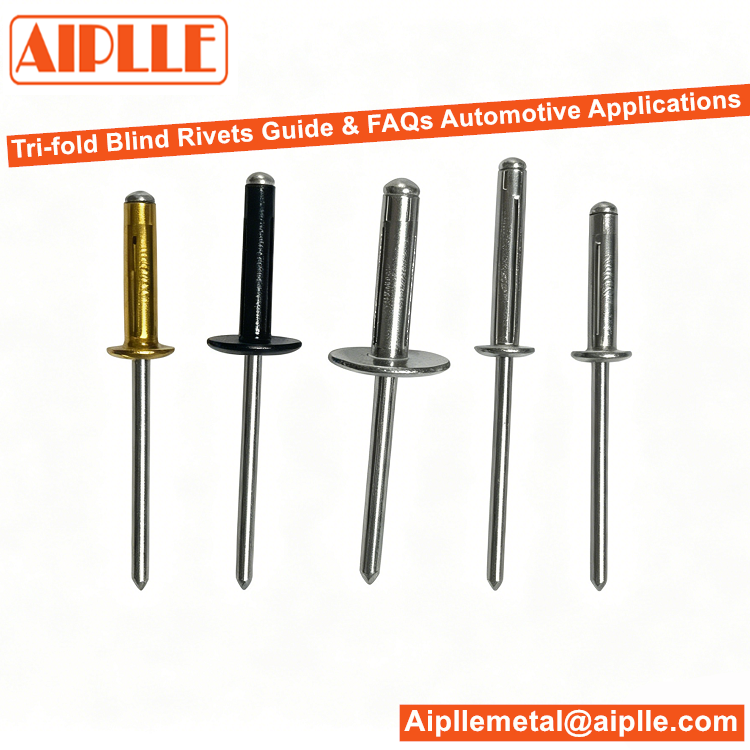
Blind Rivets Applications: Uses for Wood, Metal, Plastic & More
For assembly workers, DIY enthusiasts, and manufacturing professionals, blind rivets stand out as one of the most practical fastening solutions on the market.
In this guide, we break down real-world blind rivets applications by material and industry, sharing actionable use cases, installation notes, and practical benefits to help you decide when and how to use blind rivets effectively.
1.What Are Blind Rivets & Why Are They Widely Used?
Key Benefits of Blind Rivets for General Applications
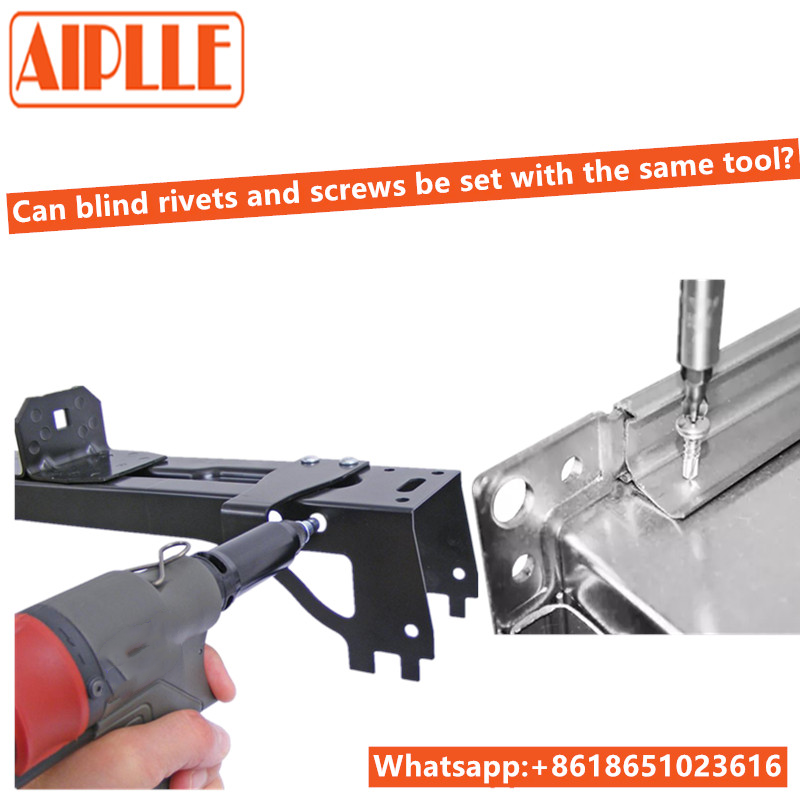
Single-sided installation: No need to reach the back of the workpiece, ideal for closed cavities and hollow parts
Wide material compatibility: Works with hard and soft materials alike, from rigid metal to fragile plastic and wood
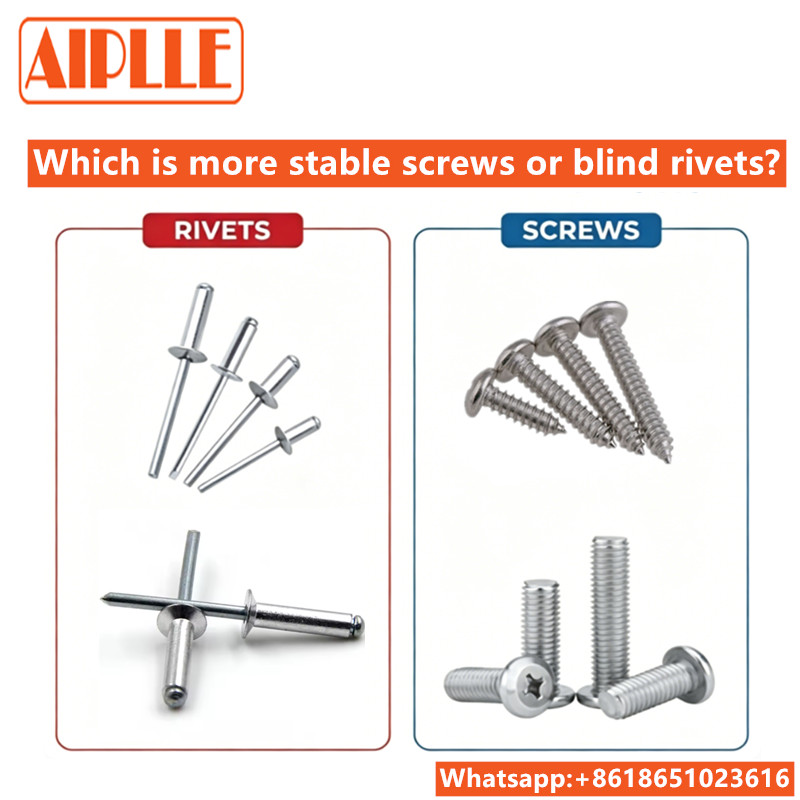
Time-efficient assembly: Simple tool operation cuts down manual labor time compared to bolts, screws, and solid rivets
Neat finished appearance: Flush head design creates smooth surfaces with no protruding parts, perfect for exterior finishing
2.Blind Rivets Applications by Material
Different materials have distinct hardness, thickness, and brittleness characteristics. Below are targeted applications for the most commonly used materials in daily production and DIY projects.
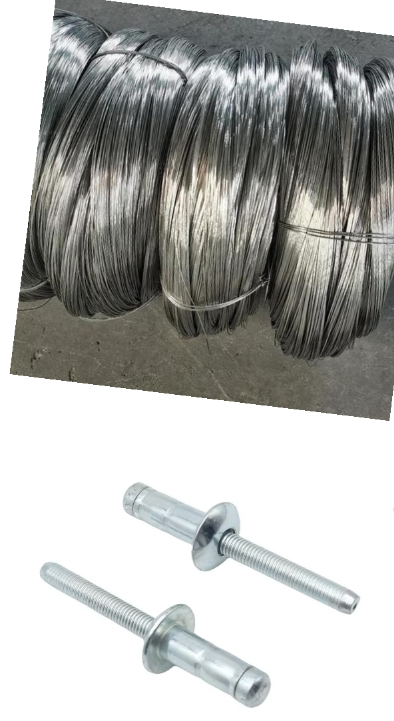 |
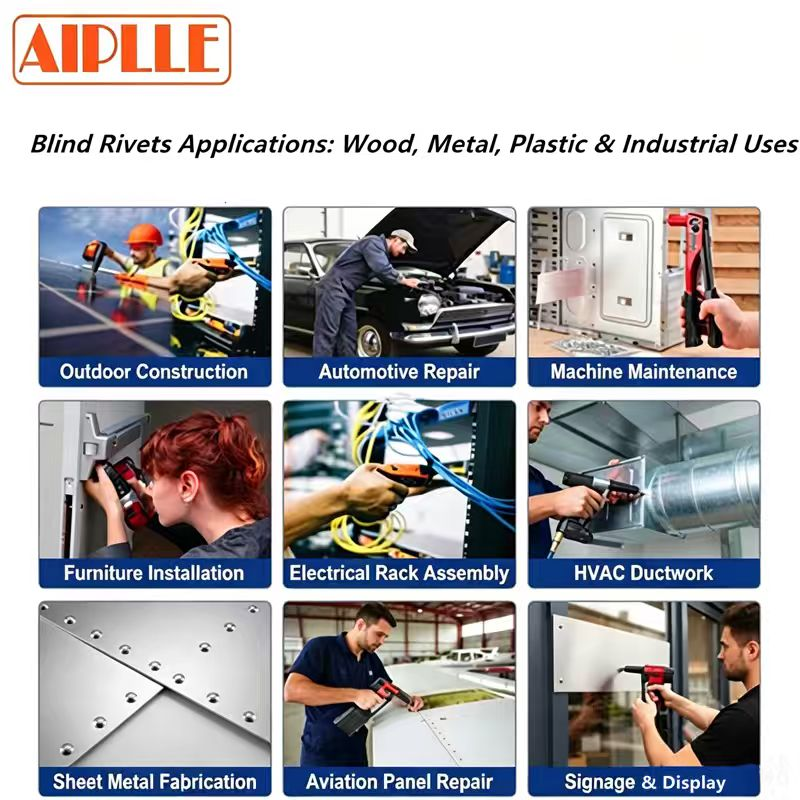
Blind Rivets for Metal ApplicationsMetal is the most common matching material for blind rivets, covering iron, aluminum, stainless steel, and thin steel sheets. Metal materials are rigid and not easy to deform, so blind rivets can provide ultra-stable fastening effects here. In sheet metal processing, workers often use blind rivets to connect thin metal plates, metal casings, and cabinet frames. For electrical enclosures, server cabinets, and metal shelving, blind rivets replace traditional screws to avoid loose threads after long-term use. In automotive accessory assembly, thin metal brackets, interior metal trim, and ventilation pipe fixtures all rely on blind rivets for fixed installation. For stainless steel metal workpieces, stainless steel blind rivets are highly recommended to avoid rust and corrosion, ensuring long-term structural stability in outdoor and humid environments. |
Blind Rivets for Wood Applications
Many DIY users and woodworkers overlook blind rivets for wood projects, but they are perfect for solving the problem of loose wood screw connections. Blind rivets work well for assembling thin wood panels, plywood, and density boards.
It is worth noting that when using blind rivets on wood, choose aluminum rivets with softer tension to prevent excessive expansion from cracking the wood grain and damaging the workpiece surface.
Blind Rivets for Plastic Applications
Plastic materials are lightweight and brittle, making them easy to crack under excessive extrusion. Ordinary self-tapping screws often cause plastic cracking and thread slipping, while blind rivets with uniform expansion force can perfectly avoid these problems.
Plastic product assembly scenarios are very extensive. Household plastic casings, electrical plastic accessories, toy components, and plastic decoration parts all adopt blind rivet fastening. In particular, for large plastic sheets and spliced plastic profiles, blind rivets can maintain a flat and beautiful splicing effect without damaging the plastic surface.
For fragile thin plastic, users can select flat-head blind rivets with small expansion ranges to ensure uniform stress on the connection surface and prevent local cracking.
Blind Rivets for Composite & Special Materials
blind rivets also adapt to various composite materials widely used in industry. Fiberglass panels, carbon fiber sheets, aluminum-plastic plates, and insulating composite boards can all be firmly connected with matched blind rivets.
Construction exterior wall aluminum-plastic panel fixing, equipment insulating layer composite assembly, and aviation lightweight composite part connection all rely on blind rivets. The lightweight and
3.Common Industrial & Daily Work for Blind Rivet Use
Beyond material-based usage, blind rivets have formed mature application systems in multiple industries, becoming standard assembly accessories for mass production and daily maintenance.
Automotive & Transportation Industry
The transportation industry has extremely high requirements for fastener . Blind rivets are used for automotive interior trim fixing, body lightweight parts assembly, railway vehicle interior panels, and ship equipment .
Construction & Decoration Industry
Workers use blind rivets to fix curtain wall accessories, ceiling keel parts, decorative panels, and outdoor advertising support frames. The fast installation speed greatly improves construction efficiency, and the flat head will not affect the overall decorative effect.
Electronic & Electrical Manufacturing
Electronic equipment is thin and precise, with many hollow internal structures. Small size Blind rivets are widely used for the assembly of electrical casings, circuit board fixing brackets, switch panels, and communication equipment shells.
Daily DIY & Household Maintenance
For family daily maintenance and handmade DIY projects, a small hand rivet tool plus a set of mixed blind rivets can solve most fastening problems. Loose furniture trim, broken plastic shell fixation, metal shelf reinforcement, and wooden craft splicing can all be easily completed with blind rivets, which is more convenient and durable than ordinary screws.
4.Quick Choosing & Using Blind Rivets
You need to match the right rivet type and specification according to different materials and scenarios.
Material Matching Principles
Use aluminum blind rivets for soft materials such as wood, plastic, and thin composite plates to prevent cracking; use steel or stainless steel blind rivets for metal structural parts that require high strength and corrosion resistance; use copper rivets for conductive and decorative scenarios.
Specification Selection Rules
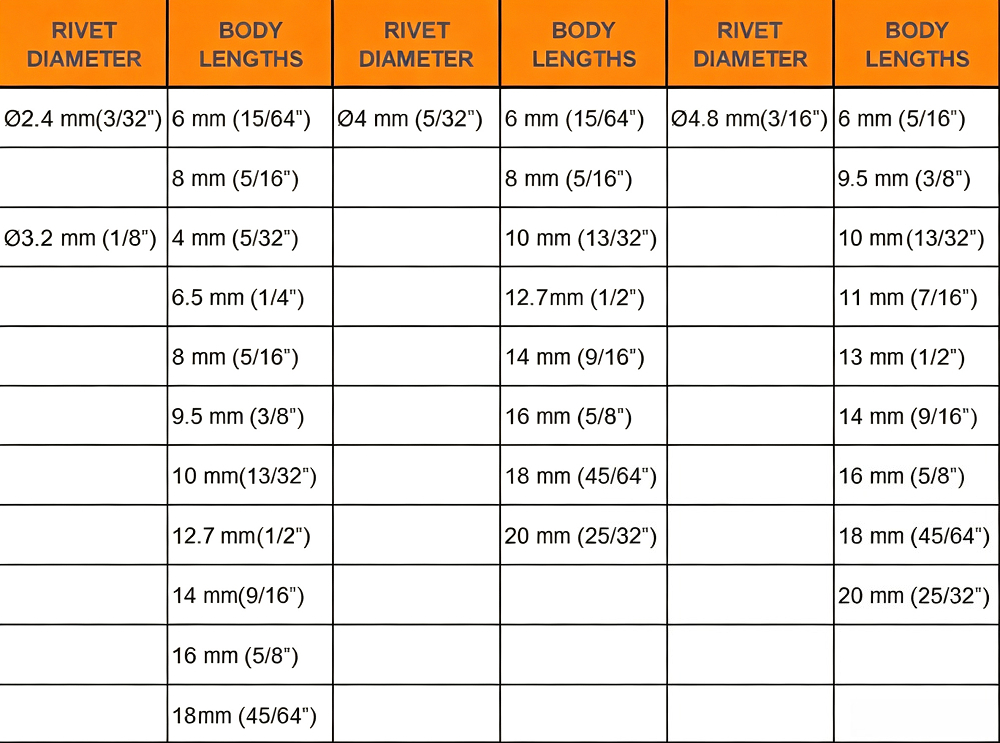
The rivet length should match the total thickness of the stacked materials, and the diameter should be selected according to the load-bearing demand.
Installation Precautions
Before installation, ensure the drilling hole size is standard, too large will cause loose fastening, too small will lead to difficult installation and workpiece cracking.
Conclusion:
Blind rivets are not just simple industrial fasteners, but versatile fastening solutions covering industrial manufacturing, engineering construction, and daily DIY maintenance. Whether you are fastening metal plates, wooden panels, plastic parts, or composite materials, matching the right type of blind rivet can bring stable, neat, and long-lasting connection effects.
FAQ revelant question.