


Blind Rivet Nut Sizes | M3 M8 5/16 Guide
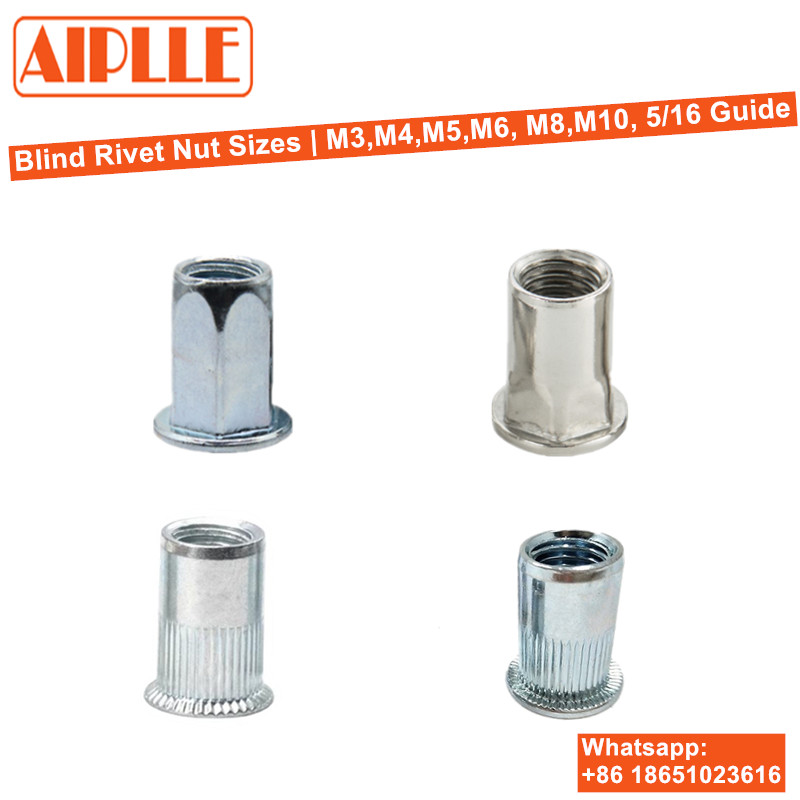
Blind rivet nuts (also known as rivet nuts or blind nuts,blind rivnuts) are specialized fasteners designed to create a threaded hole in thin materials, such as sheet metal, plastic, and aluminum panels. . Whether you’re working with M3,M4,M5,M6,M8,M10,M12, 5/16, or other sizes, this guide covers everything you need to know about blind rivet nuts, from sizes to installation and applications.
What Is a Blind Rivet Nut?
A blind rivet nut consists of a cylindrical body with internal threads and a flange at one end. During installation, a special tool pulls the mandrel (or uses a threaded tool) to have a grip.
Common Blind Rivet Nut Sizes
Blind rivet nuts are available in both metric and imperial sizes, with the most popular options tailored to standard threaded fasteners. Below are the most commonly used sizes:
Metric Sizes (Most Popular)
- Regular size M3,M4,M5,M6,M8,M10
- Other common imperial sizes: 1/4 inch, 3/8 inch, 8/32 inch (for light-duty), and 1/2 inch (for heavy-duty, industrial use).
Key Features of Blind Rivet Nuts
- One-Side Installation: No backside access required, making them ideal for enclosed or hard-to-reach areas.
- Strong Threaded Anchor: Creates a durable threaded hole in thin materials that can withstand repeated bolt/screw installation and removal.
- Versatile Materials: Available in aluminum, steel, stainless steel, and brass, matching the material of the workpiece for corrosion resistance and strength.
- Different Styles: Flat head rivet nut, countersunk rivet nut, and hex rivet nut,seal end rivet nut
How to Install rivet nuts?
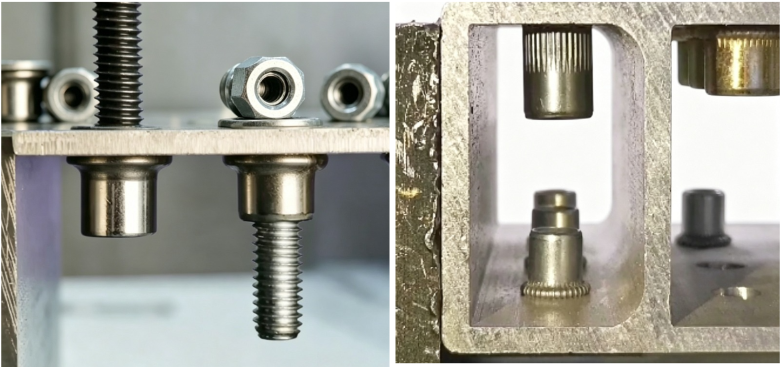
Installing a blind rivet nut is simple with the right tool (blind rivet nut tool or manual/electric riveter with a rivet nut attachment). Follow these steps:
- Drill a hole in the material that matches the diameter of the blind rivet nut body
- Insert the blind rivet nut into the hole, with the flange resting against the material surface.
- Attach the rivet nut tool to the threaded end of the rivet nut.
- Pull the tool’s handle
- Release the tool and remove it—your blind rivet nut is now installed and ready to use with a bolt or screw.
Applications of Blind Rivet Nuts
Blind rivet nuts are used across industries,blind nuts for metal including:
- Automotive: Fastening interior panels, brackets, and electrical components.
- Aerospace: Lightweight, high-strength fastening for aircraft components.
- Construction: Sheet metal framing, HVAC systems, and building facades.
- DIY & Hobby Projects: Custom furniture, metal art, and home repairs.
- Industrial Machinery: Enclosures, control panels, and equipment brackets.
Tips for Choosing the Right Blind Rivet Nut
- Match the size to the bolt/screw you’ll be using (e.g., use an M8 rivet nut for an M8 bolt).
- Choose the material to match the workpiece: stainless steel for corrosion resistance, aluminum for lightweight applications, steel for heavy-duty strength.
- Select the style based on the surface: countersunk for flush finishes, flanged for extra stability.
This blind nut insert bring us new fastening for sheet metals ,