Leave Your Message
The aerospace manufacturing landscape is undergoing a monumental paradigm shift driven by stringent decarbonization mandates, extended flight range targets, and the rapid commercialization of electric Vertical Take-Off and Landing (eVTOL) aircraft. In modern aircraft construction, weight optimization is not merely an engineering preference—it is the paramount economic and ecological determinant. While carbon-fiber-reinforced polymers (CFRP) and advanced titanium alloys have seen widespread adoption, aluminium fasteners—specifically advanced 2000, 5000, and 7000-series aluminium blind rivets—remain the fundamental backbone for structural integrity and composite-to-metallic multi-material bonding.
Every single kilogram shaved off an airframe structure directly translates into thousands of gallons in cumulative fuel savings over an airliner's operational lifecycle, reducing lifecycle carbon emissions by metric tons. Advanced aluminium blind rivets deliver an unmatched strength-to-weight ratio, high sheer capability, and exceptional installation efficiency, allowing engineers to secure multi-layer skin panels, internal ribs, spars, and nacelle cowlings with absolute reliability without adding parasitic structural weight.
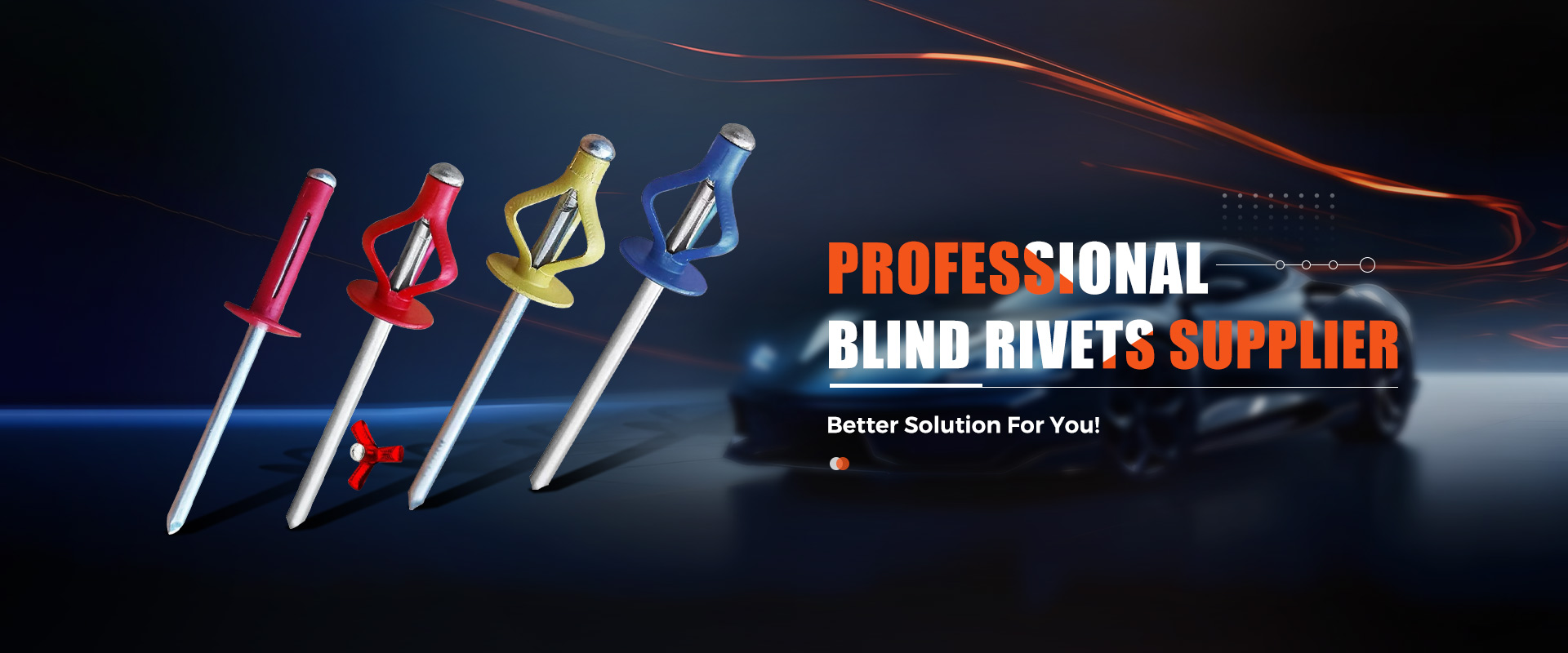
Combining metallurgical perfection, automated blind installation capabilities, and corrosion mitigation.
Aerospace-grade aluminium rivets (including 2024-T4 and 5056 alloys) exhibit high shear strength approaching 280-320 MPa while maintaining less than one-third the density of structural steels, drastically reducing total takeoff weight across fuselage skins and stringers.
When bonded with modern aerospace anodized coatings or paired with magnesium-aluminum alloys, our rivets inhibit galvanic cell formation when mating dissimilar metals or composite substrates under humid, salt-fog, and high-altitude ozone conditions.
Enables single-operator, rapid pneumatic or battery-actuated installation inside confined structural hollows—such as wing leading edges, control flaps, and avionics bays—eliminating the requirement for dual-sided bucking bars and slashing assembly cycle times.
Precision 100-degree and 120-degree countersunk heads ensure microscopic tolerances across outer aerodynamic surfaces, preventing turbulent boundary layer separation, minimizing parasitic drag, and lowering overall aircraft acoustic signatures.
Engineered mandrel-retention systems prevent core loosening under continuous sonic resonance and turbulent cyclic loading, preventing structural fretting and premature joint micro-cracking during extended flight hours.
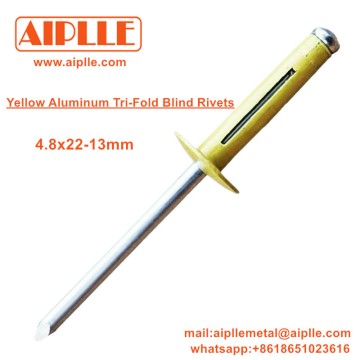
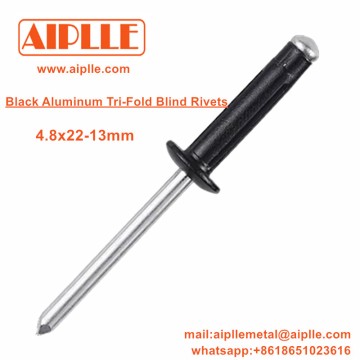
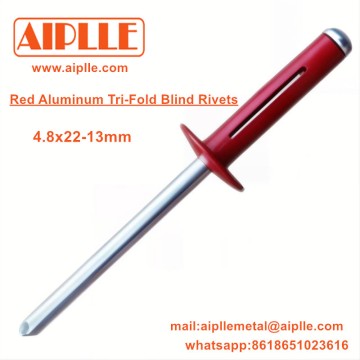
Specialized tri-fold and large-flange blind rivets distribute clamping loads over an extended bearing footprint, preventing localized crushing, core delamination, or fiber micro-buckling in thin-gauge sandwich panels.
From commercial transport fuselages to futuristic unmanned aerial vehicles and high-altitude satellites.
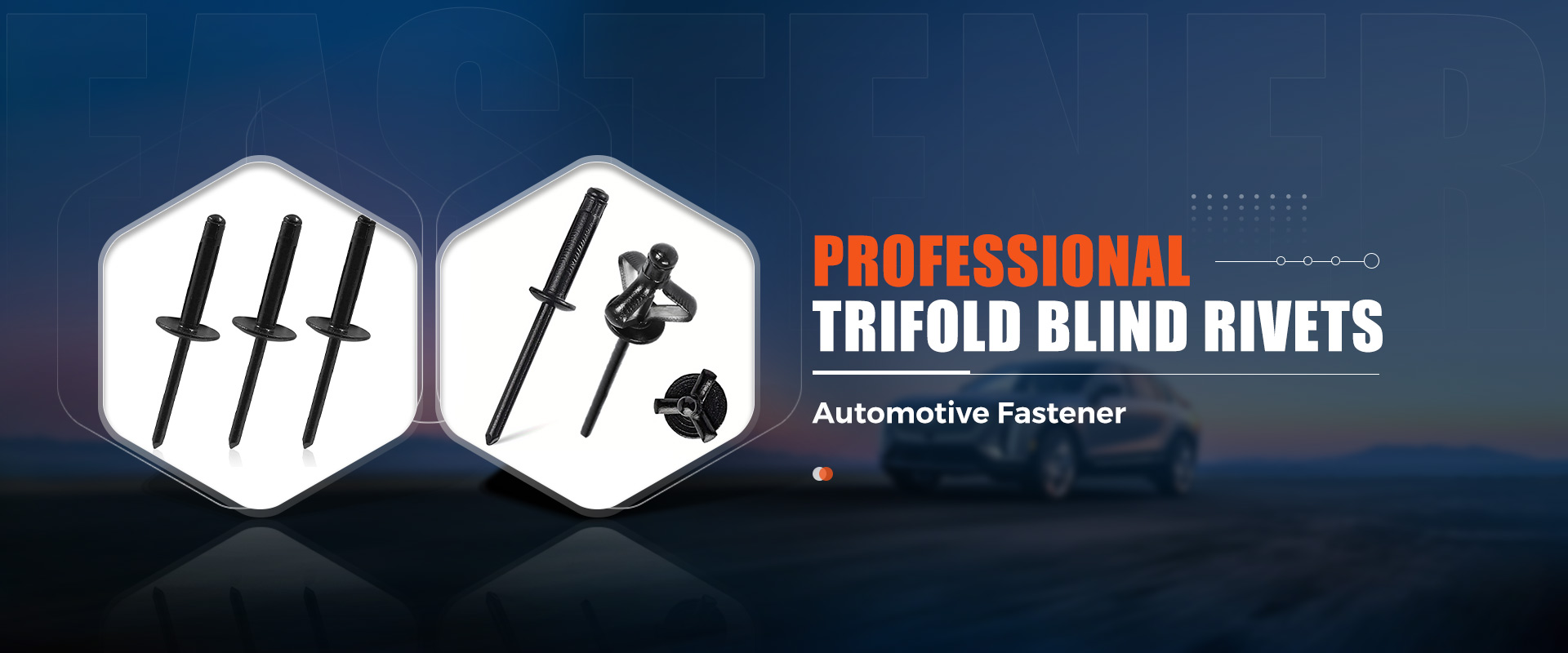
In narrow-body and wide-body commercial aircraft, thousands of countersunk aluminium rivets unite longitudinal stringers and circumferential frame rings to the outer skin. The blind fastening capability is essential for closing boxed sections where rear tooling access is physically impossible. Aluminium’s thermal expansion coefficient closely matches the surrounding 2024/7075 alloy skins, eliminating thermal stress concentration across extreme temperature cycles ranging from +50°C on tarmac surfaces to -55°C at cruising altitudes of 38,000 feet.
Ailerons, rudders, elevators, and wing flaps undergo intense aerodynamic buffet and harmonic flutter. Our structural blind rivets provide consistent residual clamp forces that withstand shear reversals. The mechanical mandrel lock guarantees that the internal pin cannot vibrate loose, eliminating the catastrophic hazard of foreign object debris (FOD) within flight control linkages.
Urban Air Mobility (UAM) and eVTOL platforms operate under strict battery-weight budgets. By deploying our ultra-lightweight Tri-Fold Aluminium Rivets, airframe manufacturers achieve structural cohesion between carbon-fiber airframe tubs and aluminium motor mounting bulkheads. The extended three-pronged expansion on the blind side spreads clamp forces gently over delicate composite laminates without inducing micro-fractures in the resin matrix.
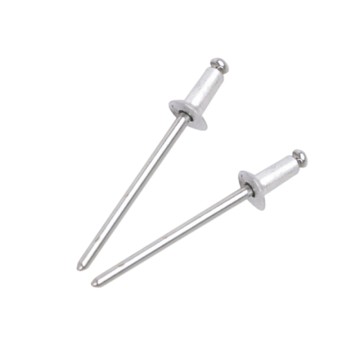
Secondary aircraft structures demand rapid installation and vibration-proof assembly. From modular electronic racks in cockpit flight-management systems to modular business-class seating pods and cargo compartment linings, our dome-head and multi-grip blind rivets deliver rapid, tamper-resistant fastening that meets strict FAA/EASA FAR 25.853 flammability and structural vibration standards.
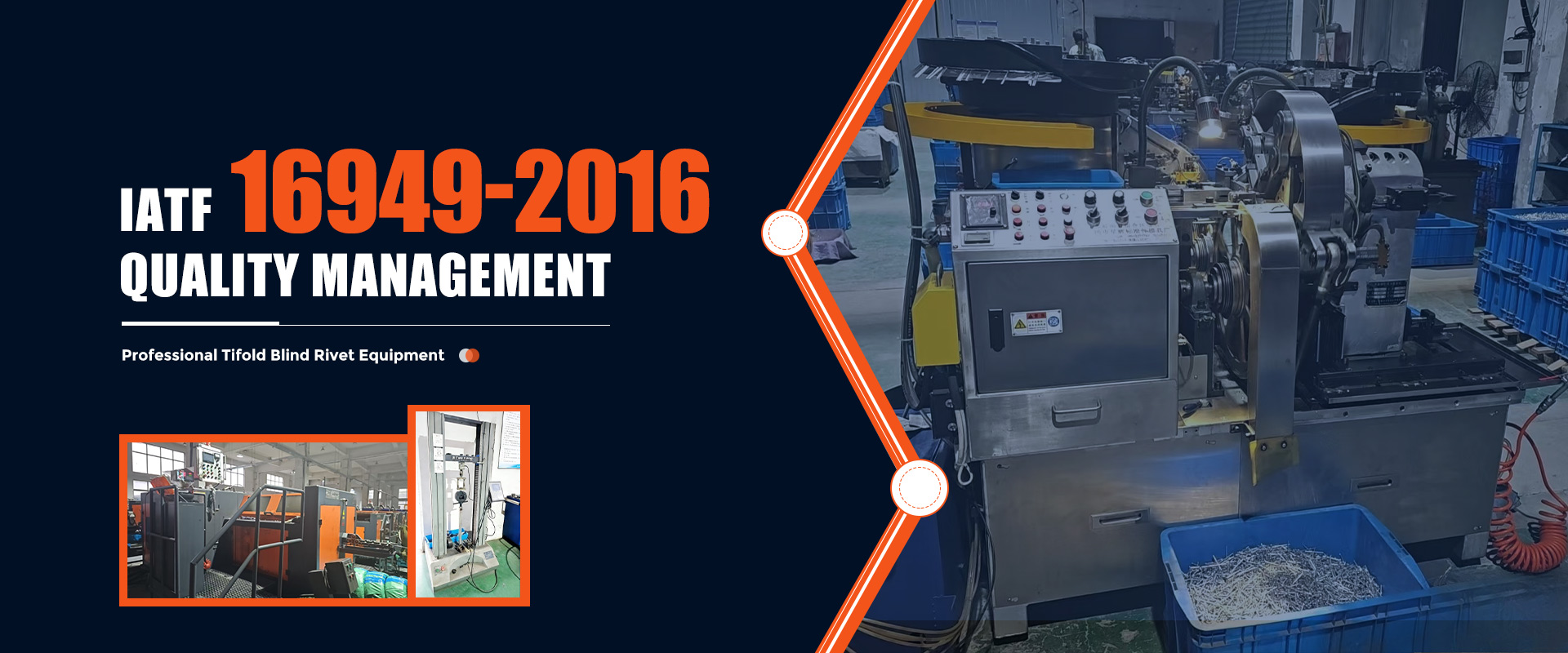
Standardized comparison of aerospace-grade blind rivets across mechanical loads and metallurgical treatments.
| Rivet Series / Specification | Material Body / Mandrel | Tensile Strength (kN) | Shear Strength (kN) | Operating Temp Range | Primary Aviation Application |
|---|---|---|---|---|---|
| Aerospace Tri-Fold 5056 | Al-Mg Alloy / 7075-T6 Al | 3.80 - 6.20 kN | 2.90 - 5.10 kN | -60°C to +130°C | CFRP Composite to Metal, Honeycomb Core Panels |
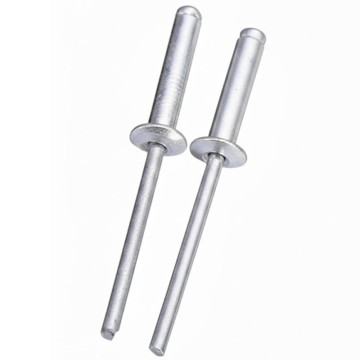
| CSK Flush Head 2024 | Al-Cu Alloy / High-Carbon Steel | 4.50 - 8.10 kN | 5.20 - 9.40 kN | -55°C to +150°C | Fuselage Outer Skin, Laminar Wing Surfaces |
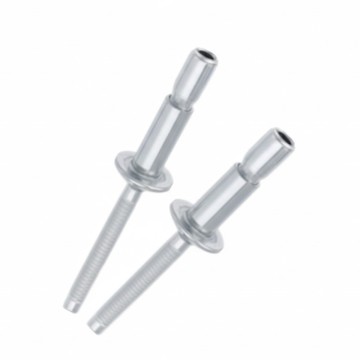
| Interlock Structural Series | Structural Al / Phosphate Coated Steel | 7.50 - 13.80 kN | 8.90 - 16.50 kN | -50°C to +180°C | Engine Cowlings, Main Ribs, Cargo Floor Beams |
| Dome Head High-Shear | Aluminium Alloy 5154 / Al 6061 | 2.20 - 4.80 kN | 2.80 - 5.60 kN | -55°C to +120°C | Avionics Enclosures, Cabin Interior Modules |
| Nickel Alloy Full Hex Nuts | High-Performance Nickel-Steel | 12.50 - 24.00 kN | 14.00 - 28.50 kN | -70°C to +350°C | Nacelle Heat Shields, Turbine Bay Structural Anchors |
In aerospace manufacturing, a single fastener failure is unacceptable. At WUXI AIPLLE METAL PRODUCTS CO., LTD., our manufacturing lines integrate high-speed multi-camera AI optical inspection systems capable of measuring dimensional tolerances down to ±0.005mm in real-time. Every batch undergoes 100% automated sorting for head concentricity, shank straightness, mandrel break-load calibration, and surface plating uniformity.
Our metallurgy laboratory validates metallurgical grain flow via micro-etching, automated tensile/shear fatigue testers, and accelerated 1,000-hour ASTM B117 salt spray chambers to ensure zero premature stress-corrosion cracking (SCC). All products are fully traceable from raw wire coil smelting to final heat-treated shipment, meeting full AS9100, ISO9001, and international aerospace standards.

Supplying critical fastening solutions for chemical processing, aerospace transport, and heavy-duty structural engineering.

Implementation of anti-corrosive structural blind fasteners for high-vibration, chemical-vapor exposure processing plants with zero failure over 36 months.
View Full Project Details →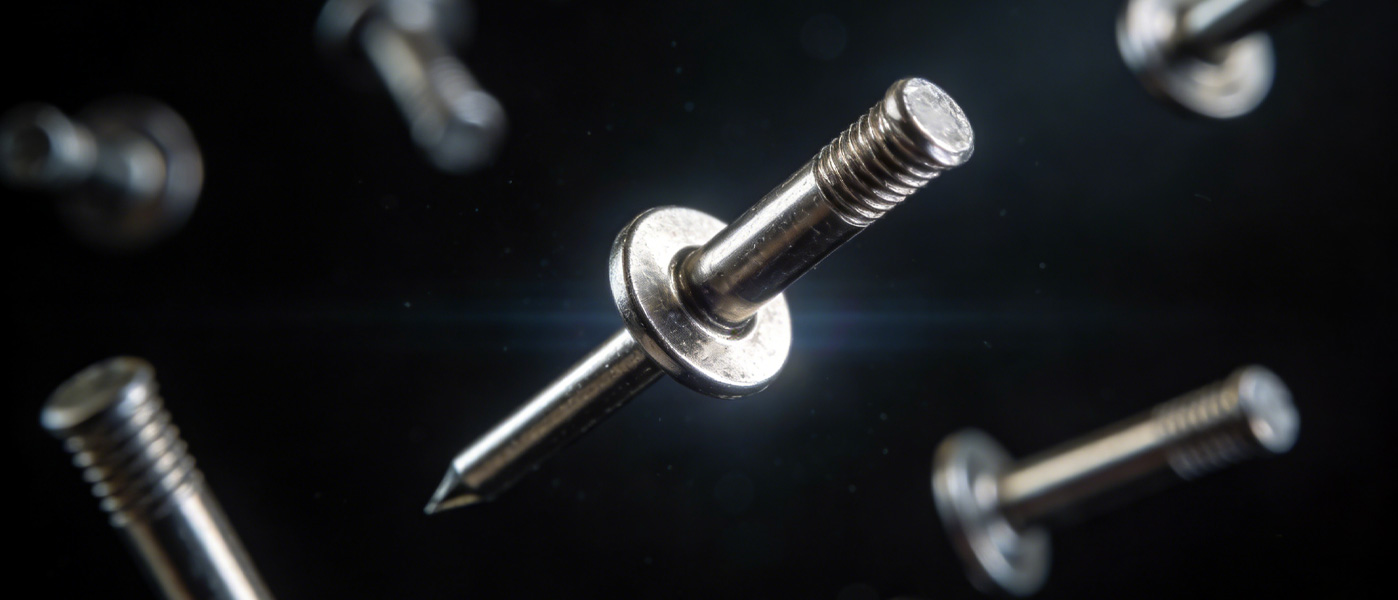
Deployment of Tri-Fold Aluminium Blind Rivets in CFRP lightweight transport enclosures, improving shear resistance while cutting joint assembly time by 42%.
View Full Project Details →
Installation of countersunk aluminium-steel blind rivets across outer aerodynamic nacelle cowlings, ensuring smooth airflow and zero joint loosening.
View Full Project Details →Essential guidance for pneumatic tool optimization, blind rivet selection, and structural safety.
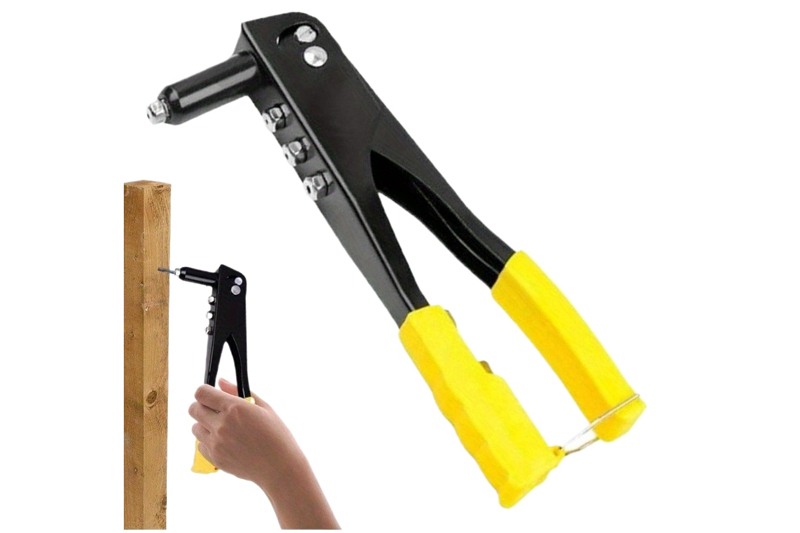
Comprehensive procedures for calibrating air line pressures, moisture filtration, and stroke-length settings for consistent mandrel break loads.
Read Article →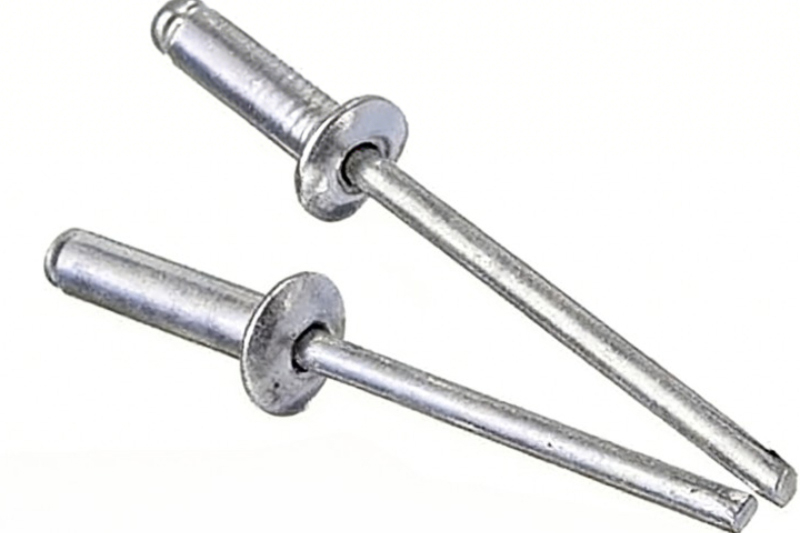
A deep dive into multi-grip, structural interlock, tri-fold, and grooved blind rivets for modern lightweight mechanical assemblies.
Read Article →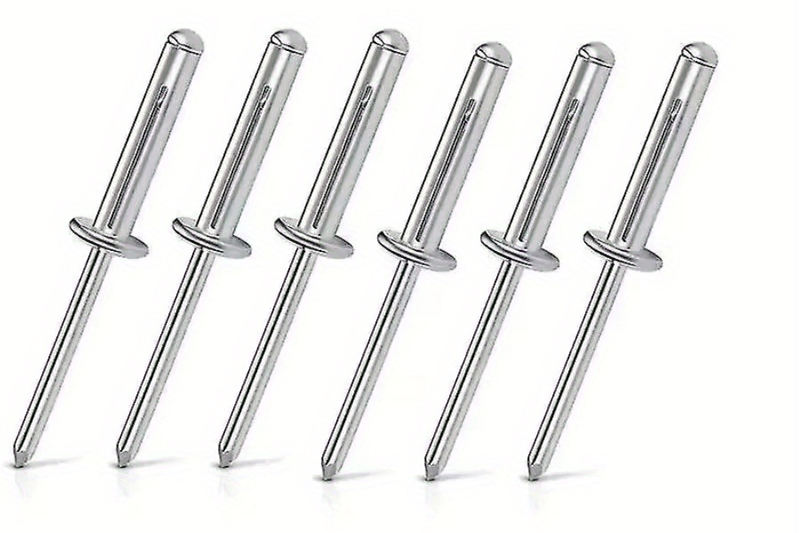
Understanding hole-diameter tolerances, grip range calculations, and shear load redistribution in critical aviation structures.
Read Article →Connect directly with our aerospace fastener application engineers. Receive 3D CAD models, material certificates, and custom quotation packages within 24 hours.
Technical answers for aerospace structures engineers, MRO specialists, and procurement directors.
While titanium provides extraordinary tensile strength for extreme structural load paths (such as landing gear trunnions and wing root lugs), aerospace aluminium rivets are significantly more cost-effective and lighter in density (approx. 2.7 g/cm³ for Al vs 4.5 g/cm³ for Ti). In non-critical and secondary structures, control surfaces, interior ribs, and cabin partitions, aluminium rivets save substantial total aircraft weight at a fraction of titanium’s raw material and machining cost.
Carbon fiber is electrically conductive and possesses a higher noble potential than aluminium. Direct contact can trigger galvanic cell reaction in humid environments. To prevent this, our aerospace aluminium rivets feature barrier surface treatments including chromate/non-chromate conversion coatings, specialized dielectric organic sealants, or are manufactured using high-purity 5056 Al-Mg alloy specifically engineered to resist galvanic degradation against composite matrices.
We recommend pneumatic-hydraulic or brushless digital DC electric riveting tools equipped with calibrated stroke sensors and mandrel collection vacuum systems. For aerospace lines, pressure regulators must maintain consistent 5.5 to 7.0 bar line pressure with in-line water separators to ensure the mandrel snaps precisely at the engineered break-point groove every time.
Yes. WUXI AIPLLE provides full OEM and ODM custom manufacturing. We manufacture rivets with 100° and 120° countersunk profiles, large flange load-spreading heads, extra-long grip bodies up to 1-3/16", and specialized color-anodized or painted finishes (e.g., Yellow, Red, Black, and Clear anodized) conforming to MIL-A-8625 and NAS specifications.
Leading global manufacturer of precision blind rivets, high-shear structural fasteners, and specialty rivet nuts for lightweight aerospace bonding, automotive body-in-white structures, and heavy industrial assemblies.