Leave Your Message
Explore our specialized aluminum blind fasteners engineered to mitigate cyclic dynamic fatigue, prevent hole ovalization, and maintain residual clamping force across commercial and passenger vehicle assemblies.
The contemporary automotive industry is experiencing an unprecedented convergence of lightweighting mandates, electrified powertrains, and rigorous Noise, Vibration, and Harshness (NVH) requirements. Traditional threaded fasteners, historically prevalent across automotive body-in-white (BIW) and interior assemblies, exhibit a critical intrinsic vulnerability: self-loosening under continuous transverse vibration and multi-axis harmonic excitations. In contrast, aluminium blind rivets for vibration-resistant automotive use offer a mechanically locked, permanent joint that eliminates the thread-slip mechanics responsible for catastrophic joint relaxation.
When an automobile navigates variable road topography, encounters continuous motor oscillations, or undergoes emergency deceleration, mechanical joints endure complex cyclic shear stresses, tensile shocks, and high-frequency resonance. In internal combustion engine (ICE) vehicles, vibrations are predominantly engine-induced at deterministic firing frequencies. However, in modern Battery Electric Vehicles (EVs), the absence of acoustic masking from combustion engines elevates subtle rattle, squeak, and mechanical buzzing into direct warranty liabilities. Aluminium blind fasteners engineered with tailored upset kinematics absorb micro-vibrations, maintain stable residual clamp force, and eliminate secondary fastener migration throughout the full operational lifespan of the vehicle.
Electric drivetrains introduce instant torque delivery and high-frequency electromagnetic vibration. Anti-vibration aluminum blind rivets provide secure grounding and rigid fastening of battery containment covers without risk of loosening over millions of road cycles.
Unlike bolts and screws that depend on thread friction—which rapidly degrades under transverse dynamic shear—blind rivets deform permanently into a solid structural lock that cannot unthread or back out under severe resonance.
Modern lightweight vehicles join aluminum sheet alloys (such as 5000 and 6000 series) with carbon fiber composites (CFRP) and structural thermoplastics. Blind rivets provide uniform clamp distribution without crushing sensitive composite fibers.
The fundamental mechanism behind high-performance vibration resistance in aluminum blind rivets lies in their closing-side upset geometry. Standard open-end blind rivets form a relatively localized bulb behind the rear sheet. While adequate for non-critical, static load assemblies, dynamic vibrational loads generate localized stress concentrations that can cause sheet tear-out or hole elongation (ovalization) in thin automotive panels.
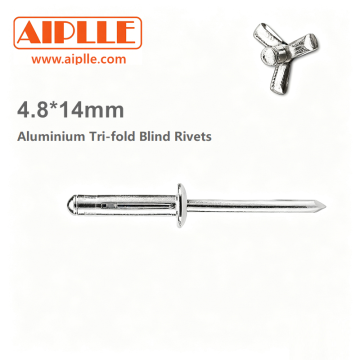
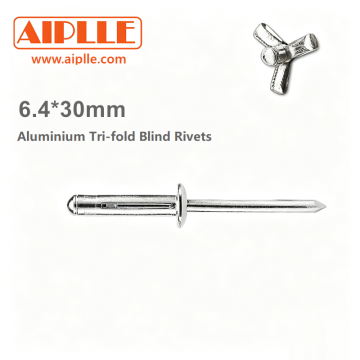
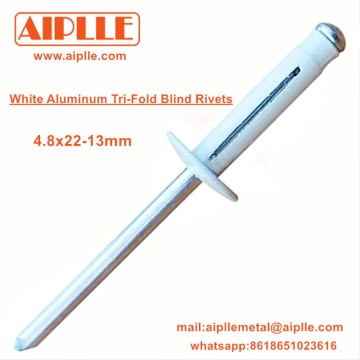
To overcome this limitation, automotive engineers frequently specify Tri-fold blind rivets (lantern rivets or bulb rivets). During the installation cycle, as the mandrel head is retracted by the pneumatic or electro-mechanical riveting tool, the slotted aluminum rivet body folds into three distinct, wide-bearing anchor wings. This three-legged "lantern" expansion delivers critical physical advantages:
The deployed three-fold wings expand the blind-side bearing surface area by up to 250% compared to standard cylindrical bulbing. This expansive footprint spreads the residual clamping load across an enlarged circumference, dramatically reducing peak stresses on thin aluminum stampings, engineered polyamides, and sheet-molding compounds (SMC). By dampening stress spikes, the joint resists dynamic fatigue crack initiation under sustained acoustic and mechanical excitation.
A notorious culprit of NVH complaints in premium automotive manufacturing is the loose mandrel remnant rattling within the installed rivet body. Specialized vibration-resistant automotive blind rivets incorporate internal mechanical crimps or mechanically locked mandrel heads. Upon reaching the calibrated breakload, the mandrel breaks flush while the retained stem section is securely trapped within the folded sleeve, completely eliminating secondary acoustic rattle and moisture ingress.
| Rivet Configuration | Blind-Side Footprint | Vibration Fatigue Endurance (DIN 65151) | Hole Tolerance Sensitivity | Primary Automotive Application |
|---|---|---|---|---|
| Tri-Fold / Lantern Aluminium | Extra Large (3 Distinct Wings) | Superior (Absorbs Multi-Axis Dynamics) | Extremely High (Fills Oversized Holes) | Instrument Panels, Door Modules, HVAC & EV Trays |
| 5052 Structural Dome Head | Medium-Large (Bulbing Ring) | High (High Tensile & Shear Capacity) | Moderate (Requires Calibrated Holes) | Chassis Brackets, Cross-members, Tailgate Hinges |
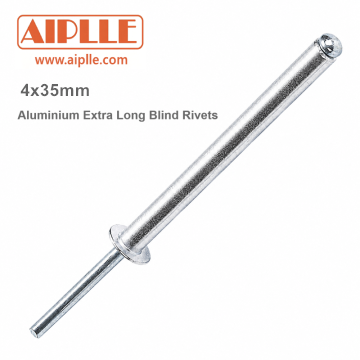
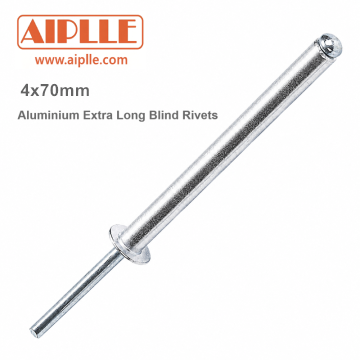
| Extended Grip Long Rivets | Medium (Dual-Phase Upset) | High (Uniform Clamping Across Layers) | High (Tolerates Stack-up Variations) | Multi-Layer Soundproofing & Honeycomb Panels |
| Standard Open End Blind | Compact (Standard Spherical Bulb) | Moderate (Prone to Slip Under Severe Shear) | Low (Tight Tolerance Mandated) | Secondary Interior Trim & Non-Structural Brackets |
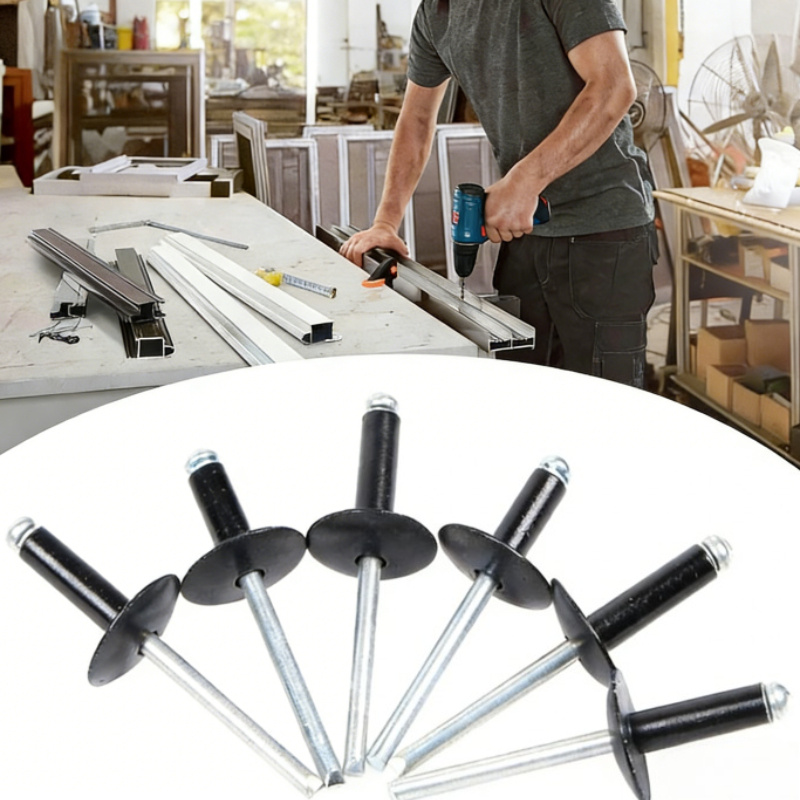
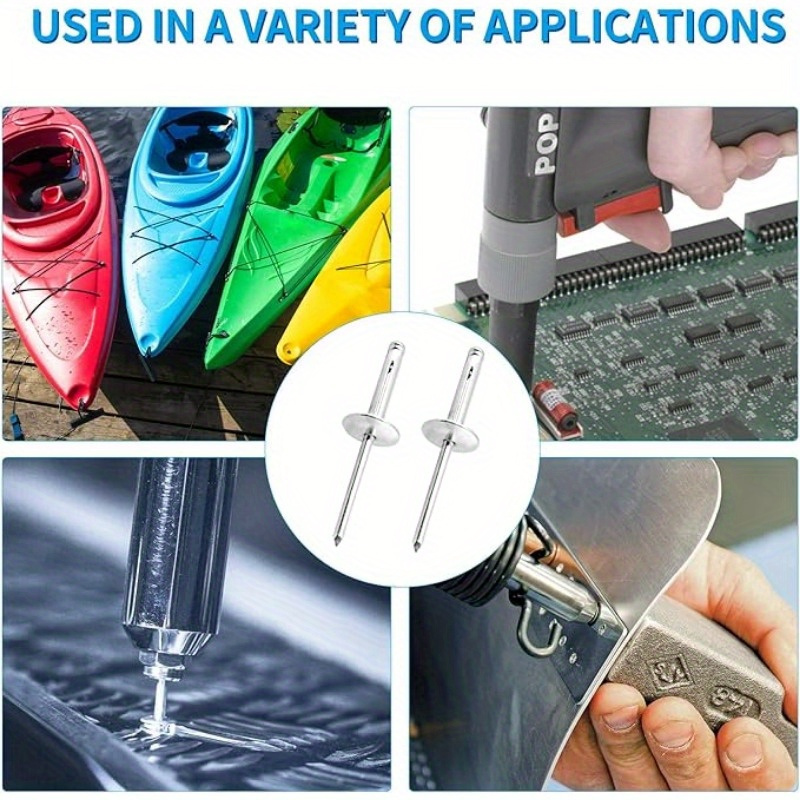
Automotive tier-1 suppliers and vehicle manufacturers subject fast-moving structural joints to grueling accelerated lifecycle validation protocols. In these high-stakes vehicular environments, failure of a single fastener can trigger warranty recalls, safety hazards, and customer dissatisfaction. Below is a detailed engineering analysis of automotive subsystems relying on vibration-resistant aluminium blind rivets:
Underbody splash shields, wind diffusers, and battery pack acoustic cladding operate in the most hostile vibration environment of the vehicle. Exposed directly to road debris bombardment, gravel impingement, turbulent vortex airflows, and water spray, these components experience continuous cyclical flexing. Using 5052-H32 grade aluminium blind rivets prevents electrolytic corrosion against neighboring aluminum floor pans while resisting the constant flutter-induced fatigue that rapidly strips standard sheet metal screws.
Modern vehicle cockpits integrate instrument panels, heads-up display brackets, passenger airbags, and complex climate control ducting onto a single cross-car magnesium or tubular steel beam. As noted in lantern rivet kinematics, connecting high-ductility polymers (e.g., PP-EPDM, ABS/PC blends) to rigid metallic beams requires fasteners that do not initiate micro-cracking in the thermoplastic boss. Tri-fold blind rivets clamp with uniform planar pressure, dissipating road vibrations transmitted through the steering column and front suspension.
Medium and heavy-duty trucks experience severe low-frequency, high-amplitude chassis torsion as they travel over unpaved surfaces or transport dynamic liquid payloads. Tailgate liners, rear aerodynamic fairings, and exterior storage toolboxes mounted with vibration-resistant bulb rivets show virtually zero fastener loosening even after 500,000 miles of highway and job-site operation.
With autonomous driving features requiring millimeter-wave radar and LiDAR modules to maintain micro-radian alignment tolerances, sensor bracket stability is of paramount importance. Micro-vibrations can shift calibration angles, generating false collision warnings or disengaging adaptive cruise control. Precision aluminum blind rivets hold mounting brackets rigidly against front fascias, eliminating bracket drift caused by high-speed airflow vibration.
The manufacturing excellence of vibration-resistant automotive rivets is intrinsically linked to rigorous metallurgical formulations. Standard commercial rivets often utilize generic aluminum alloys that suffer from cold-work embrittlement during setting. In contrast, automotive-grade rivets rely on vacuum-annealed AlMg2.5 (AA5052) or AlMg5 (AA5056) alloys, offering an optimal balance of yield strength, elongation percentage, and shear resistance.
Furthermore, contemporary automotive assembly lines are heavily automated. Modern manufacturing demands consistent riveting cycles performed by end-of-arm robotic tooling with cycle times under 1.2 seconds. Key advancements shaping this sector include:
Modern automotive lines utilize automated blind riveting stations equipped with force-displacement monitoring. Every rivet installation is digitally verified: pull force, displacement curve, and mandrel break point are recorded to guarantee zero assembly defects.
When joining aluminum to ultra-high-strength steel (UHSS) or carbon composites, galvanic corrosion is mitigated through zinc-nickel alloy plating, electrophoretic coatings, or passivated clear chromates exceeding 1,000 hours of ASTM B117 salt spray exposure.
Certified fasteners undergo dynamic transverse testing according to DIN 65151 (Junker Test). While conventional threaded fasteners exhibit loss of preload within 300 cycles, mechanically deformed blind rivets sustain clamp integrity beyond 2,000 cycles.
Self-tapping screws create localized high stress in plastic bosses, which degrade through thermal cycling and road vibration, eventually stripping the plastic thread and creating acoustic rattles. Aluminium blind rivets (particularly tri-fold lantern styles) generate broad, gentle clamp force that will not fracture brittle polymers and permanently maintains clamp load without loosening.
Tri-fold rivets are specifically engineered for forgiving hole-diameter tolerance. As the three legs expand outward, their wide footprint clamps securely over elongated, punched, or thermally expanded holes without pulling through the base material, making them ideal for high-volume automated stamping assemblies.
Automotive-grade blind rivets can be supplied with high-performance dielectric barrier coatings, specialized anodized layers, or paired with stainless steel mandrels. The stable mechanical lock prevents micro-fretting wear that would otherwise strip e-coat layers, ensuring joint durability across demanding exterior salt-spray environments.
Vibration-resistant automotive rivets feature internal mechanical locks or pinched body funnels. During the final break stroke, the mandrel head is mechanically locked within the blind-side expanded sleeve, preventing it from dropping into vehicle cavities or generating irritating NVH harmonics.
Select from our comprehensive line of structural, tri-fold, dome head, and extended grip blind fasteners tailored for automotive OEM, Tier-1 manufacturing, and industrial assembly.